Virginia City
"The whole mountain is hollow with old mine shafts and the town on top of it seems to know this."
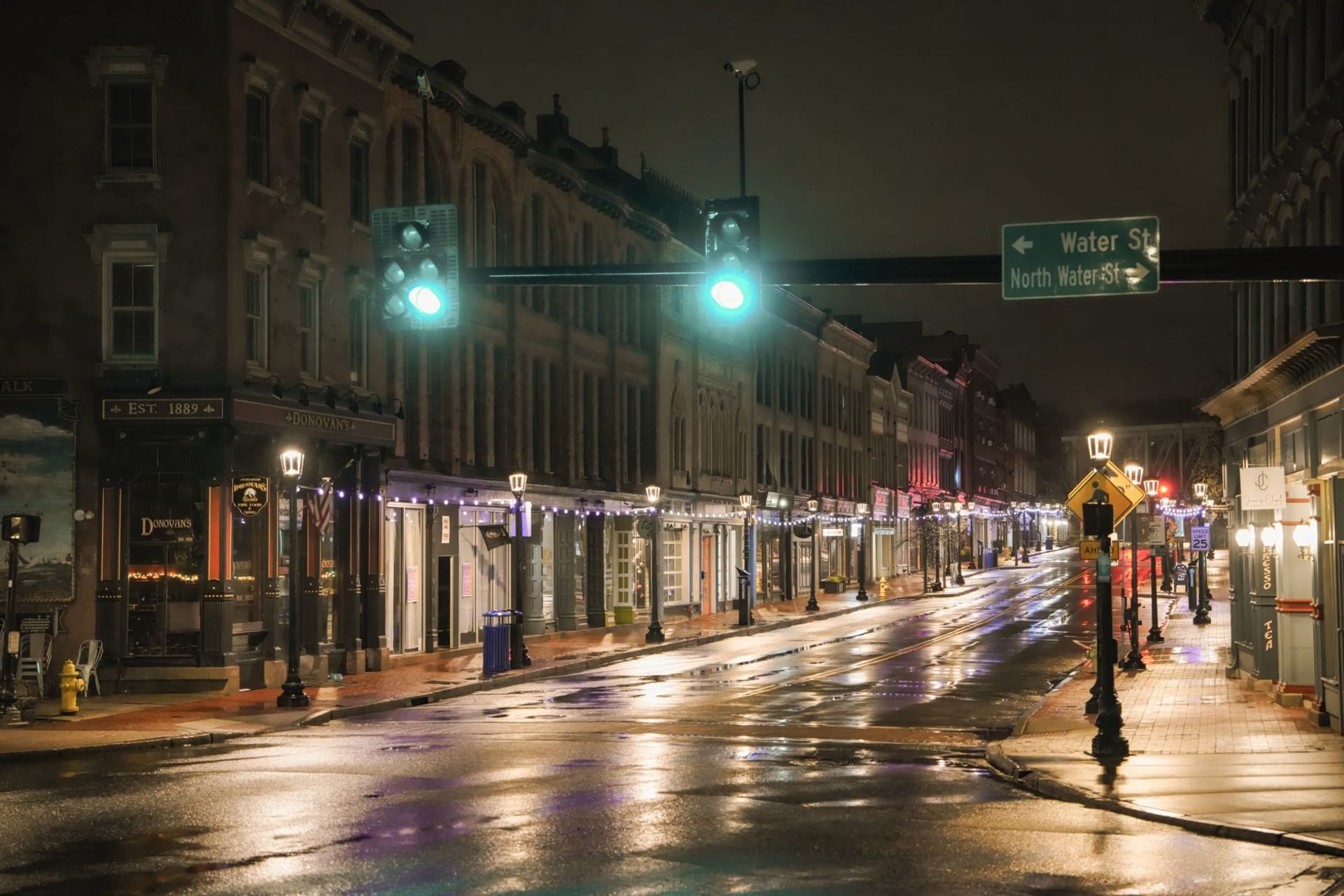
Virginia City sits on the side of Mount Davidson at nearly 1,800 meters, a single main street of Victorian commercial buildings running along a slope so steep that the storefronts are set into the hillside at different elevations, their upper floors even with the road and their lower floors disappearing into the mountain. The effect is of a town that has been simultaneously built and excavated, which is exactly what happened: the Comstock Lode, discovered in 1859, ran in veins through the mountain below and the city above was built to extract it, process it, and spend the proceeds before anyone thought to stop. At its peak in the 1870s, Virginia City had twenty thousand residents, newspapers, an opera house, a stock exchange, and a level of wealth per capita that made it one of the richest communities in North America.
I drove up from Carson City in the early morning, the road switchbacking up the slope through sagebrush and pinyon pine, and arrived to a town of about eight hundred people and several thousand tourists-worth of infrastructure aimed at making the history of the former digestible to the latter. The boardwalk along C Street, Virginia City’s main drag, has been reconstructed to period specifications and the storefronts — the Bucket of Blood Saloon, the Delta Saloon with its Suicide Table, the Fourth Ward School — have been preserved or restored in ways that manage to feel authentic without feeling sanitized. Part of what helps is that the surrounding landscape hasn’t changed. The same barren hills frame the same sky and the view down the slope into the desert valley is what everyone in this town saw every morning in 1875.
Mark Twain worked as a reporter for the Territorial Enterprise here in 1862 and 1863, during the height of the boom, and the Virginia City he wrote about — raucous, violent, unpredictable, fueled by silver and liquor and ambition — is recognizable in the bones of the current town even through a century and a half of alteration. The Territorial Enterprise building still stands, and the newspaper still publishes (a monthly now, not daily), and the small museum attached to it has Twain ephemera and some genuinely good exhibit text about what journalism looked like in a mining boomtown. Twain is both the town’s most famous former resident and its most useful lens for understanding what Virginia City actually was — not the sanitized Western heritage site, but the place where Americans came to make money by any means and largely succeeded.
The mines are the real thing to see. The Best & Belcher Mine offers underground tours that descend into the actual working tunnels, shored up with timber that was imported from the Sierra Nevada by the carload because the mountain itself had no trees worth felling. Inside the mine, the temperature drops to the consistent fifty-something degrees Fahrenheit that deep earth maintains, and the rock around you shows the vein structures of the ore — quartz and sulfide minerals threading through country rock in patterns that made 19th-century geologists giddy. The tunnel walls are wet from groundwater and the smell is mineral and cold and old.
The Virginia & Truckee Railroad, which connected Virginia City to Carson City and Reno during the mining boom, runs a short tourist excursion in summer and fall along a preserved section of track. The cars are original Victorian rolling stock, restored, and the route descends the mountain through curves that were engineering achievements in 1870 and remain visually dramatic today. The conductor narrates the history with the particular tone of someone who has given this talk five thousand times and still means it, which is its own kind of authenticity.
When to go: May through October, when the weather cooperates and the tourist infrastructure is fully operational. Summer weekends can be genuinely crowded — this is day-trip distance from both Reno and Lake Tahoe. Weekday mornings in September are the sweet spot: the tour groups haven’t arrived, the light is good on the Victorian facades, and the mine tours have openings. The town hosts a Camel and Ostrich Race in September that is exactly as deranged as it sounds.