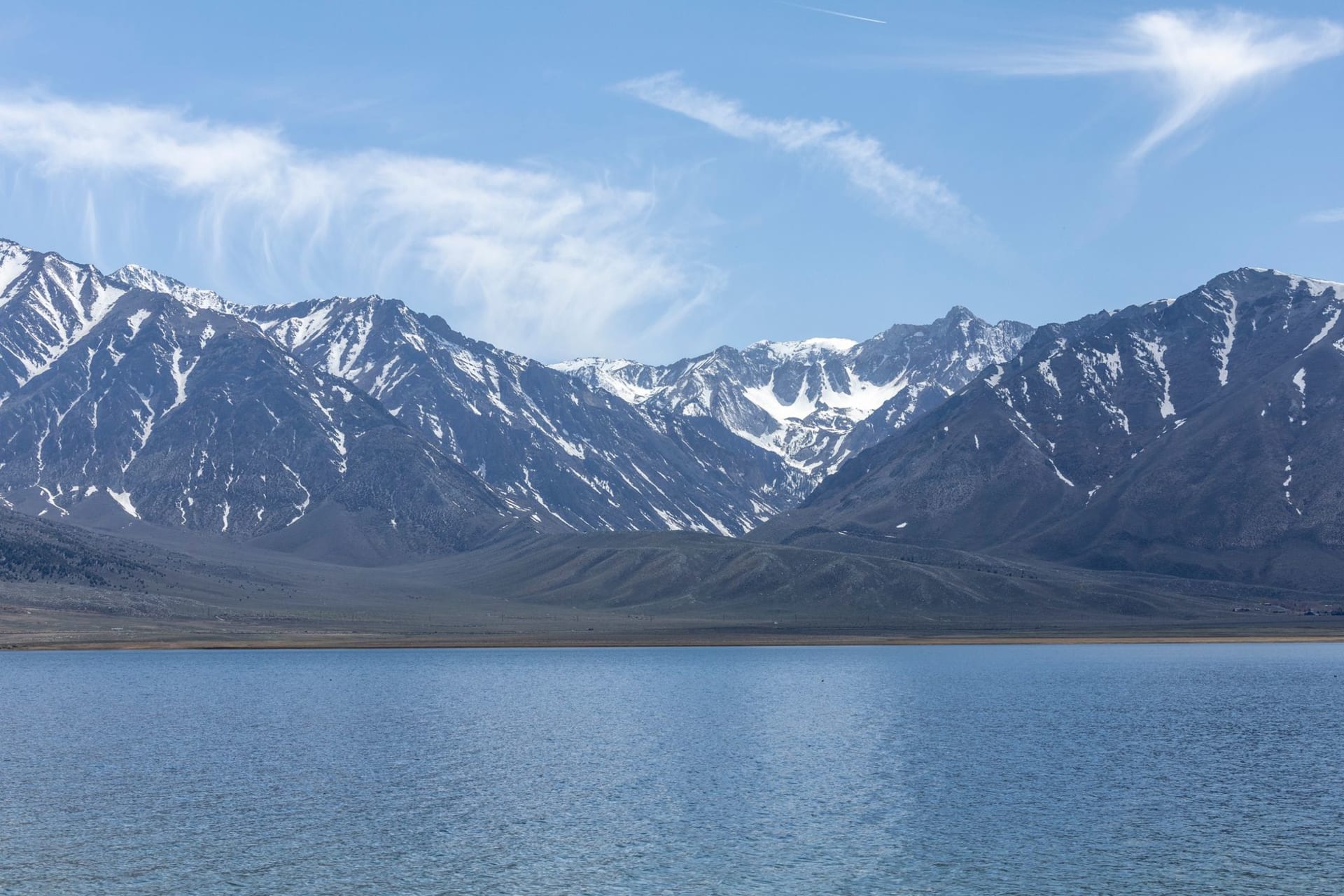
Ruby Mountains
"I drove five hours through the Nevada emptiness expecting nothing and found a mountain range that would be famous anywhere else."
Nobody told me about the Ruby Mountains. I found them on a map during a long drive across US-50, reading the topographic lines on my phone and noticing a cluster of peaks northeast of Elko that climbed past three thousand meters, surrounded by wilderness designation and almost no roads. That kind of cartographic invitation — high terrain, limited access, official wilderness — is the one I’ve learned never to ignore. I turned north at Elko, drove forty minutes through ranch land and sagebrush, and arrived at the wilderness trailhead in the late afternoon with the mountains already throwing long shadow across the valley floor.
The Ruby Mountains run roughly sixty kilometers north to south along the east side of the Ruby Valley, their west face rising abruptly from the valley floor in a way that suggests geological urgency. The name comes from garnets early settlers found in the rock — not rubies exactly, but red-toned crystals that caught the light and set expectations. What you actually find is a landscape of glacially carved cirques and hanging valleys, granite ridgelines above tree line, and a series of alpine lakes — the Lamoille Canyon lakes — strung along the valley in shades of deep green and grey-blue, fed by snowmelt from peaks that still hold snow into July most years.

Lamoille Canyon is the access point for most visitors, and the scenic road that winds up it twelve kilometers is one of the finest drives in Nevada, ascending through sagebrush into willows into aspen groves into the cirque at the canyon’s head, where the granite walls close in and the vegetation thins to alpine meadow. In October, the aspens go gold simultaneously, and the canyon holds so much of the mountain’s color that driving up it feels like entering a theater during the final act. I stopped at every pullout.
The Ruby Crest Trail runs the length of the range along the high ridgeline, roughly sixty-five kilometers from Lamoille Canyon to the Harrison Pass trailhead in the south — three to four days for a through-hike, with camping beside lakes at altitude and views east across the ruby valley to the Ruby Mountains’ own reflection in Ruby Lake, the National Wildlife Refuge below. The lakes along the trail — Island Lake, Favre Lake, Castle Lake — are the kind of high-altitude water that looks impossible in Nevada, their clarity a product of the granite bedrock and the absence of agriculture or development for many kilometers in any direction.

The wildlife encounter here are what you don’t expect in Nevada. On the hike to Island Lake I counted three mule deer on the meadow rim above the trail, two California bighorn sheep on a granite ledge above the cirque, and more sage grouse than I’d seen combined anywhere else. The Ruby Valley and Rubies form a critical wildlife corridor in the Great Basin — in winter, the deer come down into the valley and the coyotes follow, and in spring they push back up into the high country with the snowmelt. The Ruby Lake NWR below the range’s east face is one of the finest wetland habitats in the Great Basin, a network of tule marshes and open water that attracts redheads, canvasbacks, white-faced ibis, and the occasional tundra swan migrating through.
When to go: July and August for high-country hiking, when the snow has cleared and the wildflowers are running through the meadows. September and October for Lamoille Canyon’s aspen color, which peaks in mid to late October. The road up Lamoille Canyon closes with first heavy snow, usually November. Heli-skiing operations run in winter for those willing to be dropped into the backcountry.