Rhyolite
"Some towns die slow. Rhyolite died in under a decade, and somehow that made it easier to imagine alive."
A gold-rush town that boomed to thousands of souls in a few short years and emptied out just as fast, its bones still standing in the Mojave sun.
We drove up from Death Valley on a whim, the kind of detour Lia and I have learned to trust more than the itinerary itself. Beatty was already half-asleep when we passed through, and a few miles later the road just opens onto Rhyolite, sitting there in the scrub like someone hit pause on it in 1911. I’d read the numbers before we went — founded in 1904 after gold turned up in the Bullfrog Hills, and within a couple of years it had somewhere between 3,500 and 5,000 people, electric lights, its own stock exchange. Standing at the edge of the ruins, trying to square that population figure with the silence around us, was the first time the trip actually felt strange in a good way.
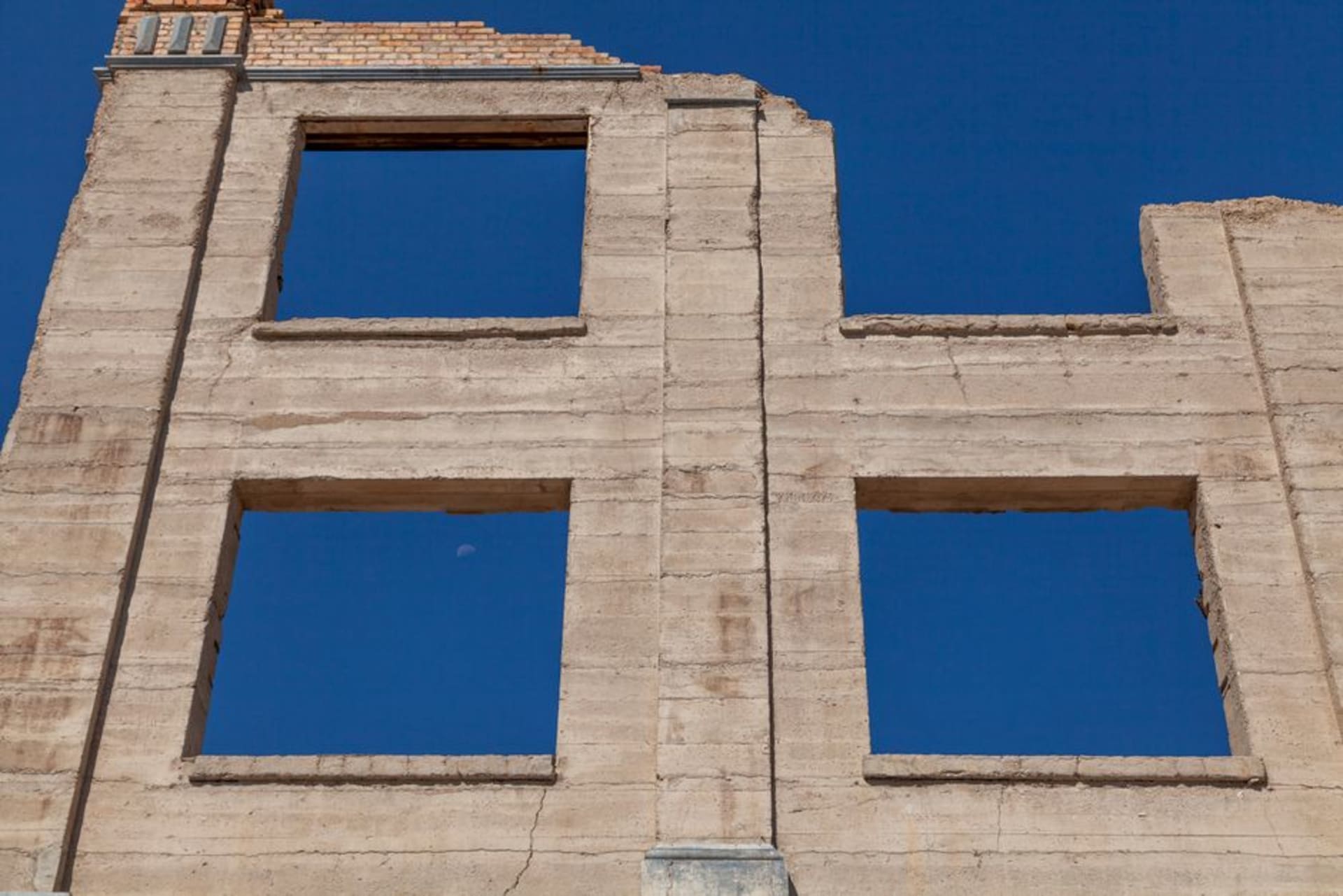
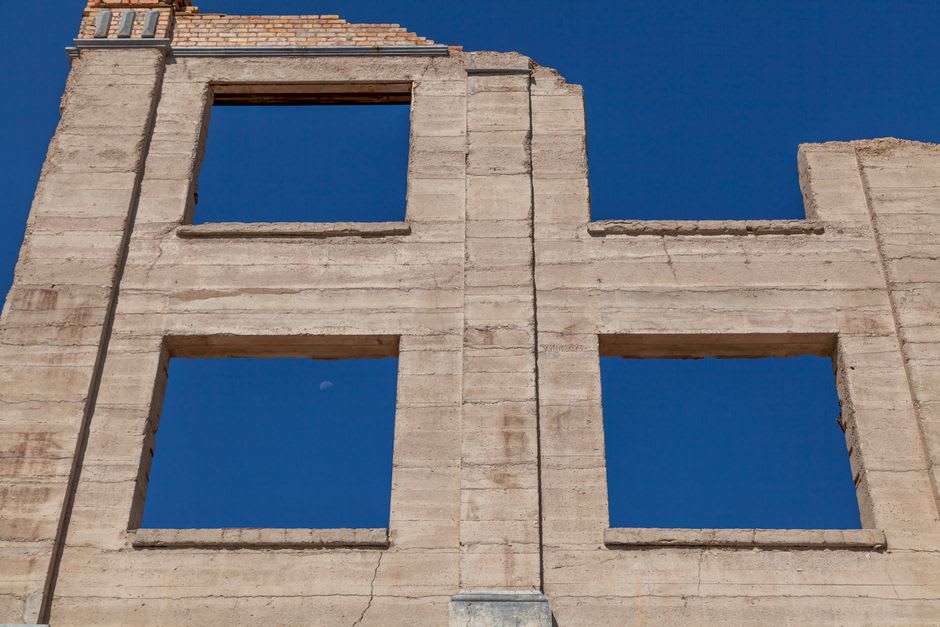
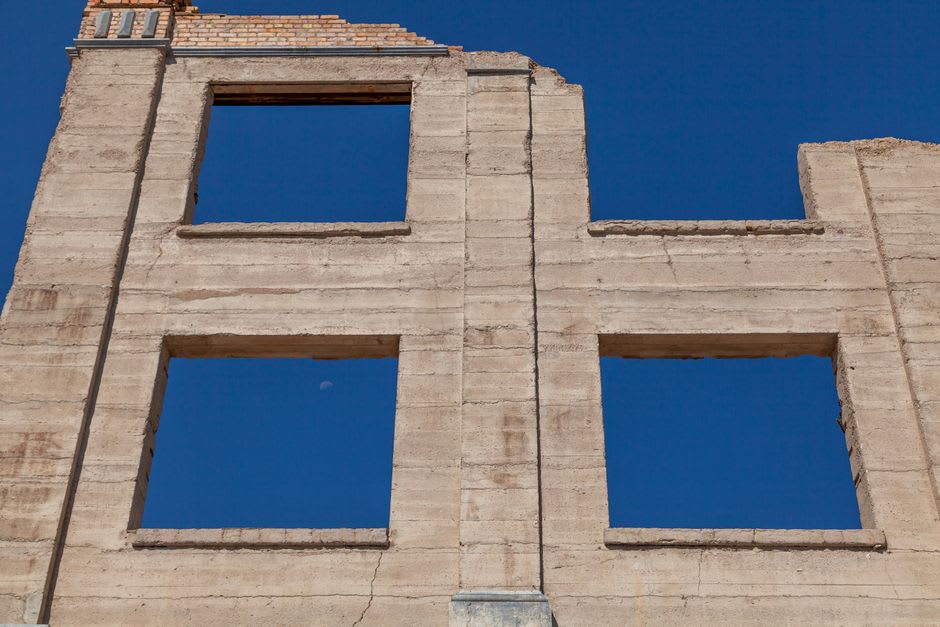
The Cook Bank Building is the one that gets you. Three stories of concrete skeleton, no roof, no floors left, just the frame holding up nothing, and somehow it’s more moving than a building that’s fully intact would be. I sat on a low wall across from it for a while, and Lia went off to photograph the light through the empty window frames. It’s wild to think a town with a stock exchange and this much ambition folded within a decade — the 1906 San Francisco earthquake spooked investors, then the 1907 panic finished the job, and by 1911 the mines were basically done.
Tom Kelly’s bottle house is the other stop that stuck with me, mostly because it’s so unexpectedly whimsical next to all that collapsed ambition. A miner built it almost entirely out of glass bottles in 1906 — beer bottles, medicine bottles, whatever was lying around a boomtown with more saloons than churches — and the thing is still standing, walls glinting faintly in the sun. We must have circled it three times. Lia kept saying it looked like something out of a fairy tale that had wandered into the desert by mistake, and honestly I couldn’t argue with her.
Next door, almost jarringly, is the Goldwell Open Air Museum — ghostly plaster figures and a sculpture of a bicycle-riding Venus scattered across the sand, installed decades after the town died. We wandered between the sculptures as the light went gold and low, the shadows of the old ruins stretching out behind us, and it felt like the desert had quietly agreed to keep hosting strange, ambitious things long after the people who built the first ones were gone.
When to go: Aim for fall through spring — the Mojave heat this close to Death Valley turns brutal in summer, and you’ll want the energy to walk the whole site slowly, not rush it in the shade of a ruined bank.