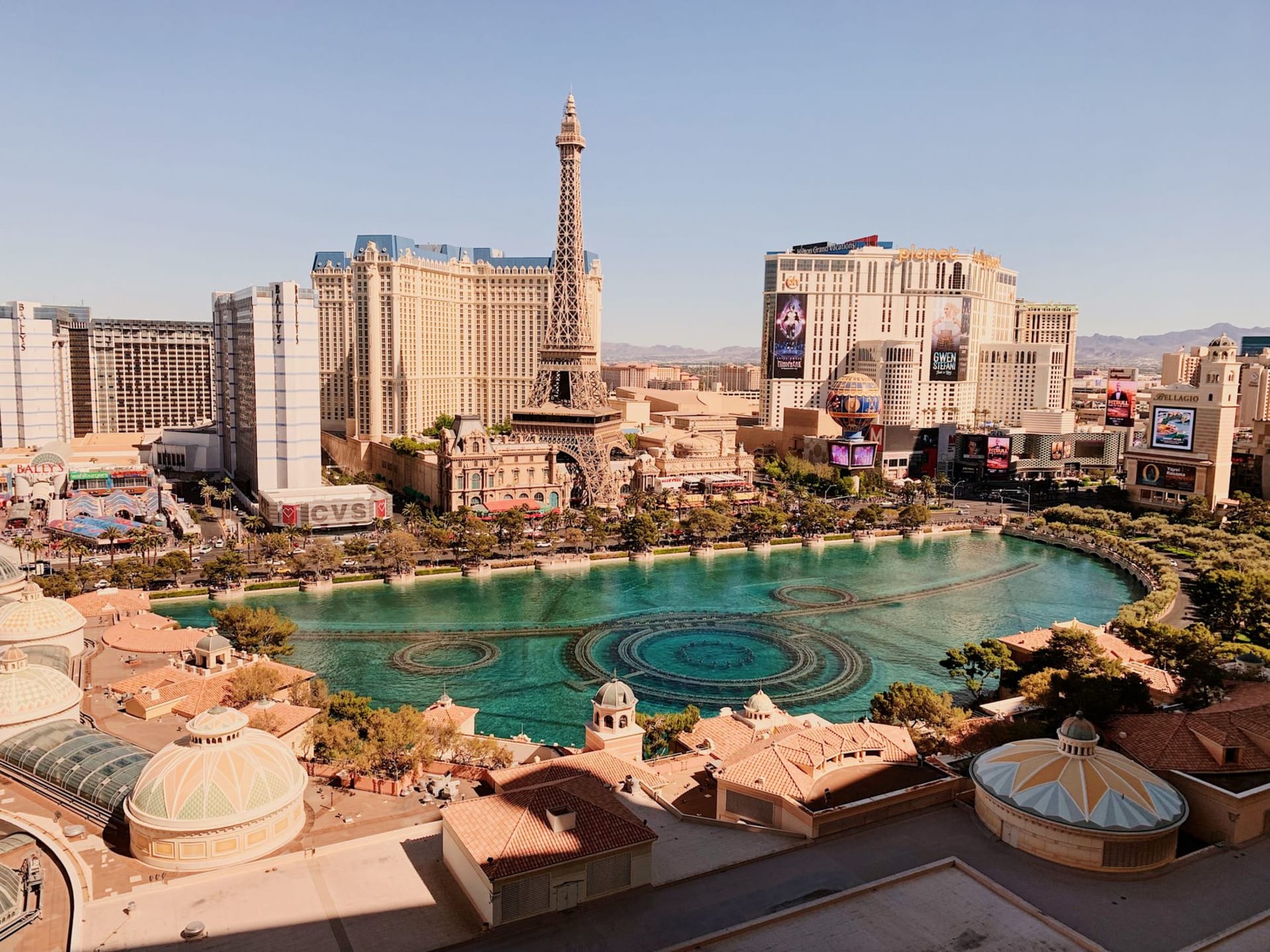
The Las Vegas Strip
"The Strip doesn't pretend to be anything other than what it is. That kind of honesty is rarer than it sounds."
I arrived at midnight and thought I understood it. The taxi from McCarran swung onto Las Vegas Boulevard and there it was — the Luxor pyramid firing a column of white light straight into the Nevada sky, the Bellagio fountains arching over the reflecting pool to Sinatra, the Sphere sitting on the edge of everything like a dropped moon, cycling through visuals too large to fully process at sixty miles an hour. I pressed my face to the window like a child and told myself I was being ironic. I was not being ironic. By the time we reached my hotel, I was already planning when to walk back out.
The Strip in daylight is a different animal. The magic drains in the sun and what remains is pure architecture — casino towers clad in gold glass, themed hotel facades that are genuinely impressive in their ambition if not their taste, the underpass infrastructure that moves fifty thousand people a day between buildings without ever touching the sidewalk. I walked the whole length from the Mandalay Bay south tower to the Stratosphere over the course of one afternoon, which took three hours because the blocks are much longer than any map suggests and every casino lobby requires a mandatory ten-minute detour.

The food is the thing that genuinely surprised me. Las Vegas has assembled a restaurant scene that would be remarkable in any city on earth, and the Strip is where the most serious rooms operate. I ate yakitori at a Japanese counter inside a casino basement at one in the morning, the charcoal smoke drifting through a room that felt transplanted wholesale from Shinjuku. I ate at a French brasserie where the bread basket alone justified the taxi across town. The casino model, counterintuitively, creates perfect conditions for ambitious restaurants — captive foot traffic, no shortage of expense accounts, and owners willing to absorb losses to keep a dining room full. The result is food that doesn’t need to survive on reputation alone, which means it actually has to be good.
The Sphere changed something about what the Strip can be. Standing outside it at night, watching the exterior display shift from a simulation of the earth from space to an abstract field of color, I felt something I don’t usually feel at tourist attractions: genuine awe at scale. Inside for a show, the wraparound visuals are the closest thing to immersive cinema that currently exists. It sits just off the Strip proper, near the Venetian, and the walk to it passes through a stretch of the boulevard that feels transitional, neither casino nor ordinary street, which gives the Sphere an appropriate sense of arrival.
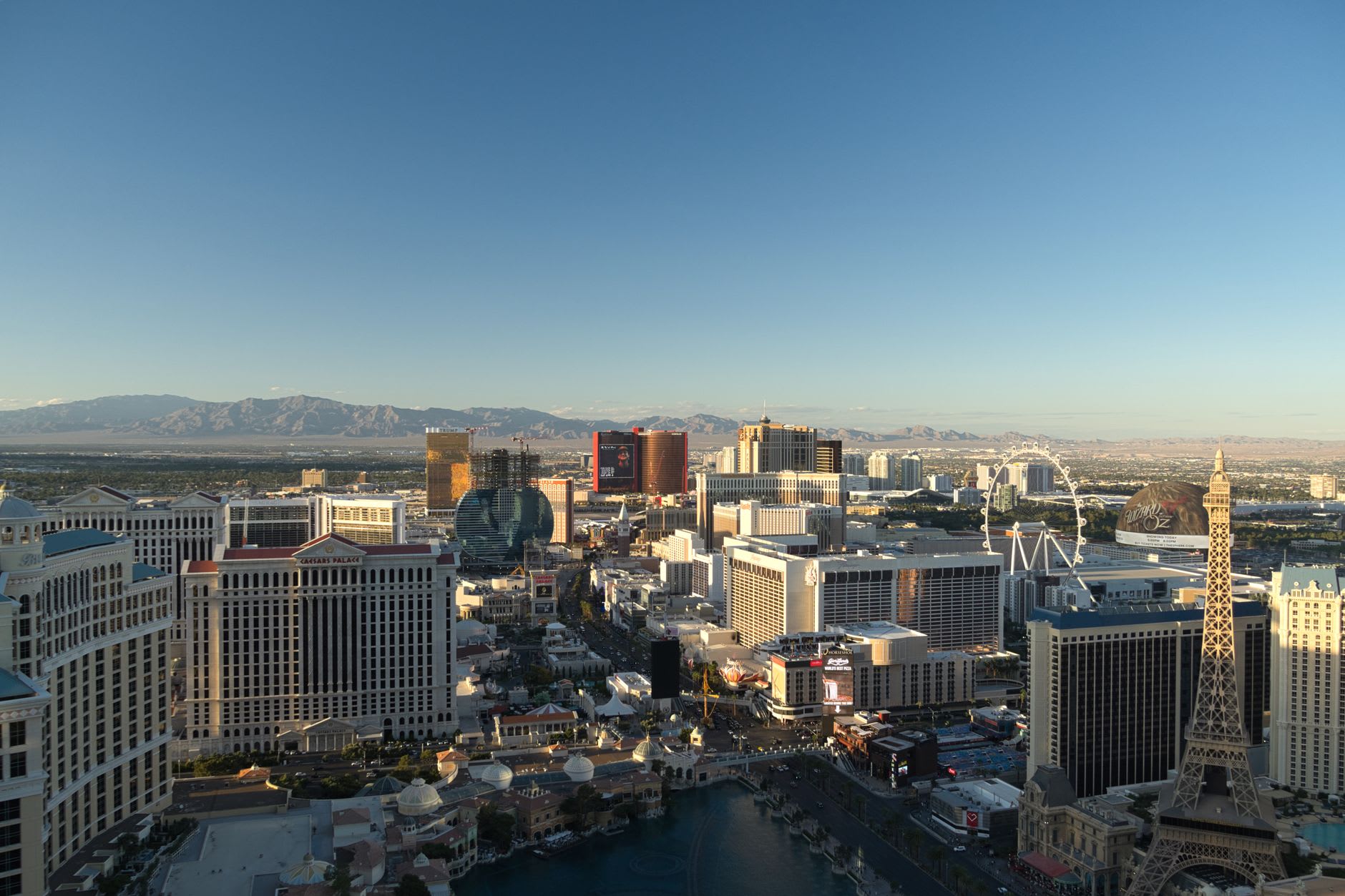
What I came to understand about the Strip, after two days of walking it and eating in it and sitting beside its pools, is that it is the most concentrated expression of American ambition in the country — not American taste, not American culture exactly, but American willingness to do something completely outlandish at enormous cost and then open it to the public and charge twenty dollars for a cocktail. There is something almost endearing in that commitment. The Strip doesn’t hedge. It doesn’t do things in half measures. It builds a replica of the Venice canals and installs working gondolas and flies in actual Italian gondoliers and that’s just Tuesday.
When to go: October and November are ideal — warm enough for pool afternoons, cool enough for Strip walking, and the summer crowds have thinned. Avoid New Year’s Eve unless you have planned months ahead; the Strip closes to vehicle traffic and holds a million people. March is spring break territory. The strip never sleeps, never closes, and never actually quiets down, so pack earplugs whatever month you choose.