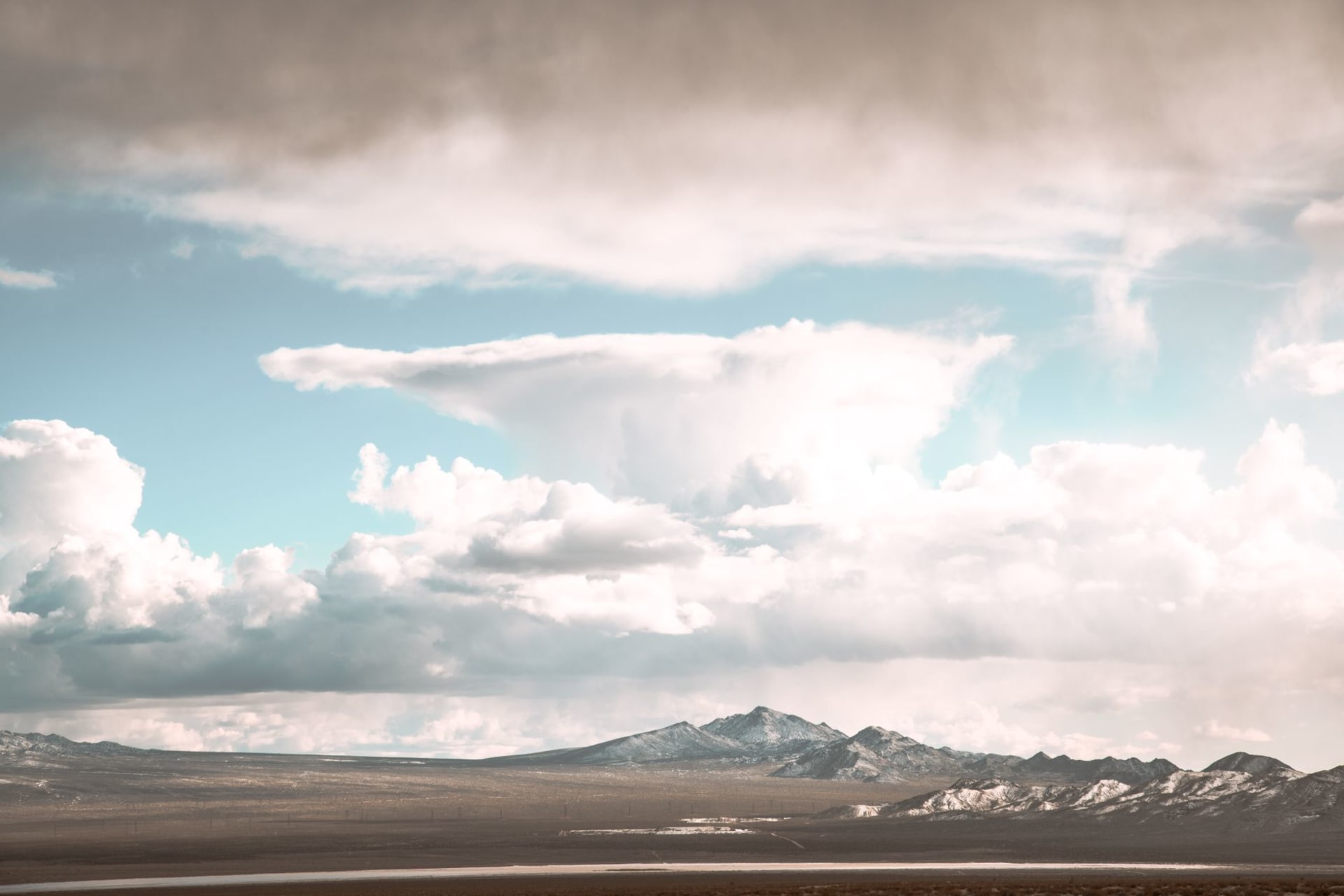
Great Basin National Park
"A bristlecone pine that was already old when Rome fell and I'm worried about my flight connection."
I arrived in the late afternoon, driving in from the south on US-93 through Baker — a town of sixty people with a gas station, a diner, and a sign pointing toward the park entrance — and the mountain materialized out of the flatness with a kind of abruptness that feels personal, like it stepped forward to introduce itself. Wheeler Peak at nearly 3,900 meters still carried snow on its upper flanks in October, a dirty white crown above the autumn gold of the aspens on the slope below. I pulled over on the park road and just stood there for a moment in the cooling air, trying to match what I was seeing with the Nevada I thought I knew.
The park gets fewer than ninety thousand visitors a year. Zion gets four million. That disproportion is one of the great quiet gifts of the American west — this extraordinary place sitting almost entirely unattended in the center of the Basin and Range, its nearest large city five hours away, its road the kind of winding ascent that turns buses away. I set up at the Wheeler Peak campground and had a fire ring entirely to myself and a view across the Snake Valley that stretched, without interruption, into Utah. When the sky went dark, I stopped counting stars and just lay on the ground.

The bristlecone pines are the reason to make the hike. Up near tree line, along the rocky ridge at around 3,400 meters, these ancient trees stand in a state of extreme and beautiful persistence. The oldest in this grove is over four thousand years old — older than the Roman Empire by the time Caesar crossed the Rubicon, this particular tree was already more than two millennia along. They are not what you expect from ancient things. They are not enormous. They are gnarled and small and wind-scoured, their bark stripped to reveal orange-red heartwood, their growth so slow that a century adds only an inch of diameter. Standing among them, I kept trying to do the math of their age and kept failing in a way that felt spiritually useful.
The Lehman Caves, down near the park entrance, are the kind of underground geology that takes millions of years to build and an hour to walk through. The ranger-led tour descends past formations I can barely name — shields, helictites, cave bacon, popcorn — all of it deposited by water working through limestone at a rate so slow it makes the bristlecones look impatient. The shields, in particular, are rare formations found in only a handful of cave systems worldwide. They grow in pairs from a single crack in the ceiling, extending outward like two circular wings, and geologists are still debating exactly how they form.

There is a small glacier on the north face of Wheeler Peak — the southernmost glacier in the United States, retreating slowly each decade but still present, tucked into a cirque below the summit. On the day I hiked to see it, the trail wound through mountain mahogany and then opened onto the rocky moraine above, and there it was: a remnant of the ice that shaped this landscape ten thousand years ago, lying in a shadow that keeps it cold enough to persist. It smelled of cold stone and thin air and the faint mineral trace of snowmelt. I sat and ate lunch beside it and felt no urgency whatsoever to be anywhere else.
When to go: Late May through October for hiking and cave tours. The Wheeler Peak scenic drive closes in winter, usually November through May, and the campgrounds go snow-buried. September is the finest month — aspen gold on the slopes, cool nights, empty trails, and the darkest skies you will find in the lower forty-eight states. The park has an official Dark Sky designation and the Milky Way is not subtle here.