Chhoser Cave
"Nobody fully knows why a civilization dug a ten-story apartment building into a cliff. Standing inside it, I stopped needing the answer."
A 2,000-year-old, multi-story honeycomb of hand-dug caves carved into a cliff face north of Lo Manthang, still only partially explained by archaeologists.
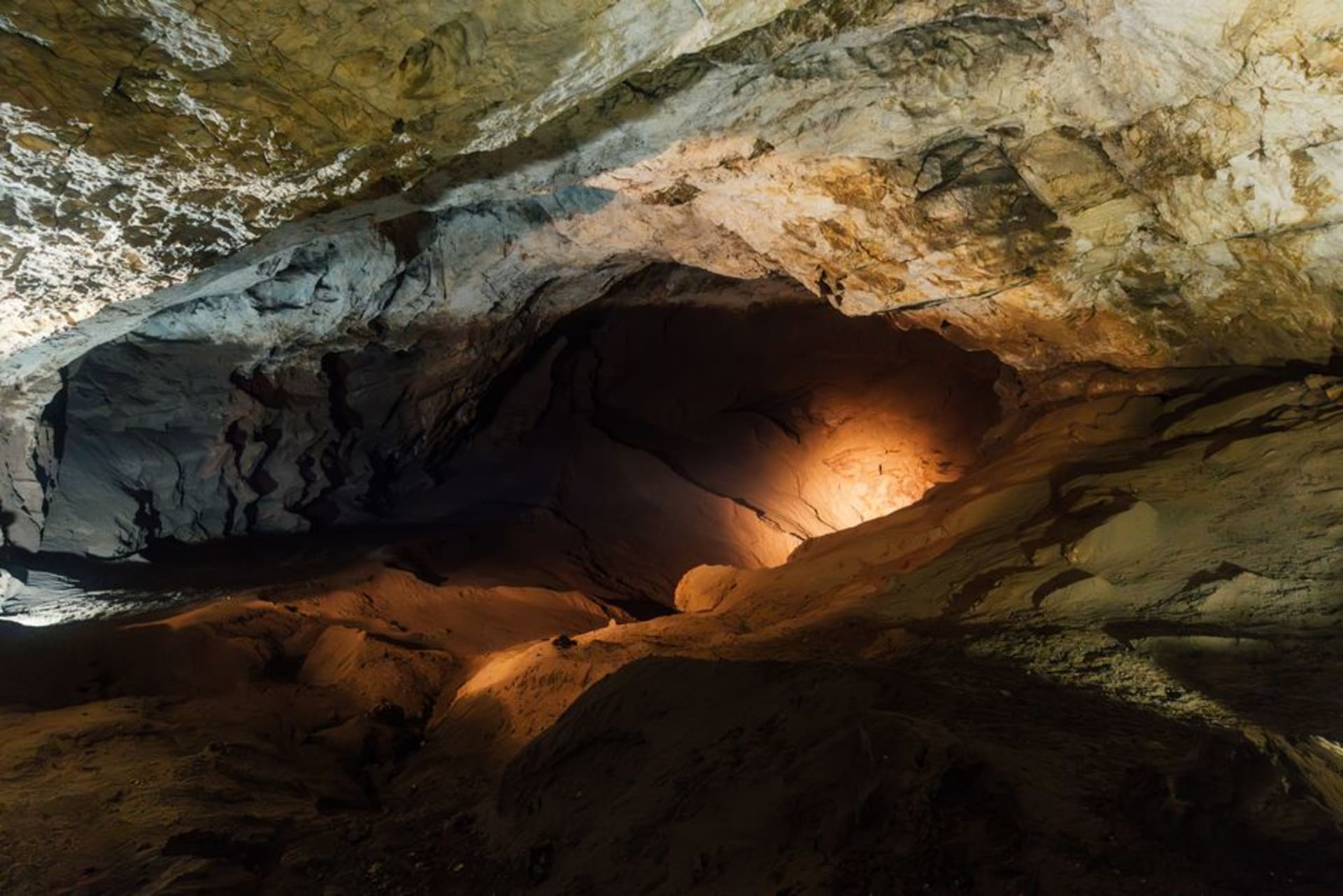
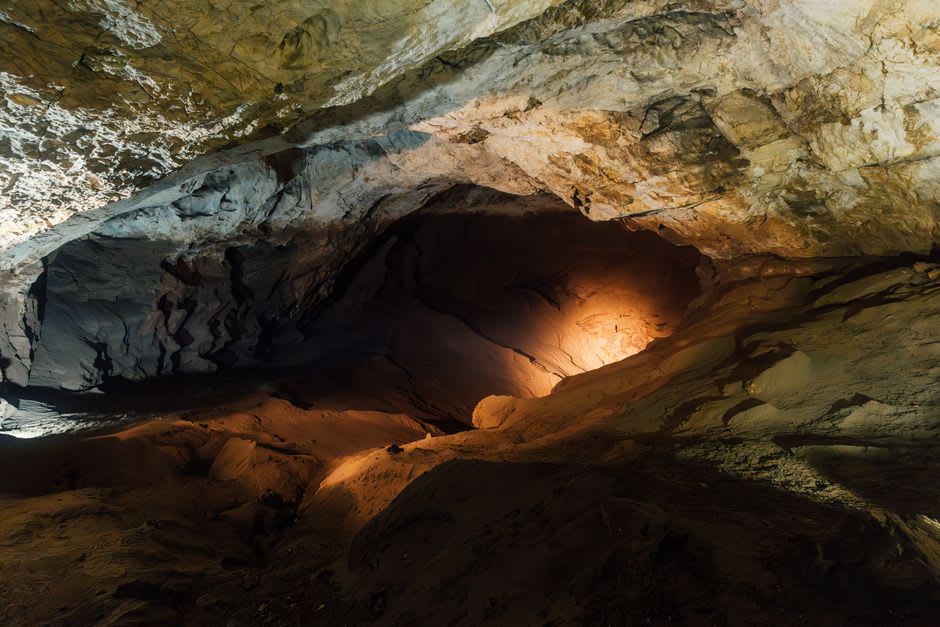
Locals call them the Sky Caves, and once you see them the name stops feeling like marketing. The cliff face above Chhoser village, a short jeep ride north of Lo Manthang, is riddled with thousands of hand-carved chambers stacked up to ten stories high — some barely large enough to crouch in, others opening into rooms with soot-blackened ceilings and traces of Buddhist murals still visible under centuries of dust. Archaeologists have found human remains, manuscripts, and painted wood dating back over two thousand years, and still can’t agree on whether the caves were used for burial, meditation retreat, defense, or all three at different points in Mustang’s history.
Climbing into the honeycomb
A local guide from Chhoser village unlocked the section that’s open to visitors and led Lia and me up a series of wooden ladders lashed together with rope, through chambers connected by holes barely wide enough to squeeze through. Some rooms had smoke-stained ceilings from butter lamps burned by monks in retreat centuries ago. Others were just empty stone boxes, silent in a way that felt deliberate. My headlamp kept catching handprints pressed into the clay walls — small ones, someone’s hands, from some year nobody can date precisely.
The village below
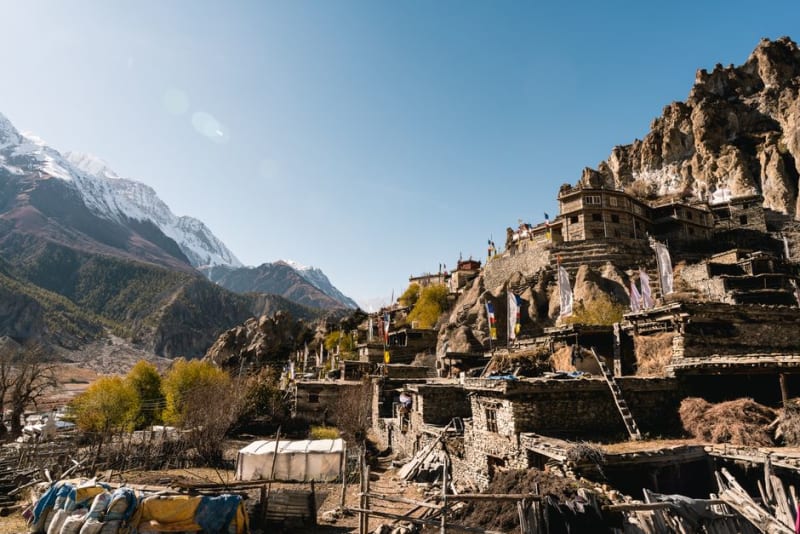
Chhoser itself is worth the detour on its own terms — a scattering of flat-roofed houses at the base of the cliff, a red gompa with a startlingly well-preserved 15th-century assembly hall, and fields of buckwheat that turn a deep rust color in early autumn. We ate lunch with the caretaker’s family, dal bhat with a Mustangi twist of dried yak cheese crumbled over the lentils, while their kids climbed the lower cave entrances like a jungle gym they’d known their whole lives, which, I realized, they had.
What stayed with me longest wasn’t the scale of the caves but the ordinariness of the village underneath them — kids playing, laundry drying, dinner cooking, all directly beneath one of the strangest unexplained architectural sites I’ve stood inside.
When to go: May through October, once the Jomsom–Lo Manthang jeep track is clear of snow and mud. A local permit and guide are required for cave access — arrange both through Lo Manthang or Chhoser village itself.
Keep exploring
More from Nepal
 nepal
nepal Chhusang
A river-junction village beneath towering conglomerate rock spires and ancient cave dwellings, where the Kali Gandaki gorge narrows to its most dramatic point.
Explore nepal
nepal Chisapani
A ridge-top viewpoint two days' walk from Kathmandu, where the Shivapuri forest gives way to open grassland and, on a clear morning, an unbroken wall of Himalayan peaks from Annapurna to Everest.
Explore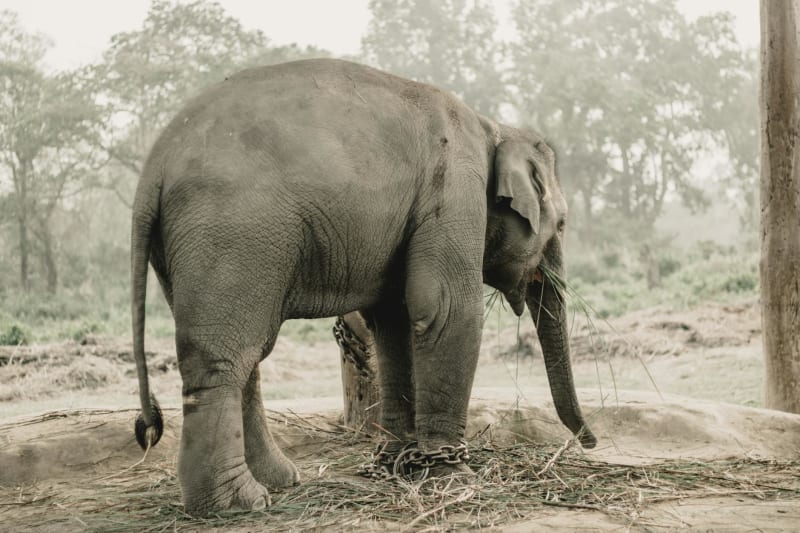 nepal
nepal Chitwan
Dense lowland jungle with one-horned rhinos, Bengal tigers, and guided canoe safaris on jungle rivers.
Explore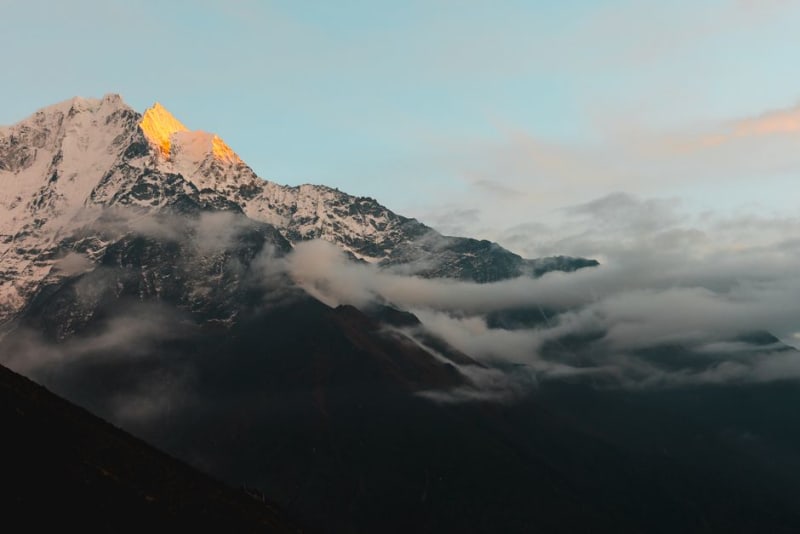 nepal
nepal Chukhung
A tiny valley outpost beyond Dingboche, the last stop before Island Peak, where the crowds thin out and the mountain walls close in from every side.
Explore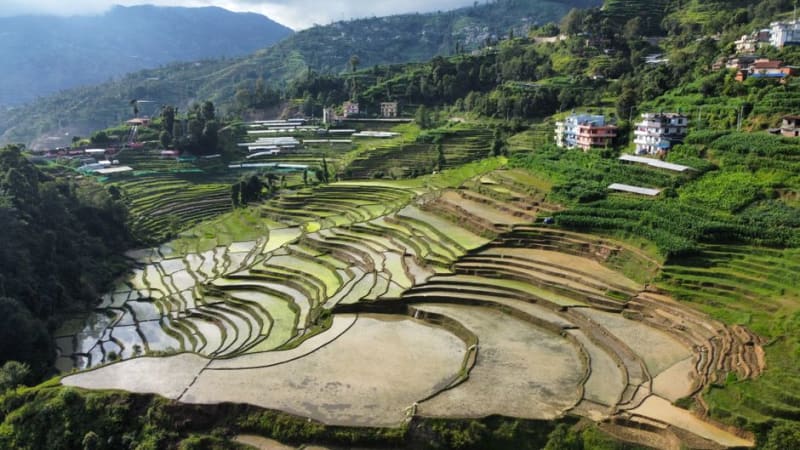 nepal
nepal Dadeldhura
A hill-station district capital in the deep far-west, cooler and quieter than anywhere on the standard Nepal itinerary, with views toward India and Tibet alike.
Explore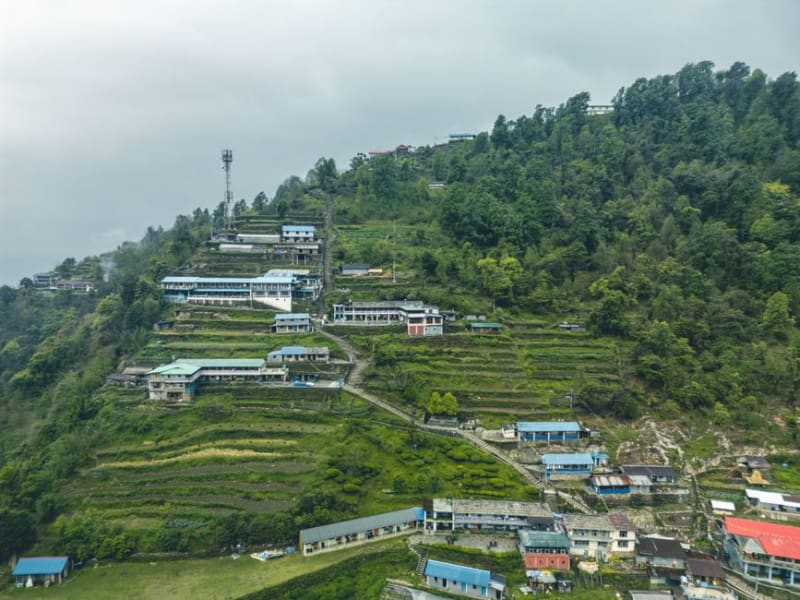 nepal
nepal Daman
A sleepy ridge-top viewpoint on the old Tribhuvan Highway where, on a clear morning, you can see more Himalayan peaks at once than anywhere else in Nepal.
Explore