Chandragiri Hills
"Chandragiri turns an entire day of hard trekking into a ten-minute cable car ride, and I have made my peace with that."
A cable car ride out of Kathmandu's traffic to a ridge with a temple, a Himalayan panorama, and shockingly clean air.
I’ll admit some guilt about how easy Chandragiri Hills makes its own summit. A cable car — the same kind you’d find at a European ski resort, oddly enough, since it was actually built with Austrian engineering support — lifts you from the valley floor at Thankot straight up 2,551 meters in about ten minutes, skipping the multi-hour hike that used to be the only way up.
The Cable Car and the Traffic Below
Boarding at the base station, we watched Kathmandu’s ring road traffic shrink to a chaotic ribbon of horns and diesel smoke within about ninety seconds of leaving the ground. The gondola climbs over dense green forest, and about halfway up, the temperature noticeably drops and the air, freed of the valley’s haze, turns genuinely clear. Lia pressed her face to the glass the whole way, which is a fair response to watching an entire city’s worth of pollution simply drop away beneath your feet.
Bhaleshwor Mahadev and the Panorama
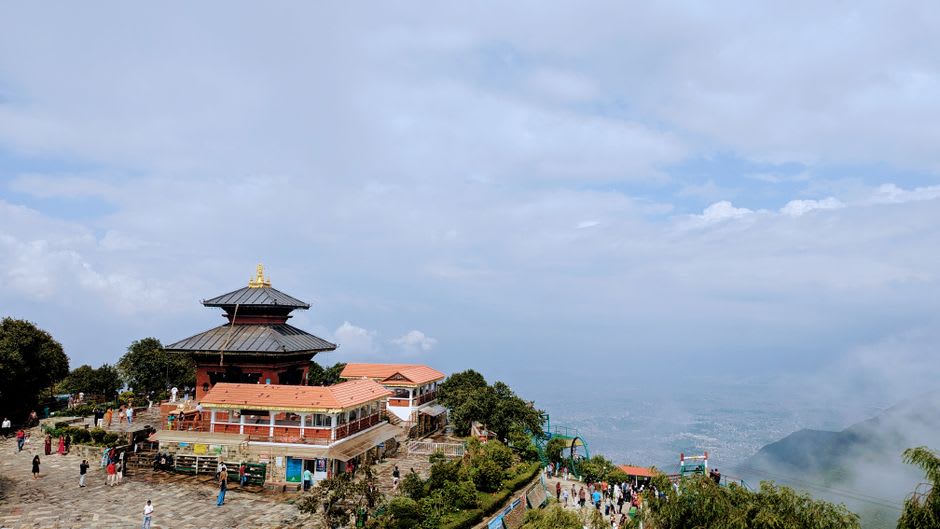
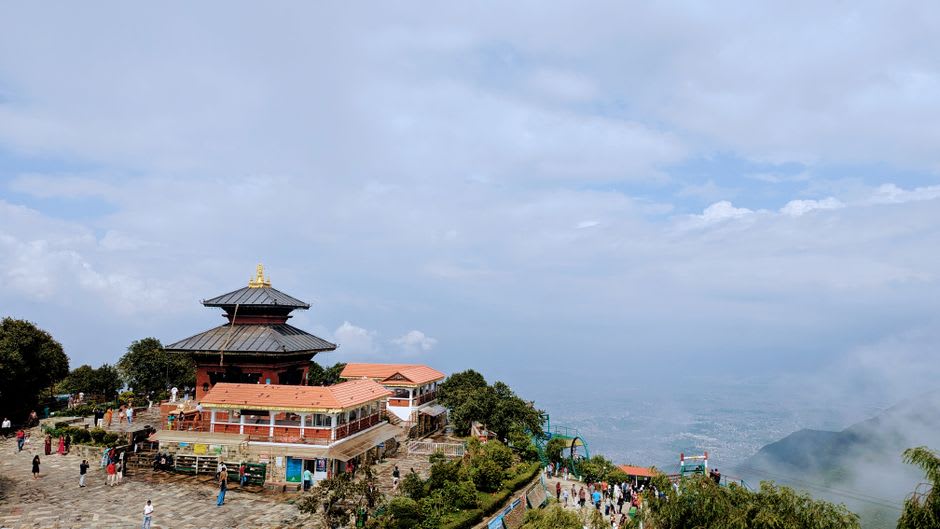
At the top, a short walk leads to the Bhaleshwor Mahadev temple, a modern Shiva shrine built around what’s said to be an ancient shivalinga, with prayer flags strung between the surrounding trees in every direction. Beyond the temple, a viewing platform delivers the payoff: on a clear day, a genuine 180-degree sweep of the Himalayas, from Annapurna in the west to Everest itself faintly visible to the east, with the entire Kathmandu Valley spread below like a relief map. We got lucky with a rare cloudless afternoon and stood there for the better part of an hour, trying and failing to identify every peak with a phone app that kept disagreeing with itself.
An Easy Half-Day From the City
What makes Chandragiri worth including in a Kathmandu Valley itinerary, beyond the view itself, is how little it demands — no permits, no multi-day planning, just a short taxi to the base station and a return cable car ticket. We were back in Thamel in time for dinner, which felt almost like cheating after the effort most of Nepal’s viewpoints usually require.
When to go: October to December and again in March and April offer the clearest skies for Himalayan visibility. Arrive by early afternoon, since afternoon haze can build over the valley and reduce visibility toward evening.
Keep exploring
More from Nepal
 nepal
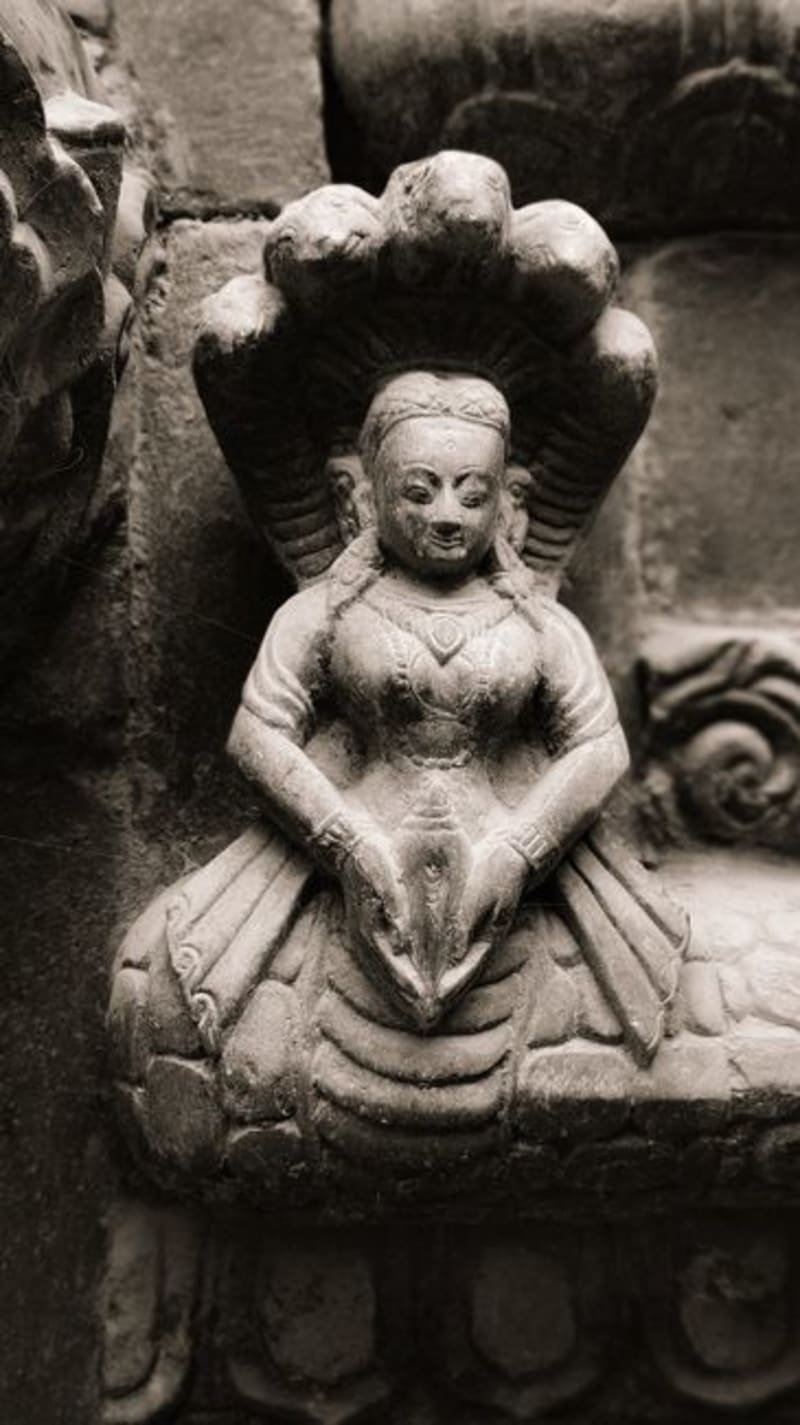
nepal Changu Narayan
Nepal's oldest surviving Hindu temple, a UNESCO site on a quiet ridge that most Kathmandu Valley visitors never reach.
Explore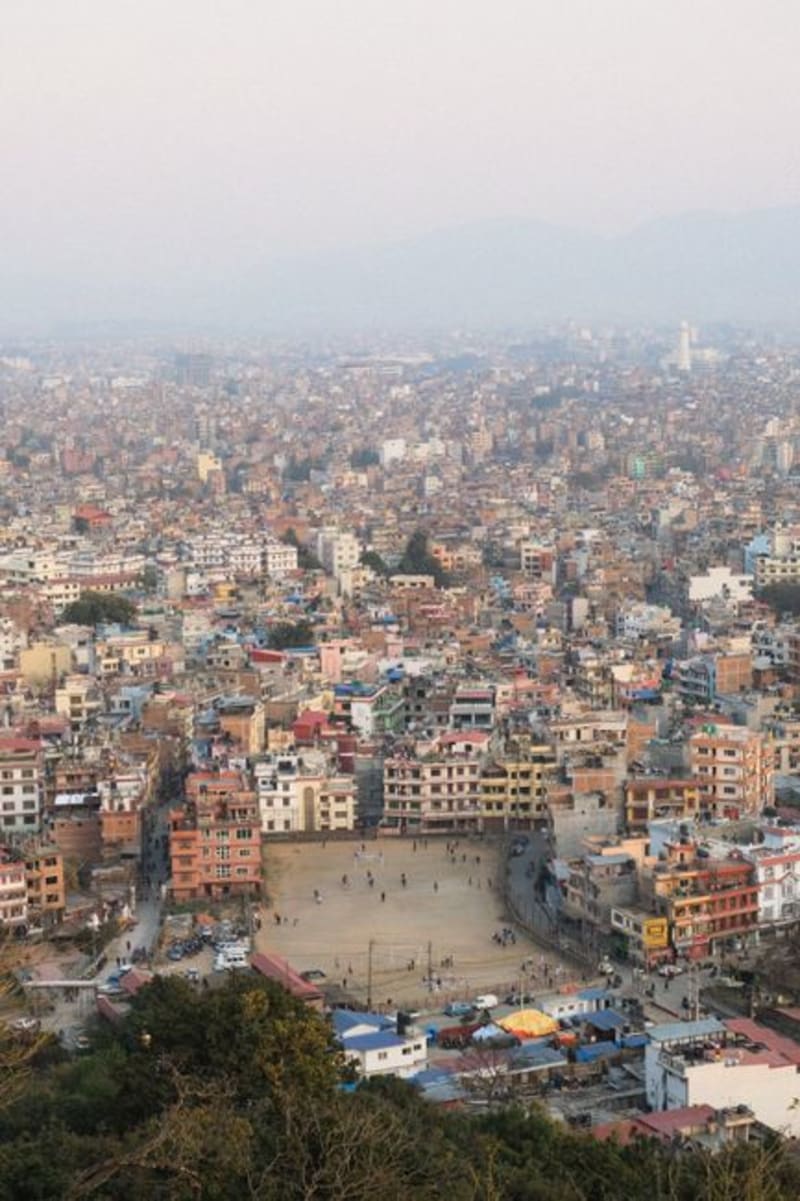 nepal
nepal Chautara
A Sindhupalchok hill town on the eastern approach to Helambu, rebuilt almost entirely since the 2015 earthquake flattened it, with a ridge-top view of the Jugal Himal that most itineraries never get to.
Explore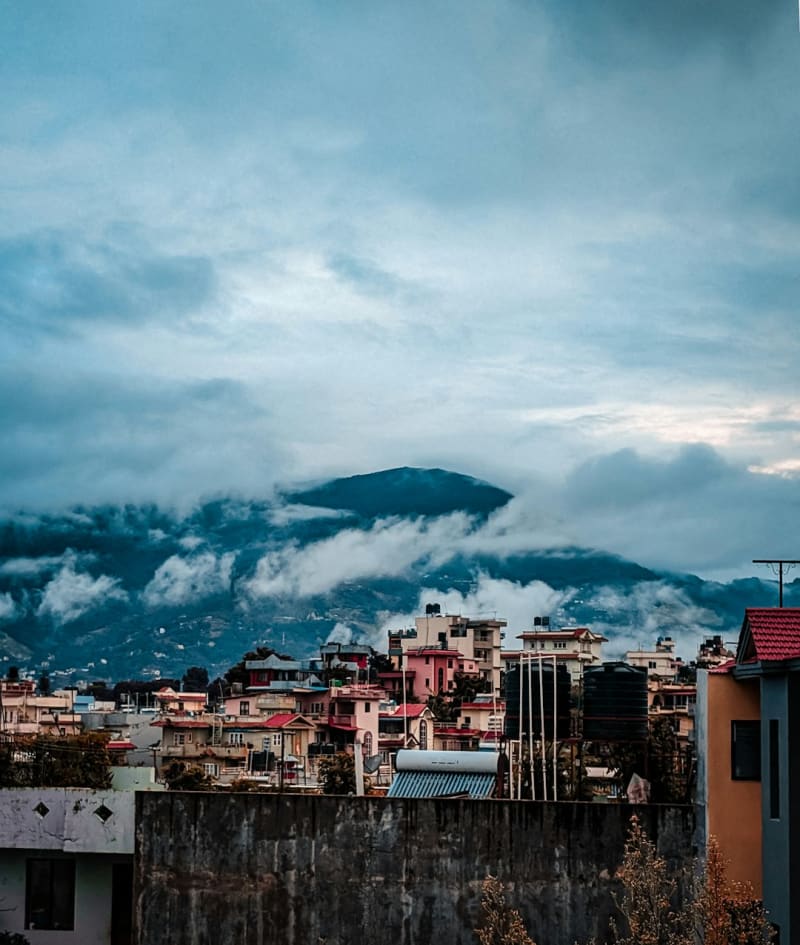 nepal
nepal Chhomrong
The last permanent village before the Annapurna Sanctuary, built on a staircase of a hillside so steep that the town itself is a kind of workout before the trail even starts.
Explore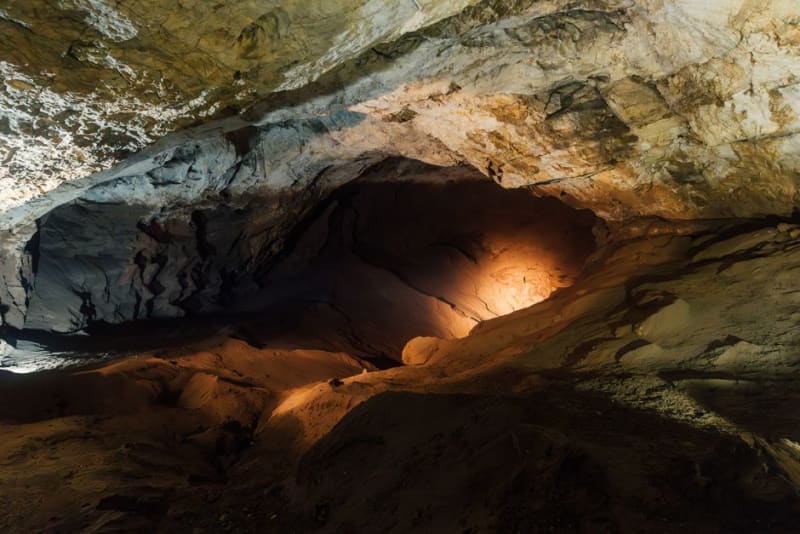 nepal
nepal Chhoser Cave
A 2,000-year-old, multi-story honeycomb of hand-dug caves carved into a cliff face north of Lo Manthang, still only partially explained by archaeologists.
Explore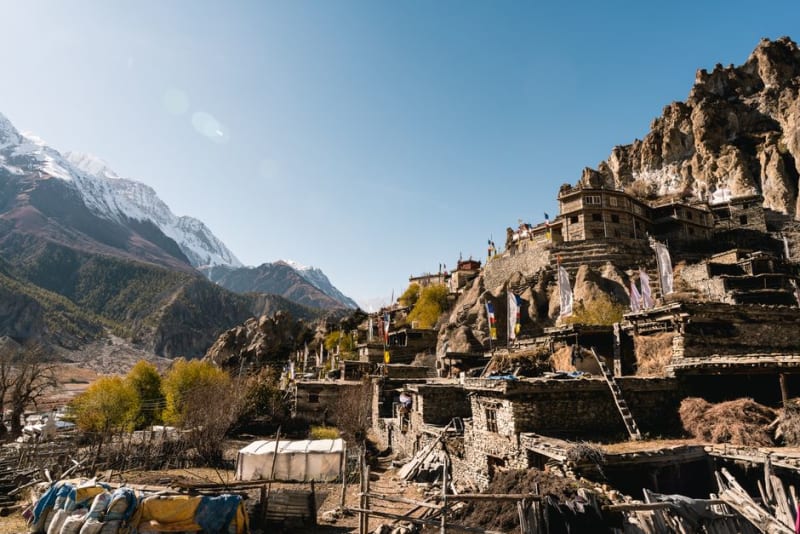 nepal
nepal Chhusang
A river-junction village beneath towering conglomerate rock spires and ancient cave dwellings, where the Kali Gandaki gorge narrows to its most dramatic point.
Explore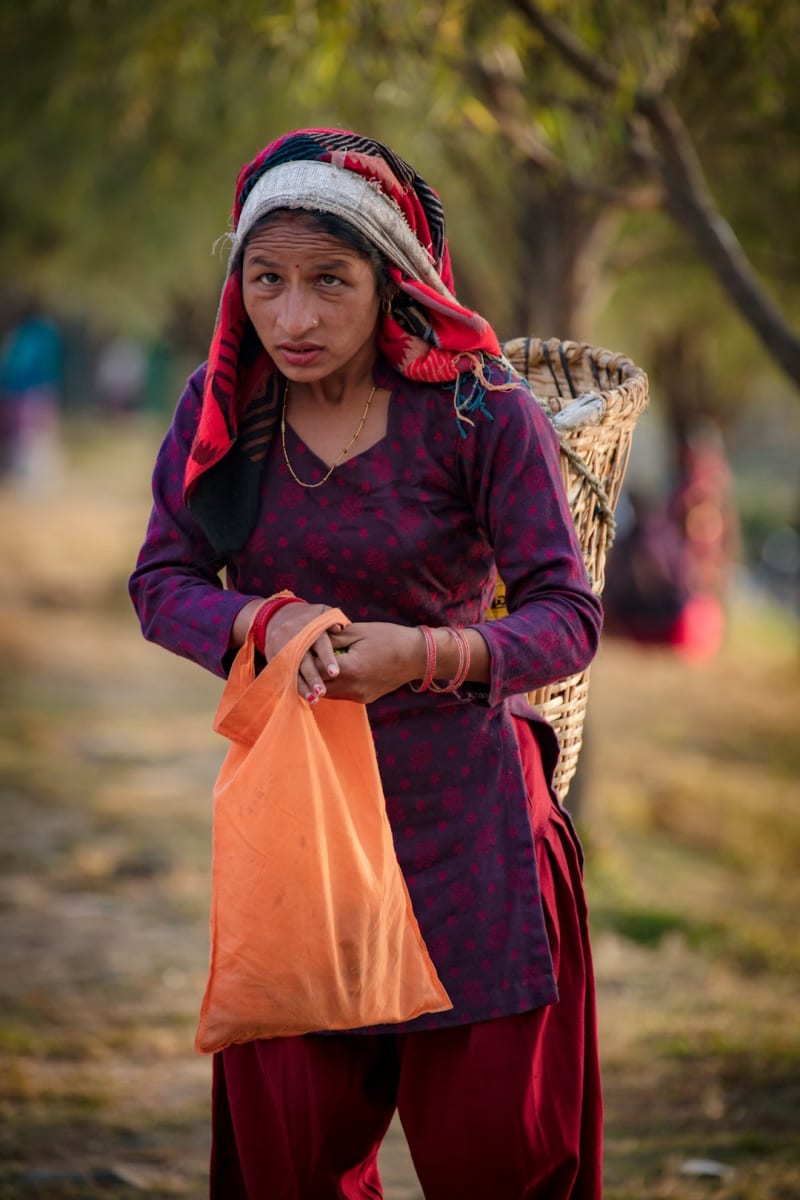 nepal
nepal Chisapani
A ridge-top viewpoint two days' walk from Kathmandu, where the Shivapuri forest gives way to open grassland and, on a clear morning, an unbroken wall of Himalayan peaks from Annapurna to Everest.
Explore