Boudhanath
"Boudhanath is a place that organizes an entire neighborhood around the act of walking in a circle."
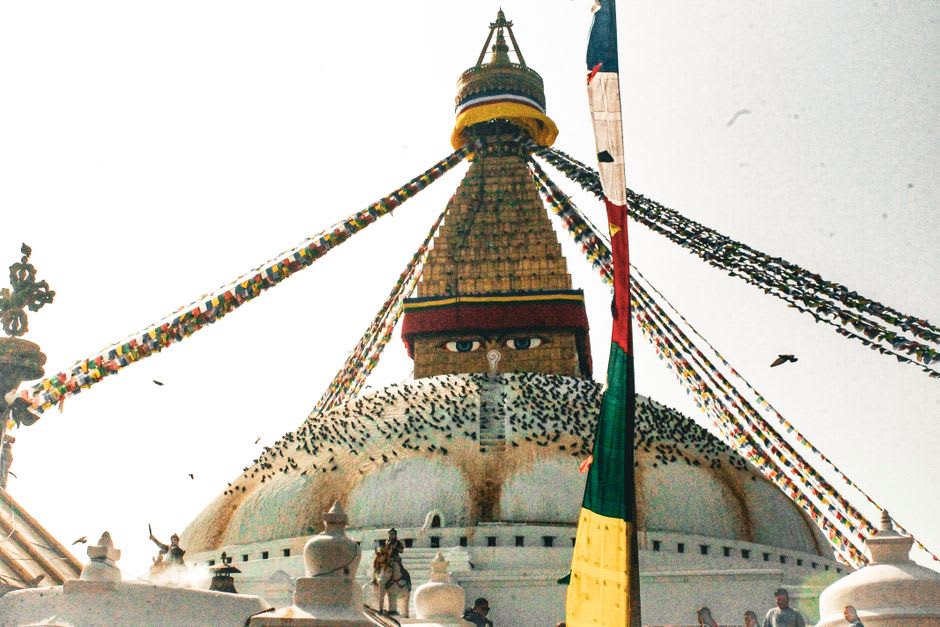
The largest Buddhist stupa in Nepal, its painted eyes watching over a neighborhood of monasteries, maroon robes, and butter tea.
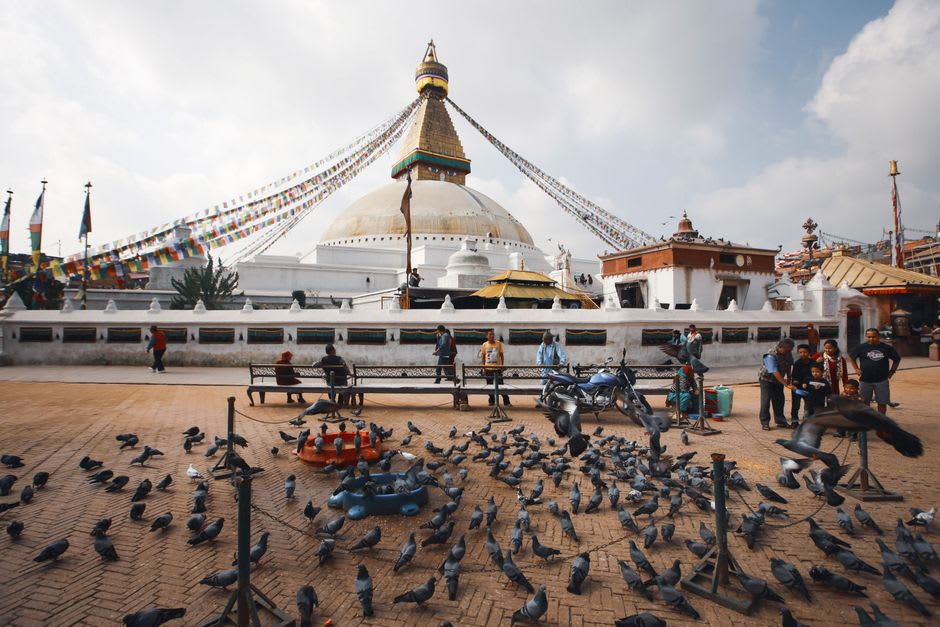
I mentioned Boudhanath in passing when I first wrote about Kathmandu, but the stupa deserves its own entry, because it is not really part of the city so much as its own gravitational center — a Tibetan exile community, a pilgrimage site, and a functioning neighborhood all layered onto the same half-kilometer of ground.
The Kora, Again and Again
The core ritual at Boudhanath is the kora — walking clockwise around the stupa’s base, spinning the brass prayer wheels set into the wall as you pass. Lia and I did our first circuit half-asleep at dawn and our second at dusk, and the crowd changes character completely between the two: morning brings elderly Tibetan women in chubas moving with the unhurried rhythm of people who have done this every day for forty years, while evening brings young monks on their phones, tourists photographing the golden eyes, and incense sellers packing up their stalls. Neither felt more authentic than the other. Both felt correct.
Rooftop Cafés and Butter Tea
The buildings ringing the stupa’s plaza have mostly converted their upper floors into rooftop cafés, and this is the single best vantage point in the neighborhood — eye-level with the painted gaze of the Buddha, watching the kora crowd move below like a slow current. We ordered butter tea, which tastes like hot salted milk with a faint grudge against sweetness, and a plate of momos that arrived scalding and slightly too fast, as if the kitchen knew we’d been standing in the cold since five that morning.
The Monasteries Behind the Stupa
What surprised me was how many working monasteries sit in the lanes just behind the main plaza — you can wander past open doors and hear young monks chanting in unison during afternoon debate sessions, their voices layered over hand claps that punctuate each point of logic. One monastery let us sit quietly at the back for twenty minutes, on the condition that we stayed silent and left our shoes at the door, which felt like a small privilege rather than an obligation.
When to go: Year-round, though October to December brings the clearest skies for photographing the spire against blue. Arrive before 7am for the dawn kora, or after 5pm for the lamp-lighting ritual, when butter lamps are set along the stupa’s base and the whole plaza glows.
Keep exploring
More from Nepal
 nepal
nepal Butwal
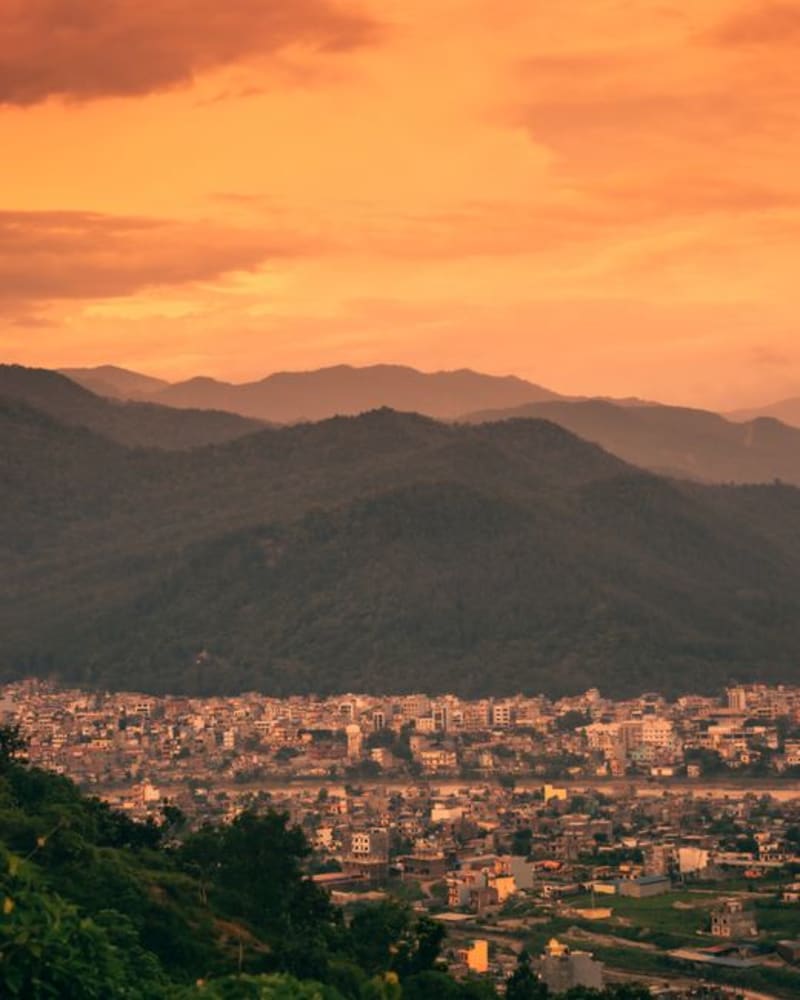
A fast-growing crossroads city where the Terai plains meet the first hills, and where the Tinau River carves a surprisingly scenic gorge right through downtown.
Explore nepal
nepal Chainpur
A centuries-old Newari trading bazaar in the eastern hills, famous for hand-beaten brass and copper craft and an architecture nobody restored for tourists.
Explore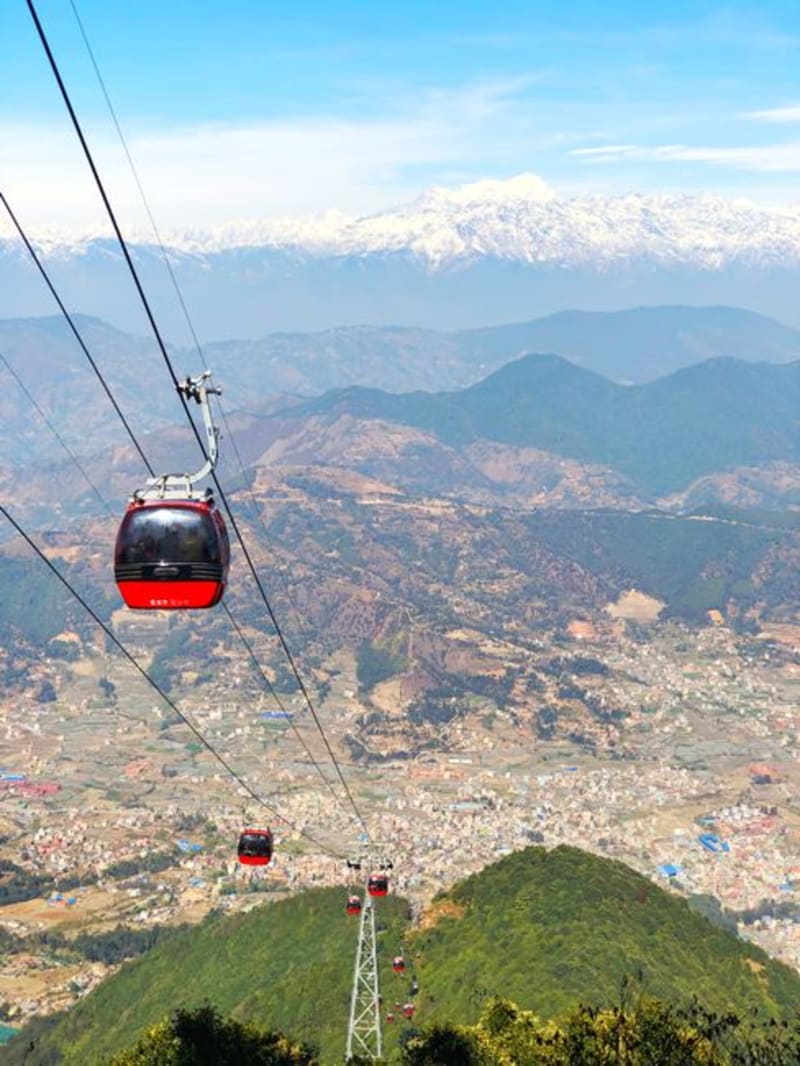 nepal
nepal Chandragiri Hills
A cable car ride out of Kathmandu's traffic to a ridge with a temple, a Himalayan panorama, and shockingly clean air.
Explore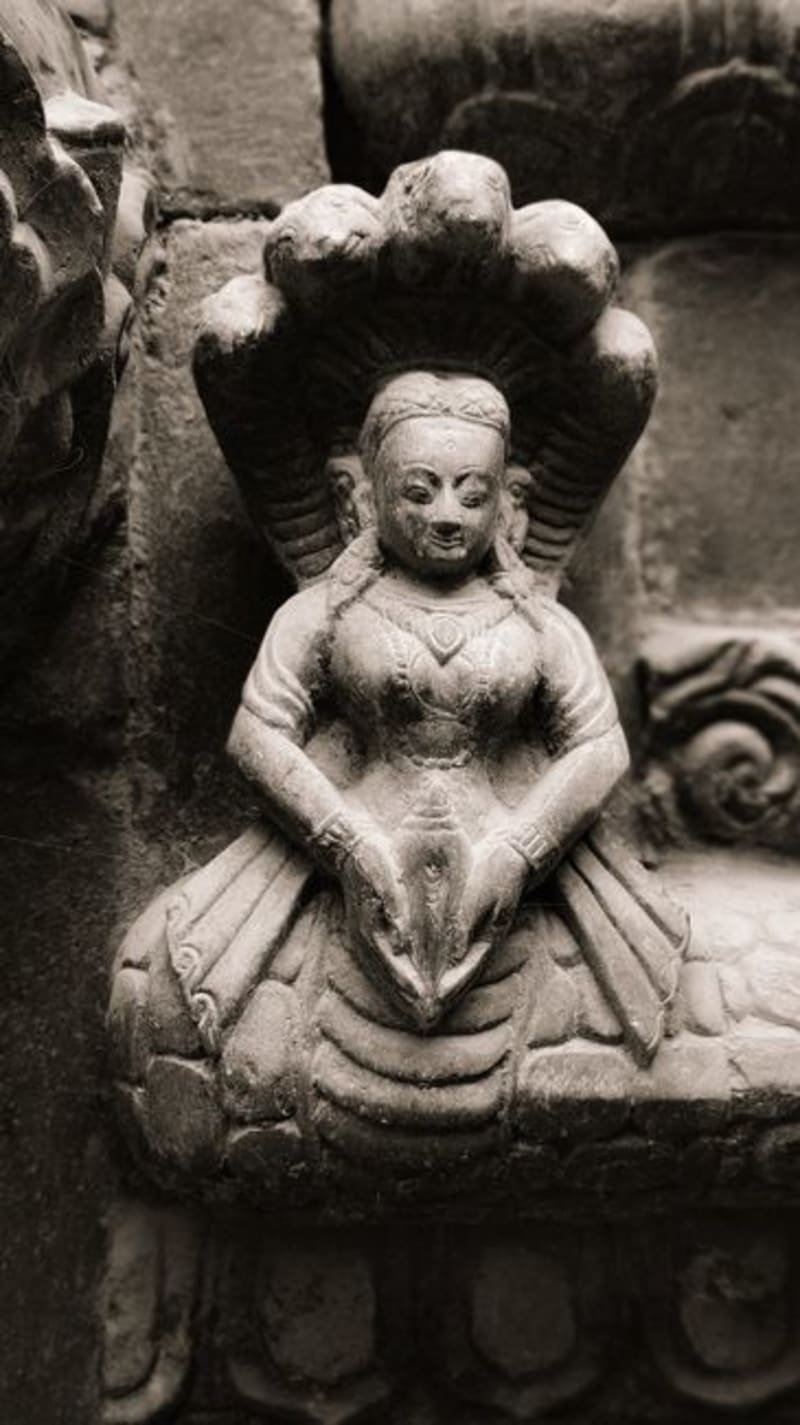 nepal
nepal Changu Narayan
Nepal's oldest surviving Hindu temple, a UNESCO site on a quiet ridge that most Kathmandu Valley visitors never reach.
Explore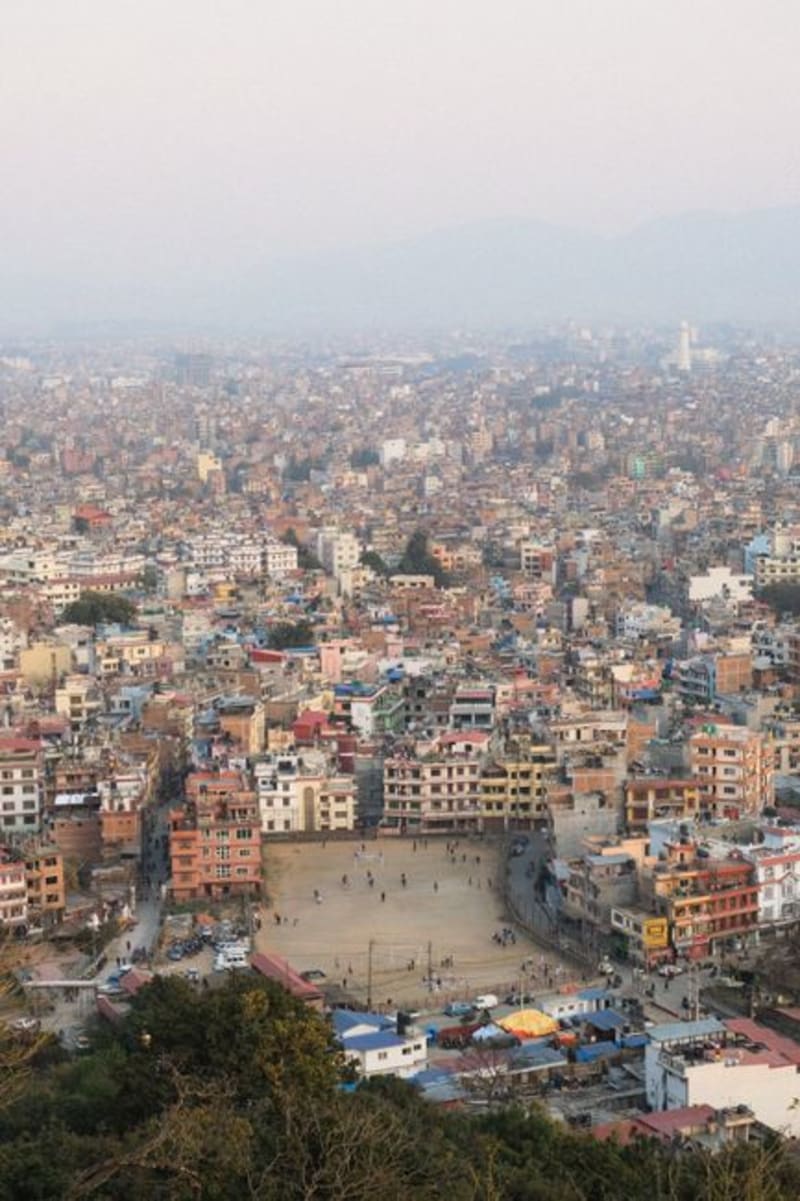 nepal
nepal Chautara
A Sindhupalchok hill town on the eastern approach to Helambu, rebuilt almost entirely since the 2015 earthquake flattened it, with a ridge-top view of the Jugal Himal that most itineraries never get to.
Explore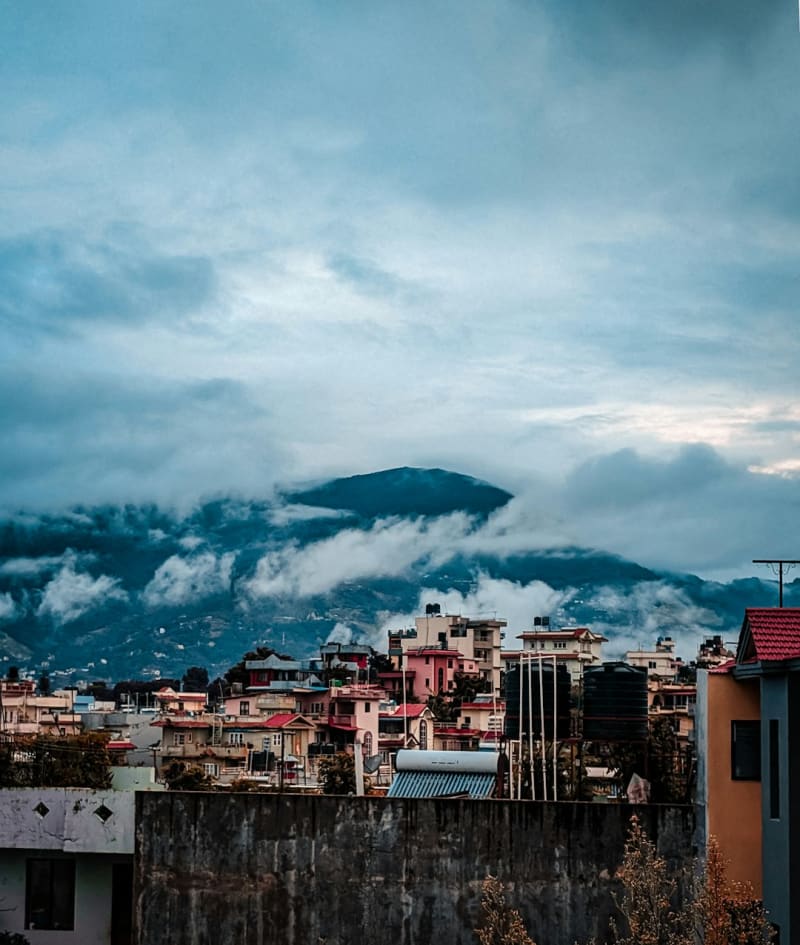 nepal
nepal Chhomrong
The last permanent village before the Annapurna Sanctuary, built on a staircase of a hillside so steep that the town itself is a kind of workout before the trail even starts.
Explore