Phek
"Shilloi Lake at dawn looked like someone had folded the sky in half and laid it down between the pines."
The road to Phek district climbs through a landscape that gradually simplifies itself — fewer houses, fewer terraced fields, more pine forest, wider sky. I had come specifically to reach Pfütsero, which sits at 2,133 metres and bills itself as the highest town in Nagaland, but the drive itself through the Chakhesang heartland was the thing that slowed me down. At one point the road crests a ridge and the view drops away on both sides simultaneously, the Doyang valley on one flank and the hills folding toward Manipur on the other, and you understand suddenly why the Chakhesang have always described their territory as a place between.
Shilloi Lake is the centrepiece of the district and one of the most unusual bodies of water in the northeast. It sits in a broad, shallow bowl at 2,000 metres, surrounded by pine and rhododendron forest, and its surface is so still on calm mornings that it becomes a perfect mirror — the clouds above reproduced upside-down in the water with a fidelity that makes the ground feel uncertain. The lake is considered sacred by local communities and fishing has been prohibited for generations, which is why the trout population is both visible and enormous, moving in slow groups beneath the surface. I stood at the bank for twenty minutes watching them and felt the particular peace that comes from observing something that has never learned to be afraid of humans.

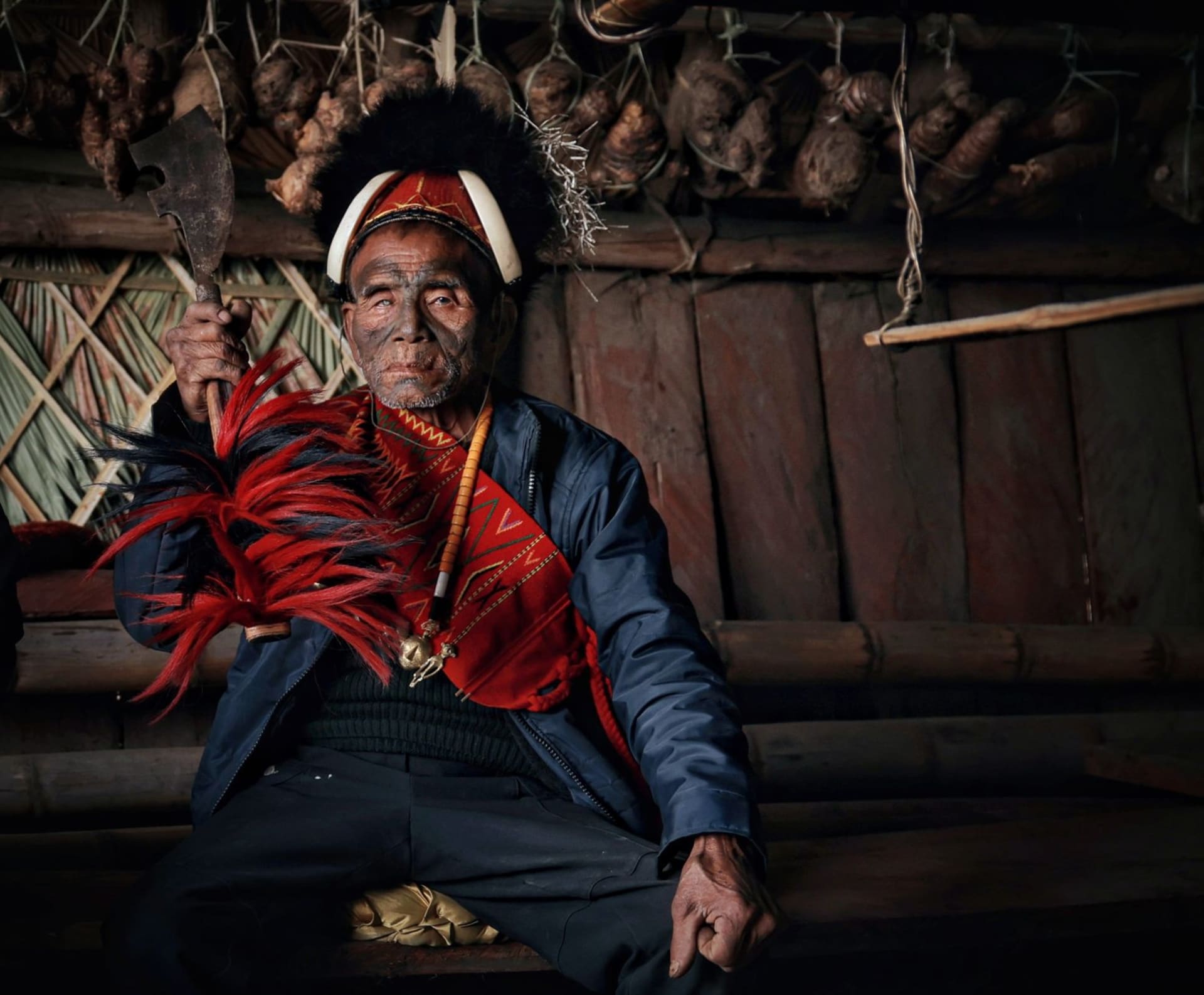
Pfütsero town is small, cool, and quiet — the kind of place where the morning market is over by eight and everyone seems to know exactly where they are going. The Chakhesang people have a distinctive weaving tradition, and the women’s shawls here use a different palette from the Angami or Lotha — deeper reds and blacks with a specific geometric pattern called the Chakhesang pfülhoulie, which appears in both formal and everyday wear. I bought one from a woman who was weaving it in her front room, on a backstrap loom attached to the wall, and wore it for the rest of the trip.
The circuit of smaller villages around Phek town is worth a day of slow walking. Chizami village has a women’s empowerment collective that produces pickled bamboo shoot and smoked meats for sale, and the collective’s small shop also serves food — I ate there twice, both times getting a rice plate with smoked pork and fermented mustard that I thought about for weeks afterward. The collective was started in the 1990s and has the quiet confidence of an institution that has figured out what it is doing.

What distinguishes Phek from the rest of Nagaland’s tourism is its understatedness. There is no festival here that draws international attention, no marquee attraction that appears on itineraries. There is a lake, some villages, a high town with cold air, and the sense that you have arrived in a place that is in no hurry to be discovered.
When to go: March through May for rhododendron blooms on the Pfütsero ridges. October and November for clear skies and post-harvest village life. December is cold at this altitude — bring layers — but the pine forests under frost have a specific, quiet beauty.