Asia
Nagaland
"I had no idea India kept something this wild in reserve."
I arrived in Dimapur on a night bus from Guwahati, bleary-eyed and underprepared, and within an hour I understood I had crossed into somewhere categorically different. The northeast of India has always been a world apart from the subcontinent that tourists typically navigate — Nagaland even more so. The Nagas spent decades resisting incorporation into India, and that spirit of stubborn independence is still everywhere: in the way people carry themselves, in the churches that dot hillsides originally shaped by animist ritual, in the pride with which each tribe wears its own specific pattern of shawl. Nobody here is performing for you. That is the first thing that catches you off guard.
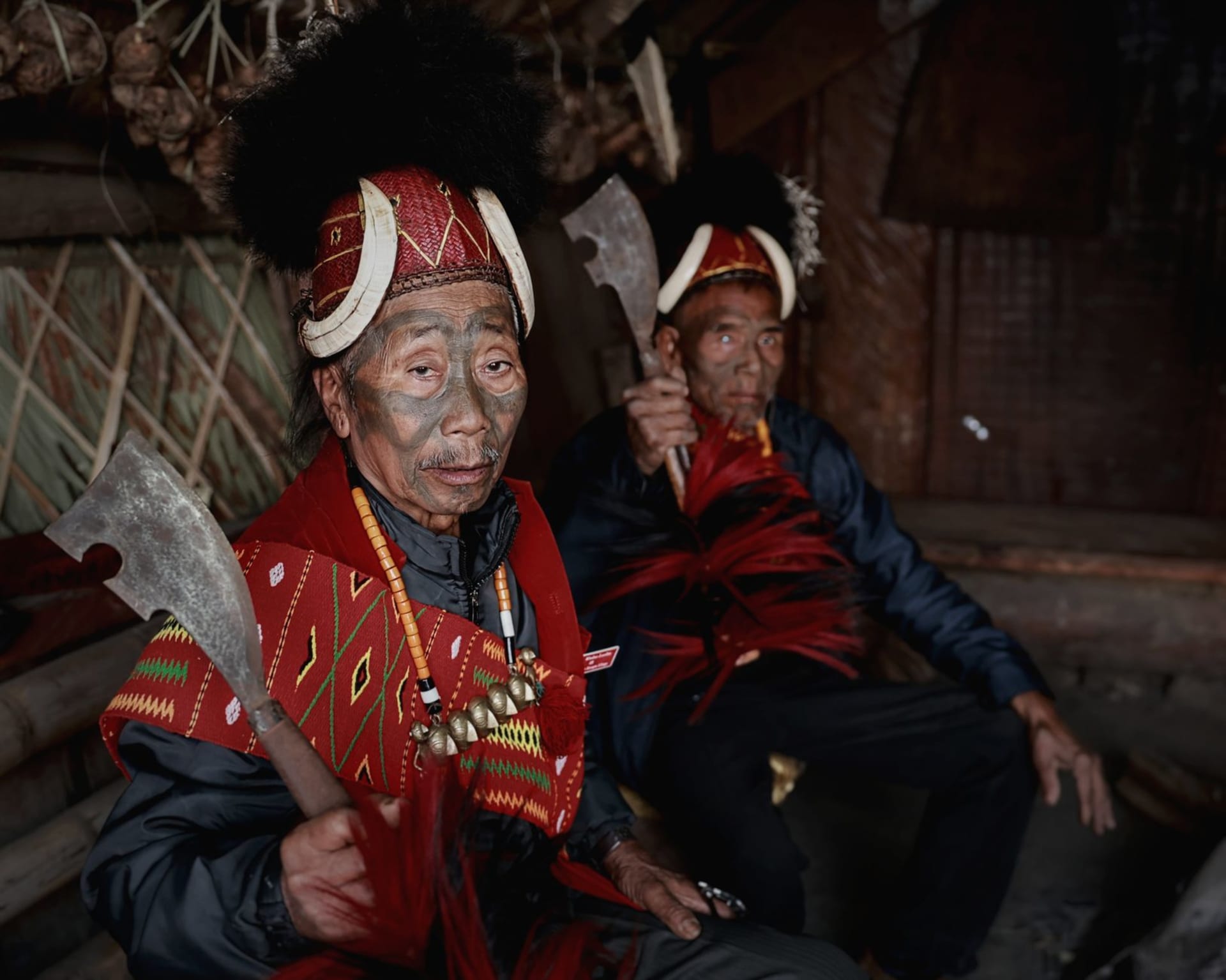
I timed my visit for the Hornbill Festival, held every December at Kisama Heritage Village just outside Kohima. For ten days, the sixteen major Naga tribes converge in traditional dress — hornbill feathers, boar tusks, warrior necklaces of red-dyed cane — for dances, music, and the kind of inter-tribal competition that feels genuinely ancient even when it happens on a stage. The morung, or traditional bachelor dormitories, are reconstructed for the festival grounds, each one distinct in its wood carvings and skulls. I spent an entire morning with a group of Konyak elders from Mon district, men with tattooed faces who had been head-hunters in their youth. They were seventy years old and impeccably dressed and laughed easily. The festival can feel orchestrated in its outer ring — handicraft stalls, beer gardens — but lean past that layer and it becomes something much realer.
Outside of the festival, Nagaland rewards the genuinely curious traveler. Kohima’s World War II cemetery, where the Allies halted the Japanese advance into India in 1944, is one of the most quietly devastating war memorials I have ever stood in. The drive north to Khonoma village, considered the first green village in Asia, winds through terraced rice fields and oak forests where hornbills actually appear if you keep still. The food is unlike anything else in India: smoked pork with bamboo shoot, fermented soybean chutney called akhuni, dried chili rice that sits heavy and satisfying through long walks in the hills.
When to go: December for the Hornbill Festival (first ten days of the month). October and November offer cooler temperatures and clear skies for trekking without festival crowds. Avoid June through August — the monsoon turns the mountain roads into genuine gambles.
What most guides get wrong: They treat Nagaland as a festival destination and nothing else, as if Kisama is the entire point. It is an entry point. The real depth is in the villages — Khonoma, Touphema, the Konyak country around Mon — where tribal life continues on its own terms. You need a Protected Area Permit, which is straightforward to obtain, but many travelers are put off by the bureaucracy and never go. That is their loss and, frankly, your advantage.