Mon District
"He showed me the tattoo on his chin, put there when he was fourteen after his first raid. Then he laughed and offered me rice beer."
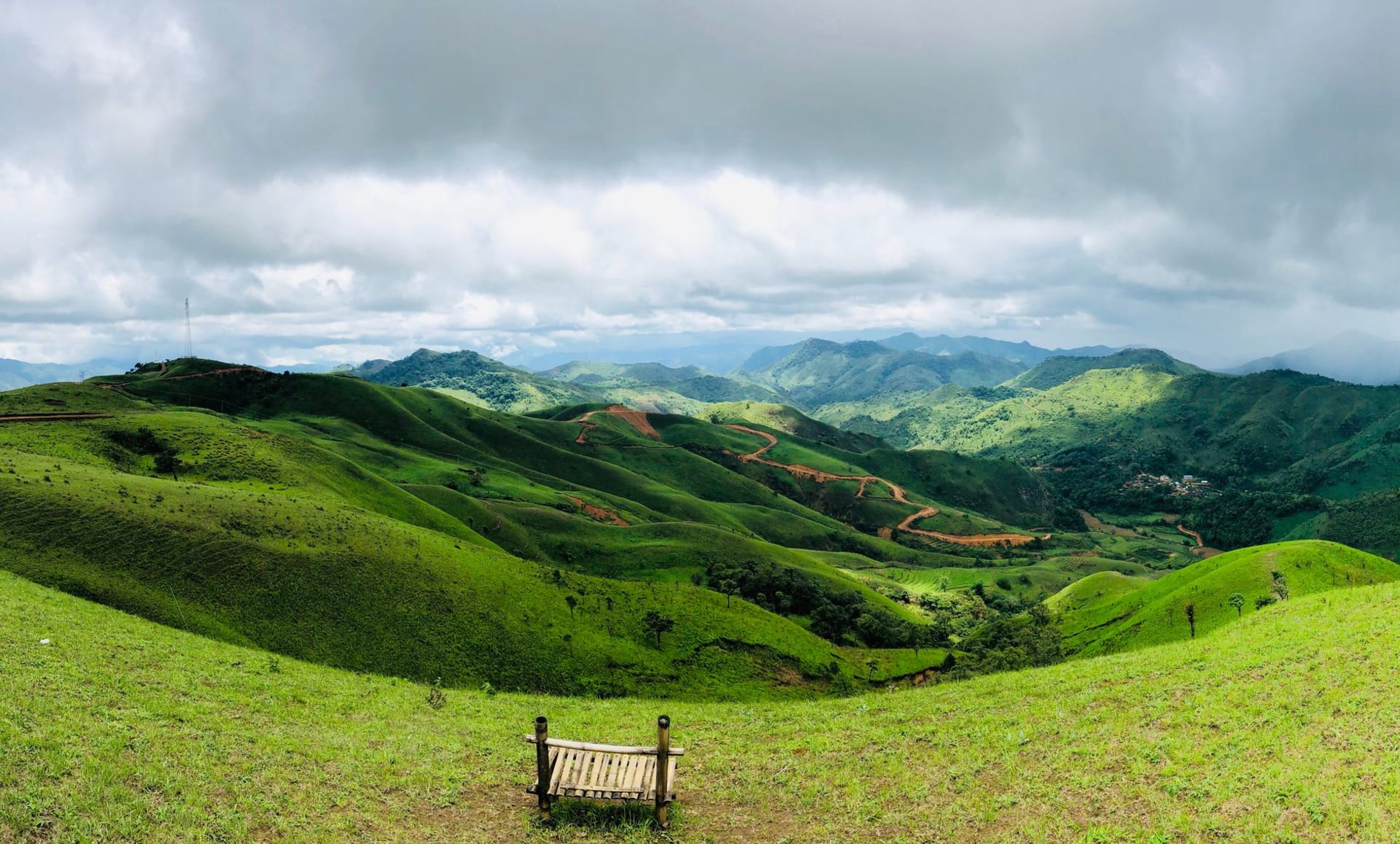
Mon sits at the end of a long road from Kohima — roughly twelve hours of mountain driving, with the last stretch descending through dense forest into a lowland river basin that feels nothing like the rest of Nagaland. The air changes. It gets heavier, more tropical, full of something green and alive that the higher ridges don’t carry. I arrived at the town of Mon at dusk, covered in red dust from an unsealed section of road, and ate pork with fermented bamboo at the only restaurant still open, listening to the sounds of the Konyak village across the valley slowly going quiet for the night.
The Konyak are the largest of the Naga tribes and historically the most feared — their warriors were headhunters who decorated their longhouses with the skulls of enemies and tattooed their faces and chests in patterns that recorded each raid. The practice ended officially in the 1960s when Christianity and the Indian government arrived simultaneously, but the generation that came of age before that transition is still alive, still present, and still tattooed. These men and women are in their eighties now. Their faces are remarkable — dark geometric lines across the chin, cheeks, and forehead, faded slightly but still legible, still telling a story that was written in violence and that they carry with a complete absence of shame.

Longwa village, about forty kilometres from Mon town, straddles the India-Myanmar border — the chief’s longhouse is physically divided between two countries. The Angh, or chief, receives visitors in his traditional house, which still displays skulls above the entrance and has the ancient quality of a place that has been continuously inhabited by someone important for centuries. When I sat with him he wore a necklace of tiger claws and brass pendants and spoke in Konyak through an interpreter about the old life — the raids, the relationships with other villages, the meaning of the tattoos. He was not nostalgic exactly. He was precise. This happened, he said, and this is what it meant.
The landscape around Mon rewards extended walking. The Tizit area has weekly tribal markets where Konyak villagers from across the district gather — not for tourists, not for festival, but because the market is the market and has been for generations. I spent a morning there watching trade in medicinal roots, woven cloth, locally distilled spirits, and live chickens, understanding perhaps fifteen percent of what was being said and feeling genuinely lucky to be there at all.

Getting to Mon requires both effort and a Protected Area Permit, and the combination filters out the purely casual visitor. That filtration is one of Mon’s great virtues. The people you meet there — researchers, photographers, the occasional serious traveler — tend to be people with genuine purpose, and the conversations you have in the guesthouses at night, over cheap whisky and smoked meat, are among the better ones available in the northeast.
When to go: November through February for dry weather and manageable roads. March brings warmth and the forests flush green. The annual Aoleang festival in April is the Konyak’s own celebration and worth timing a visit around if the permit logistics can be arranged.