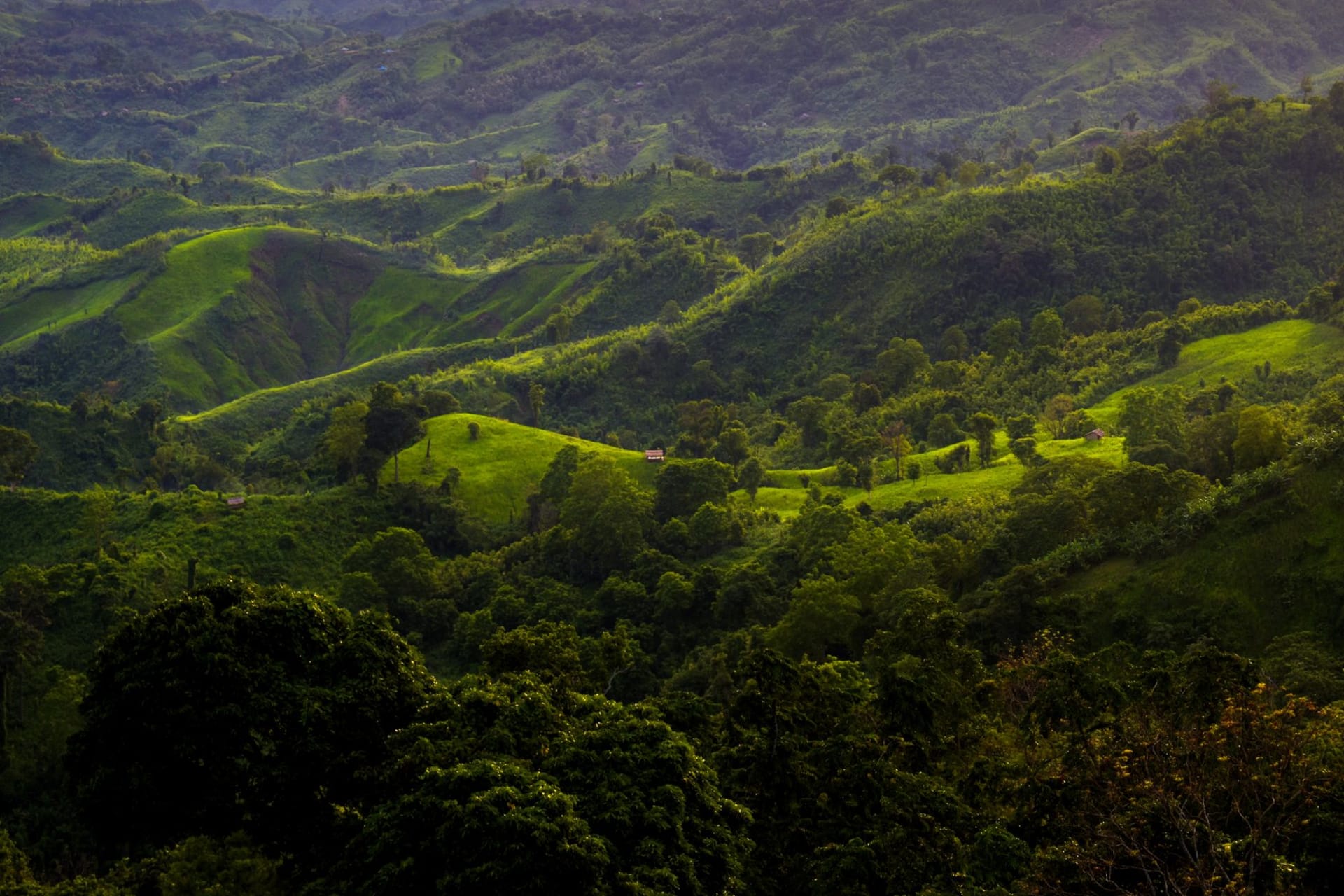
Dzükou Valley
"At 2,452 metres with no phone signal, I realized I had been holding my breath for three hours."
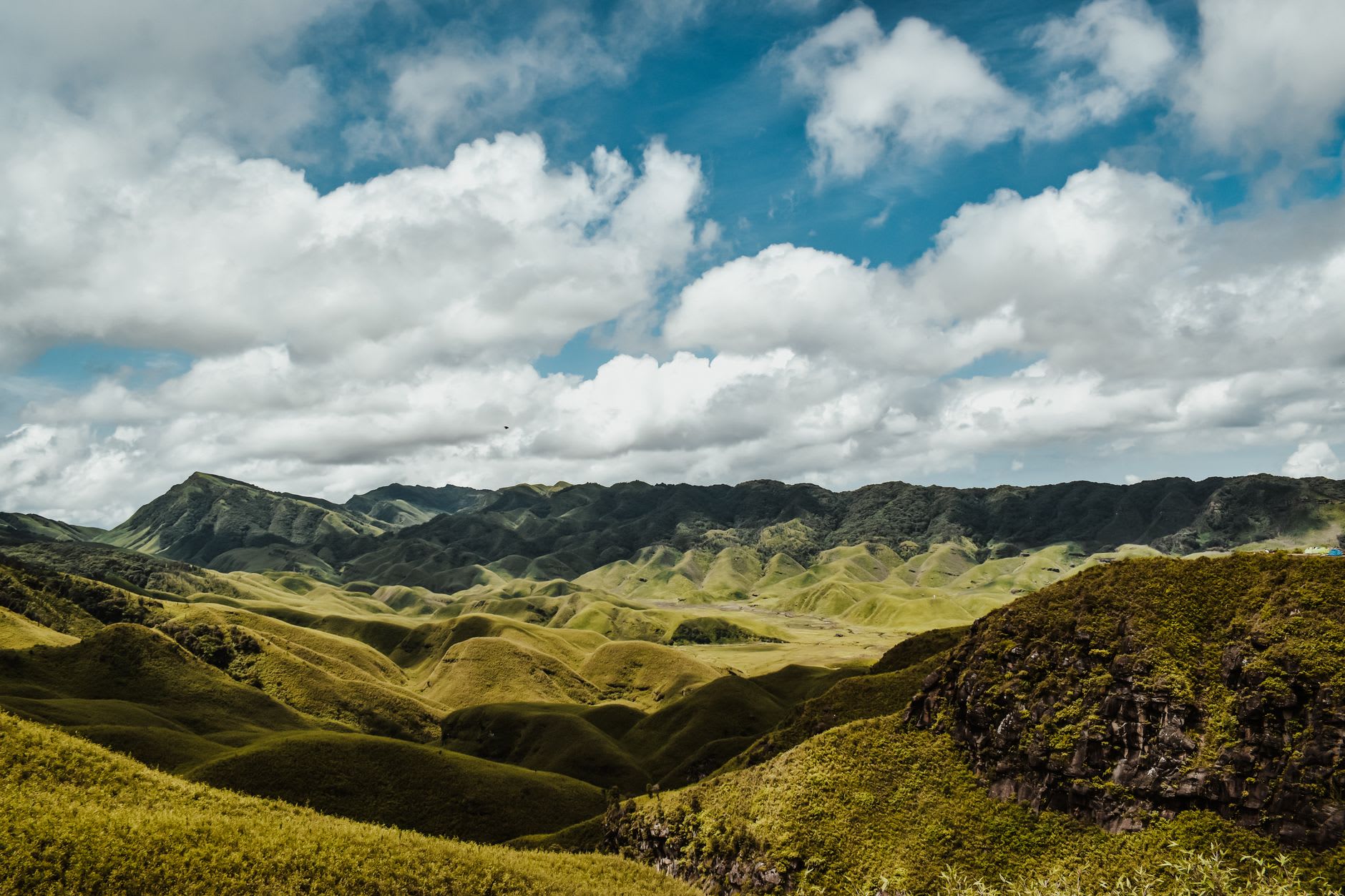
I reached the Dzükou Valley after a three-hour climb from the Viswema trailhead, arriving at the ridge just as the clouds broke below me and the valley appeared — a wide, gentle bowl of grassland and forest at 2,452 metres, ringed by bare ridgelines that caught the afternoon sun. There are places that announce themselves with some fanfare, and places that simply reveal themselves in silence, and Dzükou is the second kind. I sat down on a rock and ate biscuits and did not speak for a long time.
The valley is most famous for the Dzükou lily — a white flower with a delicate blue tinge that blooms in July and transforms the meadows into something that belongs more to watercolour painting than to mountain ecology. I came in November, so I missed the lilies but gained the frost-touched landscape of late autumn: the grasses copper and gold, a small river running crystal-clear along the valley floor, the rhododendrons leafless and sculptural against the sky. The valley feels different from everything below it — less inhabited by urgency, somehow, as if the altitude has burned off whatever it is in us that is always moving on to the next thing.
There is a forest department rest house in the valley where you can stay overnight, and I did, which turned out to be one of the better decisions of the trip. The caretaker cooked rice and dal over a wood fire, the smoke filling the small room pleasantly, and after dark the stars were the kind that city people call excessive — too many, too bright, arranged with the abandon of someone who has never heard of light pollution. Walking outside at midnight to find the Milky Way running clean across the valley like a river in the air was the kind of moment that embarrasses you when you try to describe it later.
The valley straddles the border with Manipur and the terrain shifts as you move deeper into it — the forest changes character from oak and rhododendron to stands of bamboo, the bird life diversifying audibly. I spent a morning following the valley floor east, without a specific destination, watching crimson-breasted woodpeckers in the bamboo and a pair of birds I could not identify making a sound like a bicycle wheel needing oil. The return path climbs steeply back to the Nagaland side and in good weather gives views that run fifty kilometres in every direction.
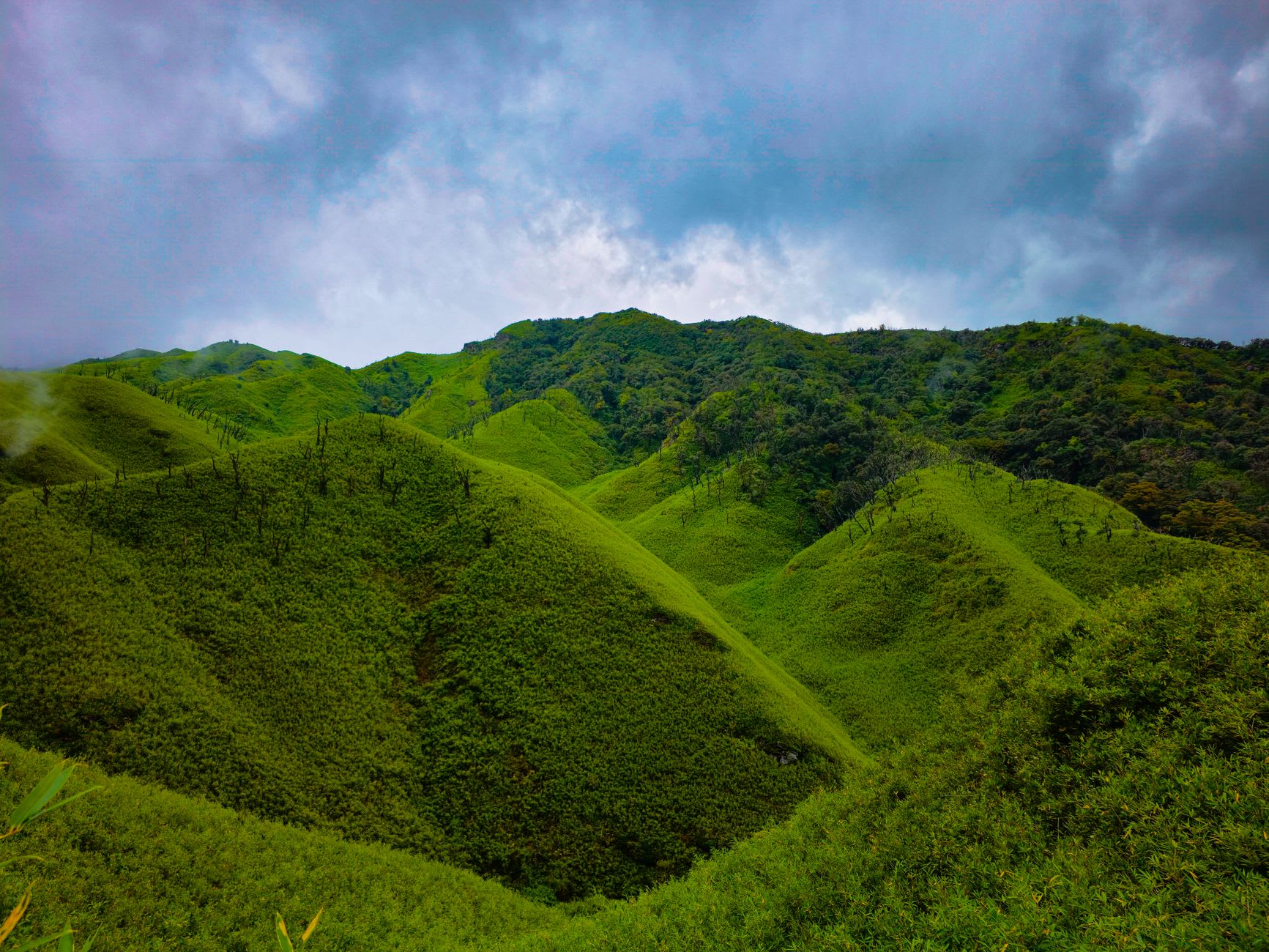
Dzükou demands physical effort and rewards that effort proportionally. The trails are real trails, not paved paths, and the weather can change with the swiftness characteristic of high mountain environments. I watched a clear afternoon become cloud in forty minutes, the valley floor disappearing entirely in mist that smelled of pine and cold earth. This is what high places do, and they do it without asking whether you’re ready.
When to go: July for the famous Dzükou lilies, though this coincides with monsoon conditions and the trails become genuinely slippery. October through December for clear skies and spectacular light. Avoid the trekking entirely during June–August unless prepared for rain and mud at altitude.