Wadi Musa
"The best cup of tea near Petra is not inside Petra — and the second best thing about this town is that everyone keeps that secret."
I arrived in Wadi Musa by bus from Amman at six in the evening, three hours after the Petra gates had closed, and the town received me with the particular warmth of a place that has been welcoming exhausted travelers for two thousand years. The Nabataeans called it Elusa or simply the city of the valley. The Prophet Salih is said to have watered his she-camel at the spring — Ain Musa, Moses’ Spring — still flowing near the old part of town. Every major Abrahamic faith has left a claim on this valley’s water. What I found there in the early evening was a main street of restaurants and phone shops and a minimarket, and a table outside a small place called something like Brothers Restaurant where I ate mansaf — slow-cooked lamb over rice with jameed sauce, fermented dried yogurt with a smell so strong it clears your sinuses before you even pick up the fork — and drank three glasses of sage tea and felt the bus journey evaporate.
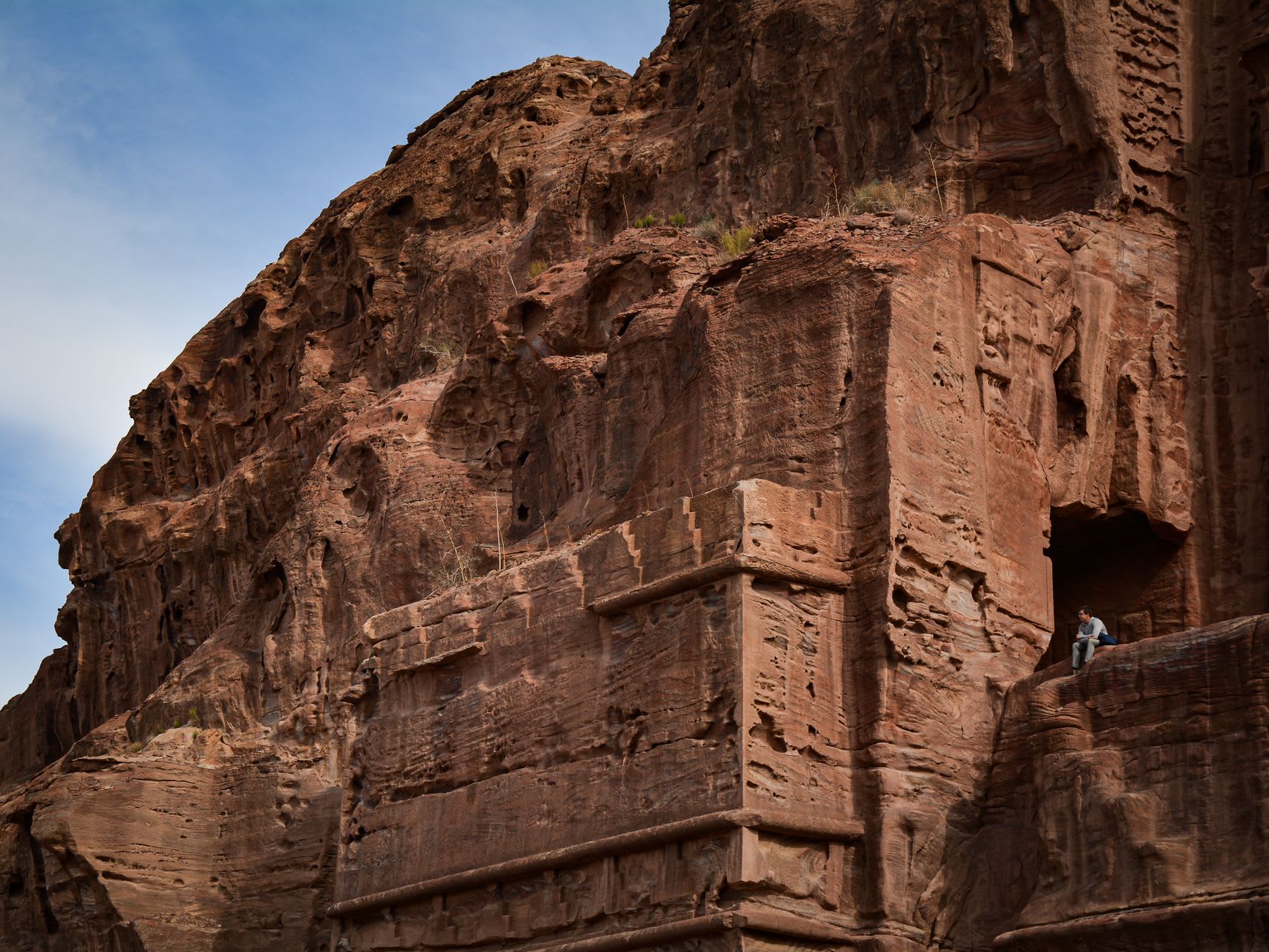
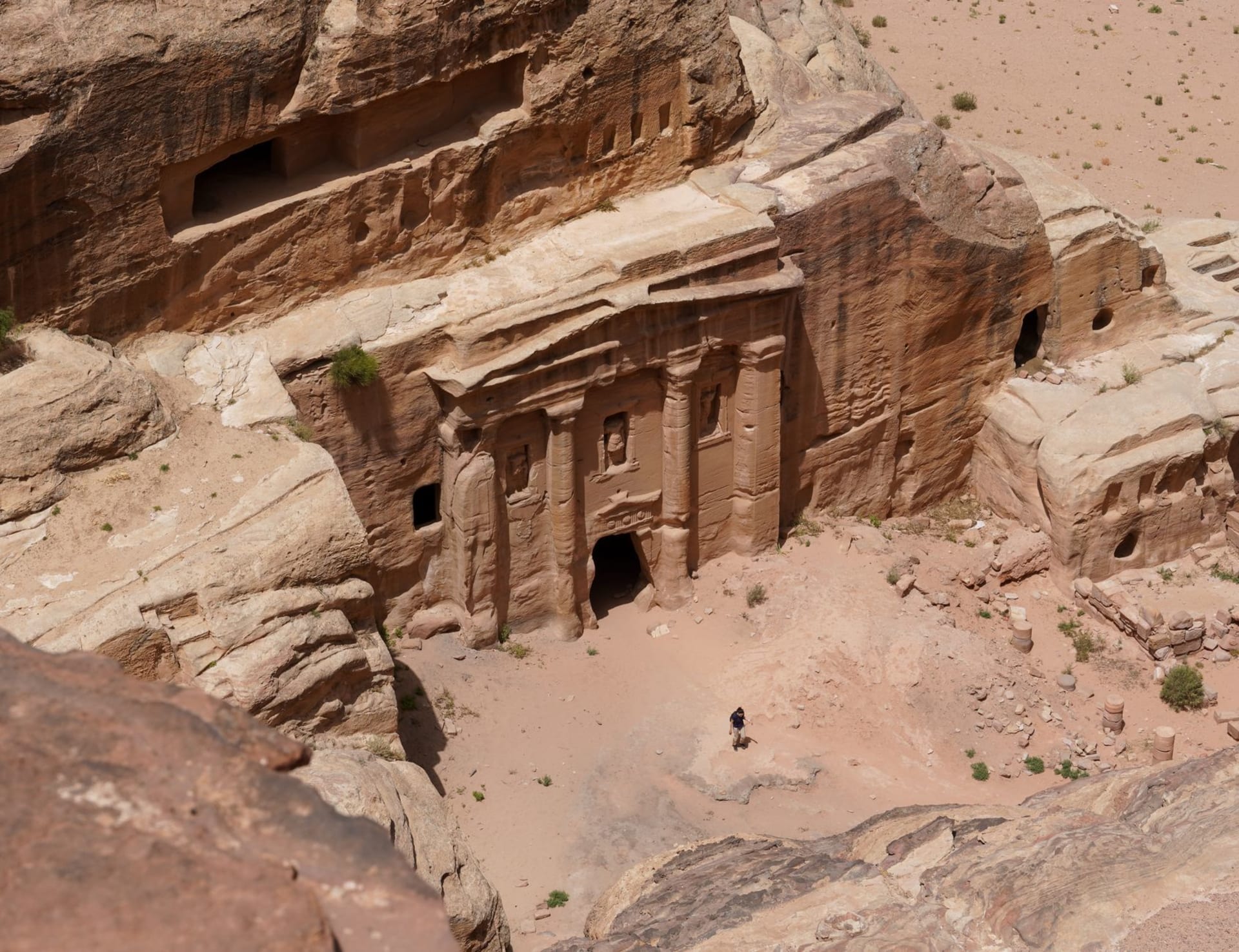
Wadi Musa is not a destination in the conventional sense. It is the gateway to one, and it is where you stay, and it is where you eat before and after Petra, and if you are smart you spend your evening here rather than inside the tourist hotels that cluster at the gate. The town runs up the slope of the wadi in terraces, the houses stacked above each other with views down the valley toward where the Petra mountains begin. In the upper part of town there are grocery stores run by men who will tell you about their cousins in Aqaba and their views on the Jordanian football league and the exact distance in walking minutes to every cave in the district. There is a hammam that has been running in some form since the Ottoman period. There is a woman who sells hand-woven Bedouin textiles from a room in her house on a street I found only by following a sign scrawled on cardboard.
The restaurants are divided by the locals into two categories: those that exist for tourists and those that exist for everyone. The tourist ones cluster near the gate and serve something described as “traditional Jordanian” that involves chicken and rice and a sauce no Jordanian grandmother would claim. The real ones are on the side streets and at the top of the hill, and they serve maqluba — upside-down rice with eggplant and lamb — and musakhan — roasted chicken on flatbread with sumac and caramelized onions — and foul, the slow-cooked fava beans that are the breakfast of half the Arab world and are, when made properly, one of the great simple pleasures of being alive. I ate foul with olive oil and fresh tomato every morning for three days and arrived at Petra having consumed something that the Nabataeans, in some form, would have recognized.
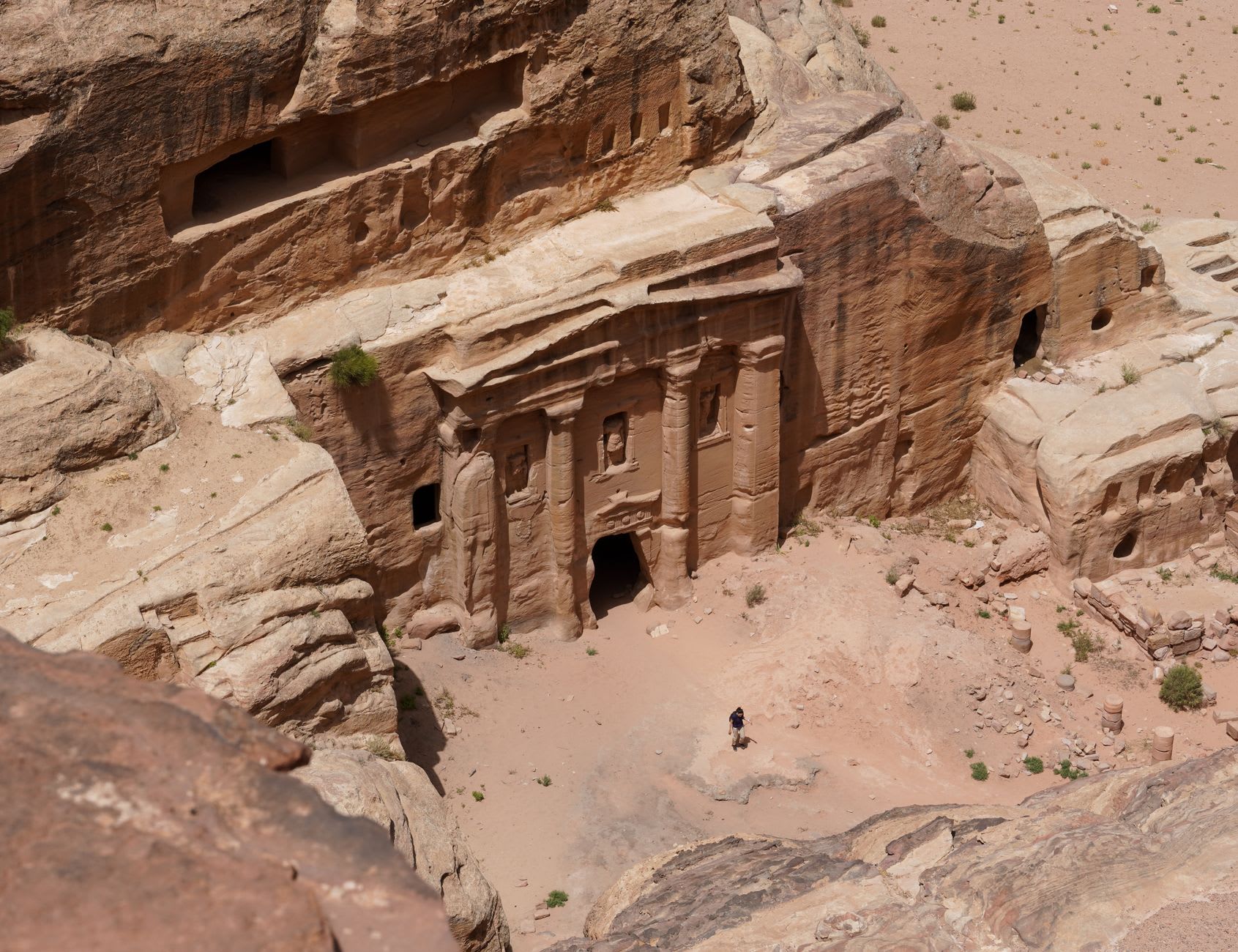
Ain Musa, Moses’ Spring, is a few minutes’ walk from the main street and is easily missed — it sits in a small domed room beside the road, the water emerging from the rock in a thin stream that feeds a tank and then runs down into the valley. It is not spectacular by any visual measure. But it is continuous. The same water has been emerging from that rock since before the Nabataeans arrived, and it made this whole corner of the desert habitable, and it is still flowing, and the stone around it is dark and cool and smells of water in the way that only sources in arid land do — intensely, gratefully.
When to go: Wadi Musa is livable year-round, but the best time to be based here is October through April, when the temperature in the morning is brisk and you can walk to the Petra gate in twenty minutes without suffering. Avoid the very cheap hotels at the gate — they serve the function of proximity but nothing else. A mid-range guesthouse on the main street, with a balcony facing the valley, is worth whatever modest premium it costs.