Middle East
Nabataean Desert
"A civilization that carved its whole world from living rock and then vanished."
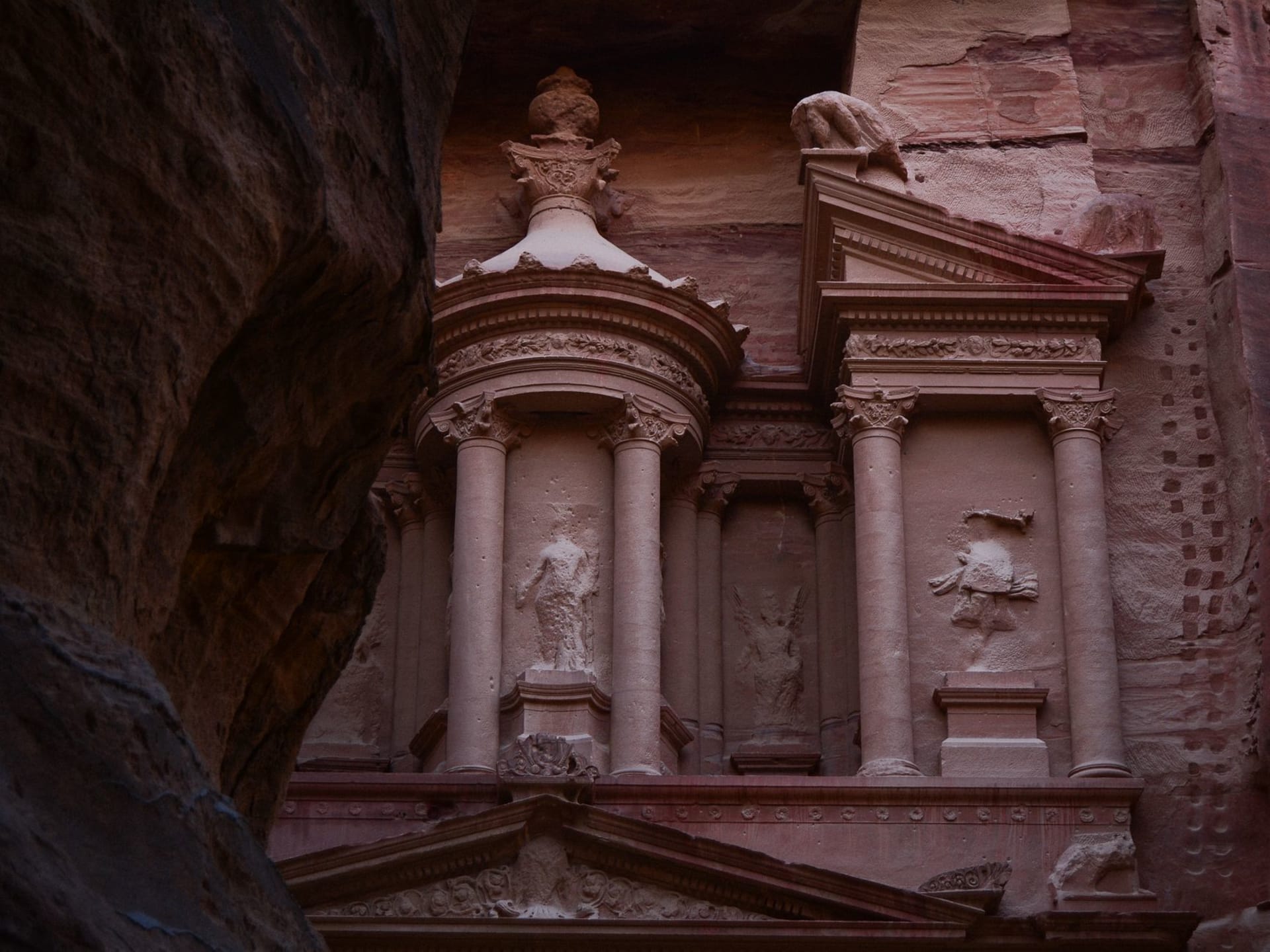
I arrived at the Siq before dawn on purpose. Not because any guidebook told me to — most of them say “early morning is best” as a throwaway line — but because I wanted to be inside that canyon before the light changed and before anyone else arrived. Walking through the narrow slot of sandstone in the dark, hands brushing the walls, the rock still cold from the night, feeling the path curve and the walls lean closer, I understood something about the Nabataeans that no museum panel had prepared me for: these people did not merely build in the desert. They built with it. The Treasury appeared at the end of the Siq not like an archaeological site but like an apparition, the pale rose facade catching the first horizontal light and glowing, and I stood there genuinely struggling to believe human hands had carved it.
The Nabataean empire stretched from the Hejaz to the Sinai, controlling the frankincense and spice routes that connected Arabia to the Mediterranean world. Petra was their capital, but the desert around it is full of their traces — the carved water channels cut into sandstone hillsides, the ancient trade roads visible as faint lines across the wadi floors, the caravanserai ruins where traders once stopped and bargained. The high place of sacrifice above Petra gives you the whole city spread below, the colonnaded street, the royal tombs, the Monastery hidden in the mountains to the north. Most visitors see the Treasury and leave. That is like visiting Paris and going only to the train station.
Wadi Rum, two hours south, is Nabataean territory by geology if not strictly by political history — the same red sandstone formations, the same sense of scale that refuses to cooperate with human expectation. Bedouin tea served from a battered brass pot over coals in the desert tastes like smoke and cardamom and feels like something that has been happening here for two thousand years. Because it has.
When to go: March to May and October to November. The desert is navigable, the light is extraordinary, and the days are warm without being punishing. July and August are brutal — 40°C in the shade, and the shade runs out quickly in a landscape made of exposed rock.
What most guides get wrong: They present the Nabataean world as Petra-and-nothing-else. The real discovery is the wider landscape: the ancient trade routes, the carved water systems that made a desert city possible, the smaller carved tombs and rest stops scattered across the region. The Nabataeans were engineers and merchants as much as they were architects. Understanding that changes how everything looks.