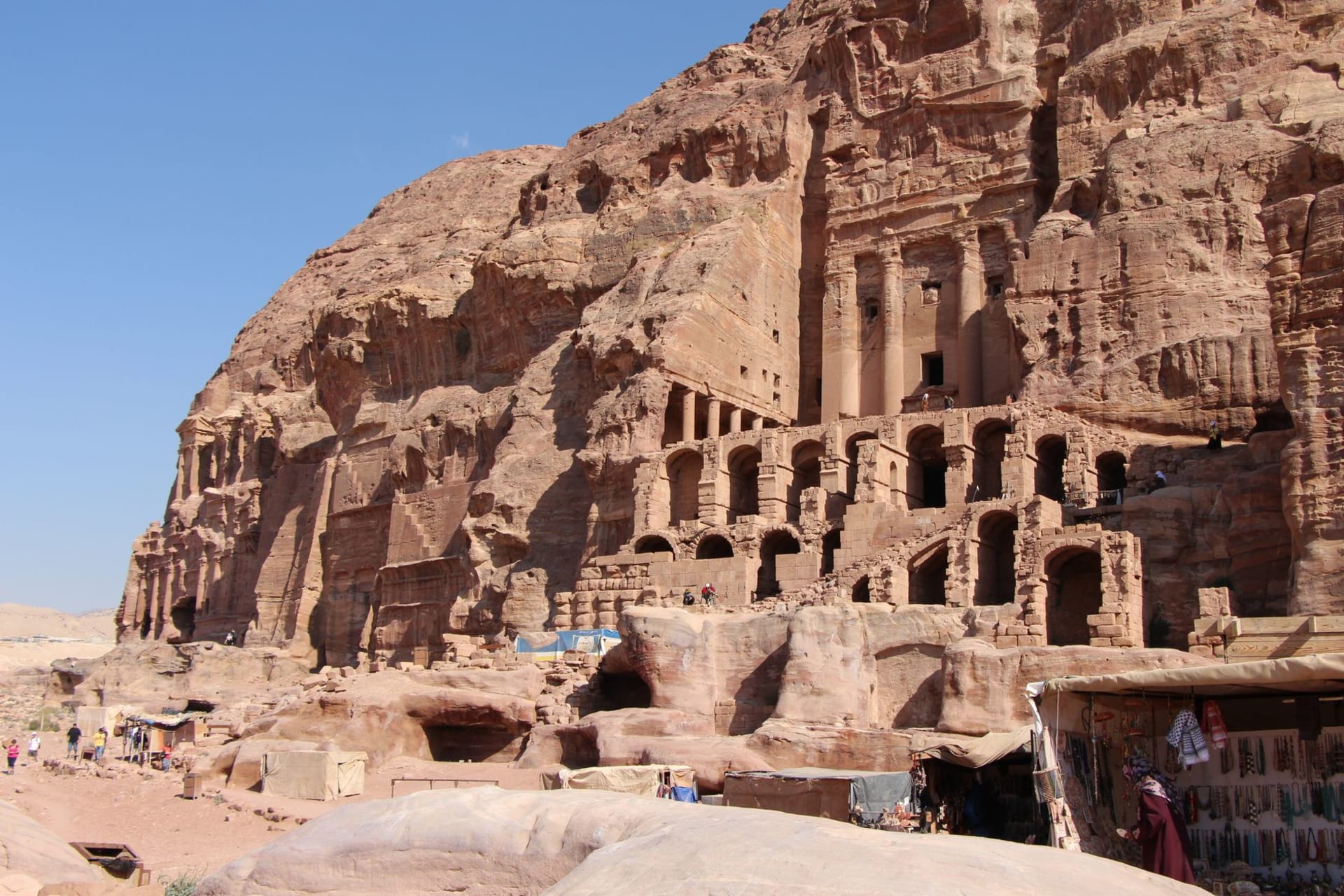
The Siq and Al-Khazneh
"The crack of light at the far end of the Siq is the longest two kilometers you will ever walk."
I went in before the horses, before the guides, before the first tour buses had disgorged their cargo at the gate. The Siq begins ordinarily enough — a dirt path between tall walls, the desert air still cold enough to see your breath — but within fifty meters the walls close in and the sky becomes a thin blue ribbon above you and the sound of your own footsteps becomes the loudest thing in the world. The canyon is formed by a single fracture in the sandstone, one great geological argument that split the rock two million years ago and left a passage barely wide enough for a loaded camel. I ran my hand along the wall as I walked and felt the smoothness that centuries of caravans had polished into it.
The Nabataeans understood what they had in this passage. They lined it with votive niches, carved shallow alcoves into the walls and placed their deities inside — worn flat now, the faces long since abraded away, but still present, still watching. They ran a terracotta water channel along the left wall that brought spring water from Ain Musa into the city, and you can trace its path for the whole two kilometers, this thin groove in the rock that kept seventy thousand people alive in a desert. The engineering is the thing that moves me most. Not the Treasury, not the facades, but the fact that these people looked at a waterless canyon in a bone-dry desert and said: we will put a city here, and here is how the water will come.
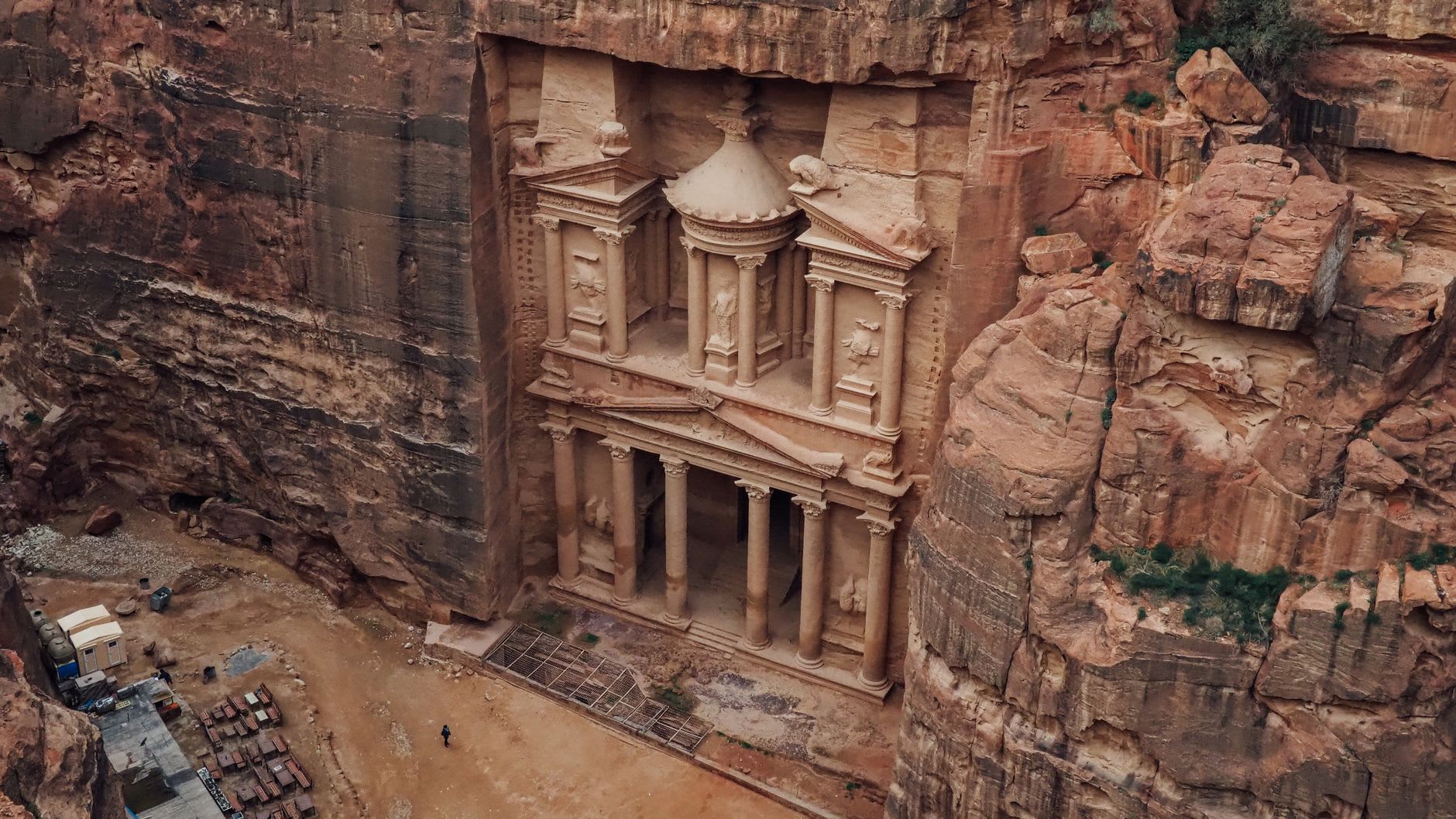
The Treasury appears when the Siq bends and opens. There is no warning. One moment there is sandstone wall and then there is a gap and in the gap is a fraction of a column, a fragment of carved pediment, and then you step out and the full facade rises thirty meters above you and the only honest response is to stand still for a while. Al-Khazneh — the Treasury — is not, of course, a treasury. The Bedouin who named it believed Pharaoh had hidden his riches in the stone urn carved at the top. What it actually is, most likely, is a tomb, possibly for the Nabataean king Aretas III, carved somewhere in the first century BC. The interior is three plain chambers, empty of ornament. Everything the Nabataeans cared about, they put on the outside.
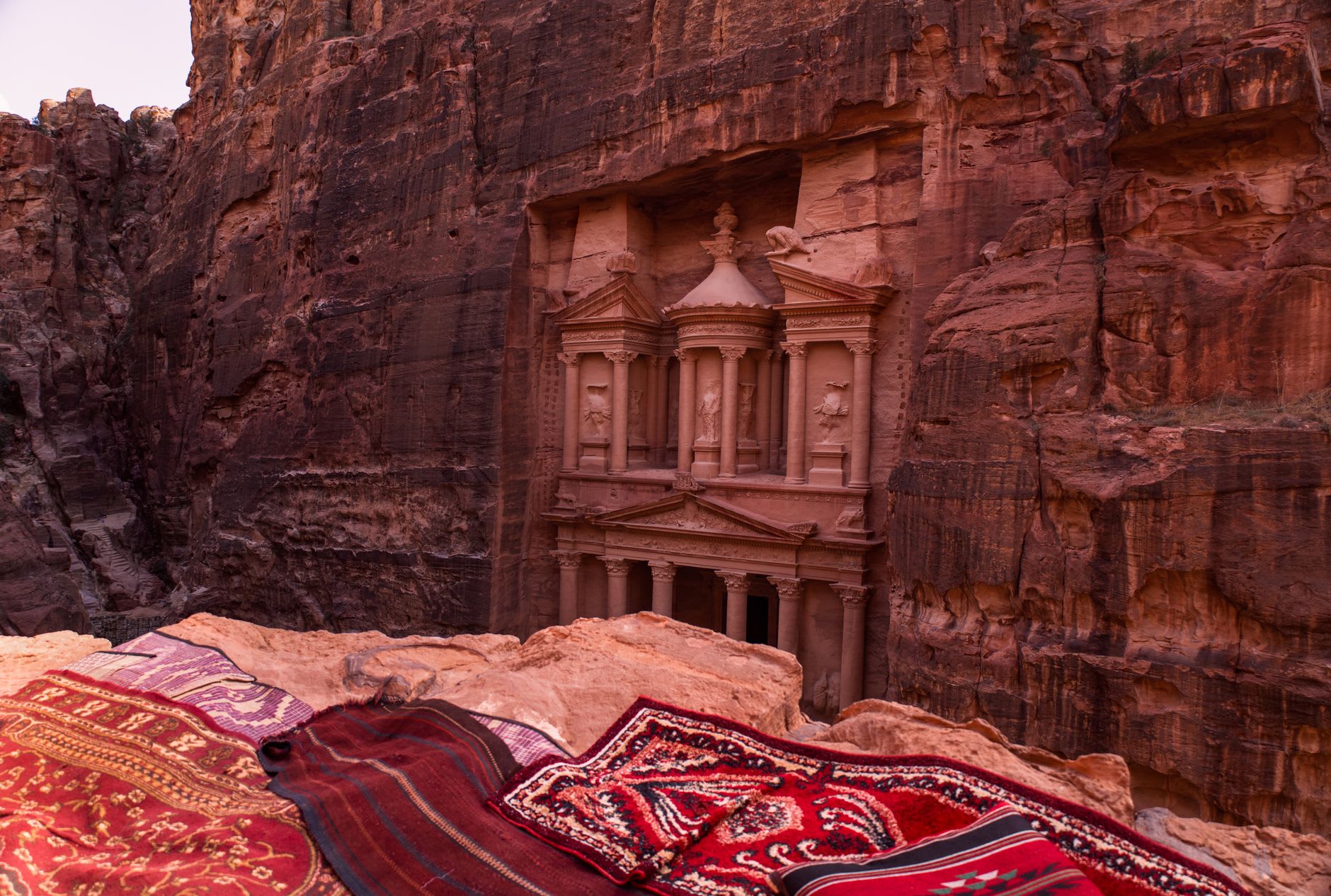
The light on the facade changes color every twenty minutes from dawn until midday. In the first light it is pink-gold and almost transparent, the carved details catching shadows that dissolve as the sun rises. By nine in the morning it is a deep coral. By ten it is the full rose-red that photographs have trained us to expect. I stayed for two hours after the first tour groups arrived, watching the color shift, ignoring the camels being paraded in front of it, trying to hold onto the version of it I had seen in the dark canyon before the world woke up.
When to go: Enter the Siq by 5:30am in summer, 6am in spring and autumn, before the organized tours arrive. The Treasury is at its quietest and most dreamlike in the forty minutes around dawn. Avoid Fridays and weekends when Jordanian domestic tourism peaks. The Siq is walkable year-round but the Treasury plaza becomes unbearably crowded from 9am to 2pm in peak season.