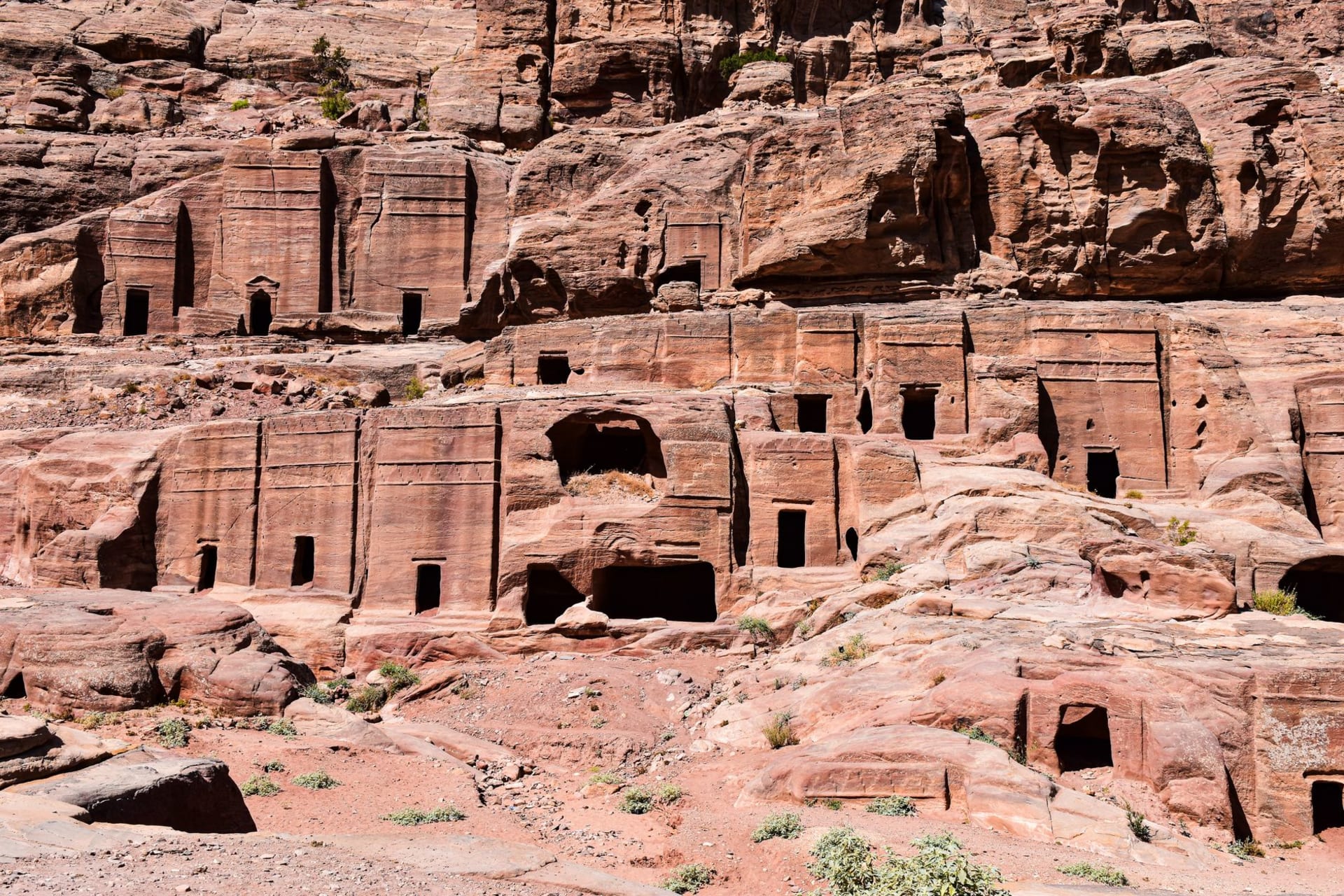
The Royal Tombs
"The colors inside the Urn Tomb — swirling maroon and cream and violet — make the carved exterior feel almost plain."
Petra has a temporal logic. The crowds move through the Siq, pool in front of the Treasury, then proceed north along the colonnaded street, and the whole pressure of tourism flows in that direction. The Royal Tombs face east on the eastern cliff wall — they are visible from nearly everywhere in the main valley, massive carved facades stacked side by side in the stone, but to get to them you walk slightly against the grain of the crowd, and so they are quieter than their scale would suggest. I went in the early afternoon on my second day, when the others were sheltering from the midday heat. The facades were in full light, the rock a deep copper-orange, and I had the lower terrace almost to myself.
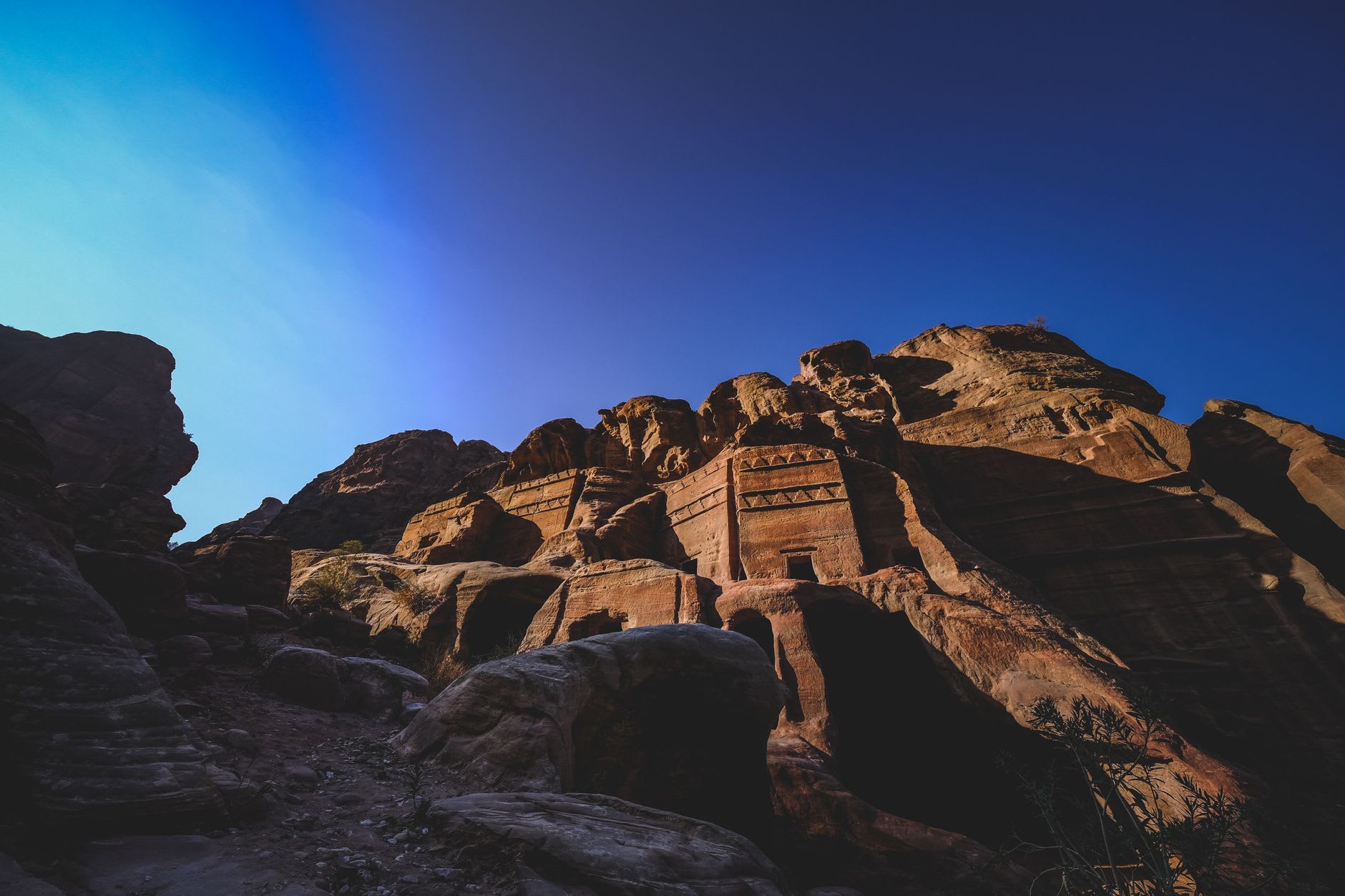
The Royal Tombs are actually four distinct monuments, each given a name by later archaeologists that refers to an architectural feature or to its carved stone colors: the Urn Tomb, the Silk Tomb, the Corinthian Tomb, the Palace Tomb. The Urn Tomb is the most imposing — a wide portico supported by a row of arches, above which rises the carved chamber with its classical doorway surmounted by a triangular pediment and an enormous urn at the apex. Below the portico are three vaulted chambers that the Byzantines later used as a church, and inscriptions on the walls record the consecration. The chamber interior is large enough to fit a congregation comfortably. Standing inside it, looking up at the vaulted ceiling, you feel how systematically the Christians and Nabataeans reconfigured the meaning of the same space.
But the interior of the Urn Tomb — accessed by a staircase to the right of the portico — is what I remember most vividly. The carved chamber inside has walls of swirling banded sandstone: deep maroon, cream, violet, amber, all running in curved strata through the rock. The Nabataeans chose this specific spot in the cliff because the stone here had the most extraordinary color patterns. The tomb chamber is not decorated. The decoration is the stone itself, which they have simply cut away to reveal. This approach — treating geology as aesthetics, letting the material be the art — is the most distinctly Nabataean thing I know.
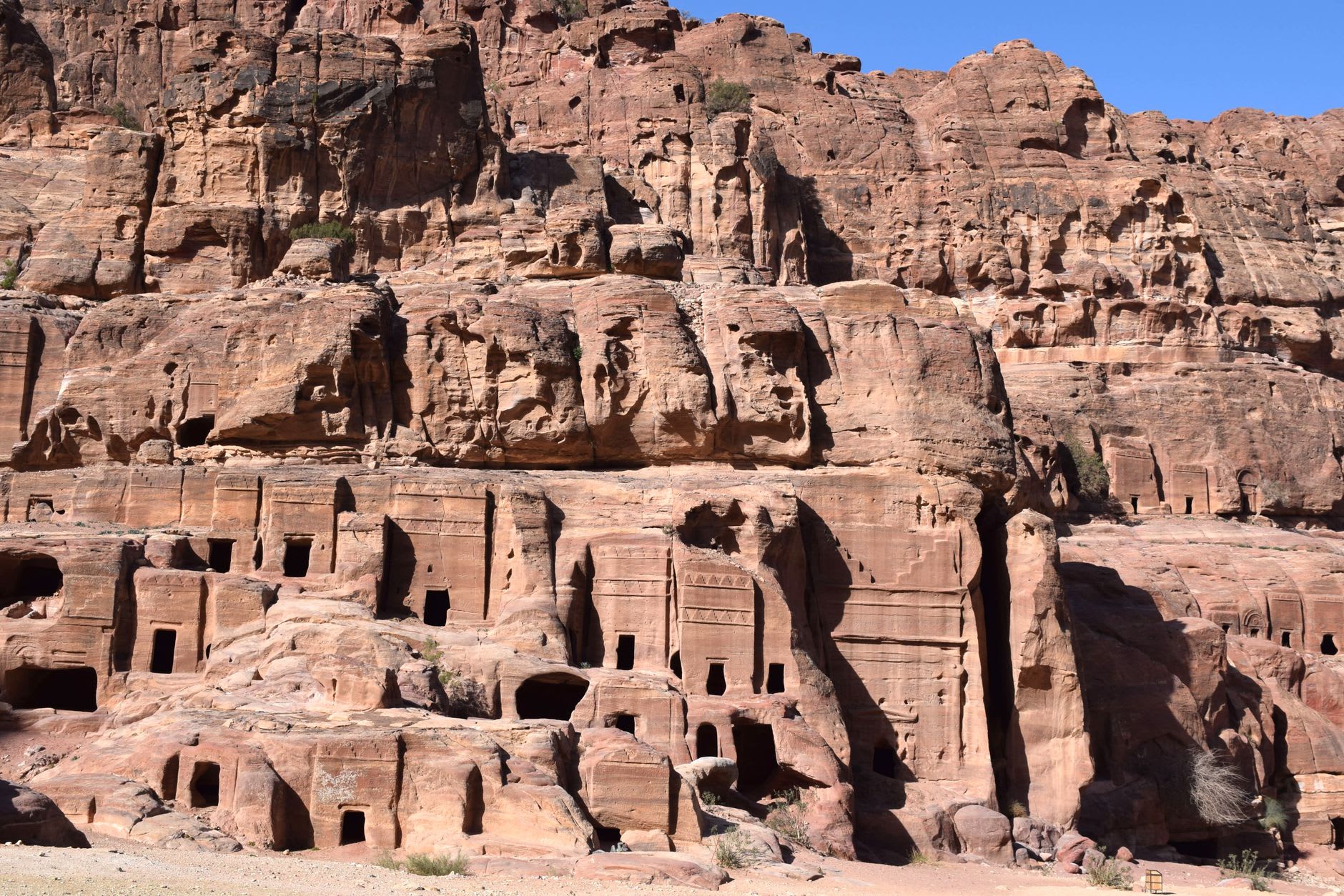
The Silk Tomb next door is named for the silk-like flow of its colored stone — a smaller facade, less dramatic in silhouette, but the rock colors in the carved surface are extraordinary, running in horizontal waves of amber and rose and grey. The Corinthian Tomb attempts the most ambitious architecture of the group, with two stories of Corinthian columns, but time and the elements have worn it to a rougher state than the Urn Tomb. The Palace Tomb at the end of the row is the largest in terms of sheer width, modeled loosely on a Roman palace facade, with five doorways across the lower story and the upper story’s columns and pediments softened by erosion to near-illegibility. Together, these four facades are a masterclass in what happens when an extremely rich civilization runs out of wall space on the ground and starts carving upward.
When to go: The Royal Tombs face east, so morning light strikes them beautifully from 7am to noon, but the afternoon light from 2pm onward creates the warmest, most photogenic color on the rock. Visit once in the morning for the quality of light on the facade, and again in late afternoon for the deeper amber tones. Allow at least two hours to explore all four tombs properly.