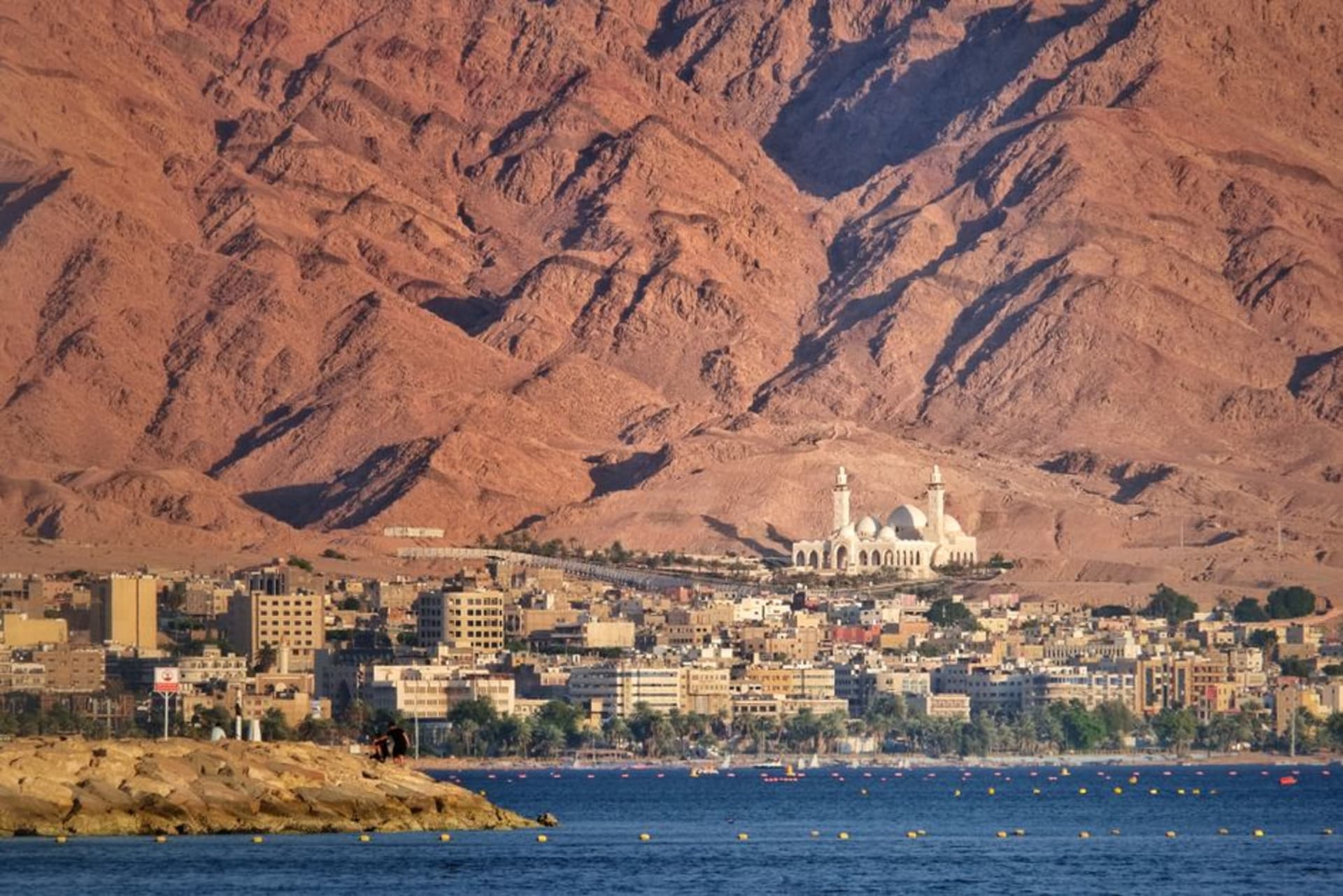
Aqaba
"The Nabataeans called it Ayla and built a port here for the same reason I came — because after the desert, you need the sea."
Jordan's one window onto the sea, a Red Sea port town where Nabataean traders once unloaded incense and where I unloaded three days of desert dust into the reef instead.
I came down from Wadi Rum on the back of a pickup truck with two Bedouin guides who were dropping supplies in Aqaba, and the drop in altitude and the sudden appearance of blue water after four days of red sand did something to my brain that I was not prepared for. Aqaba is Jordan’s only coastline, a sliver of Red Sea coast squeezed between Israel, Egypt, and Saudi Arabia, and it has been a port for exactly as long as people have been moving goods through this desert — the Nabataeans called it Ayla, and their caravans came down from Petra loaded with frankincense and myrrh to load it onto ships bound for Egypt and the Hejaz. Standing on the modern corniche with an ice cream in hand, watching container ships queue outside the harbor, I felt the same commercial logic still operating two thousand years later. This is where the desert meets the world.
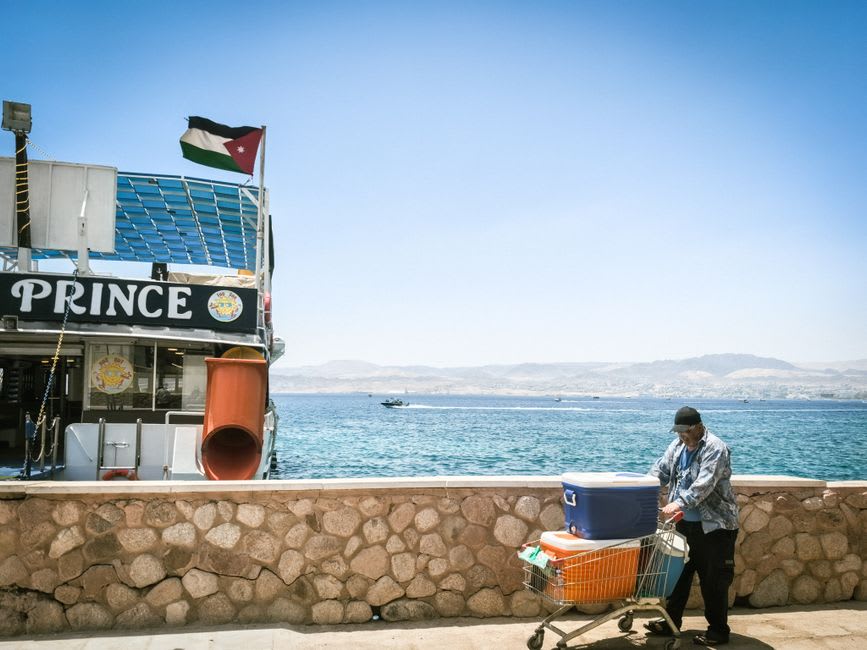
The old town is compact and unglamorous in the best way — a grid of streets behind the Mamluk-era fort where you can still see the scars from a British naval bombardment in 1917, a fish market that opens at dawn, and juice stands where men press pomegranates and oranges by hand while arguing about football. I ate grilled hammour, a local grouper, at a plastic-chair place two streets back from the water for less than the price of a coffee in Amman, and the owner brought me a second plate of it without being asked because I had, apparently, eaten the first one with sufficient enthusiasm. Aqaba does not perform for tourists the way some coastal towns do. It just continues being a working port town that happens to also have extraordinary coral reefs a hundred meters offshore.
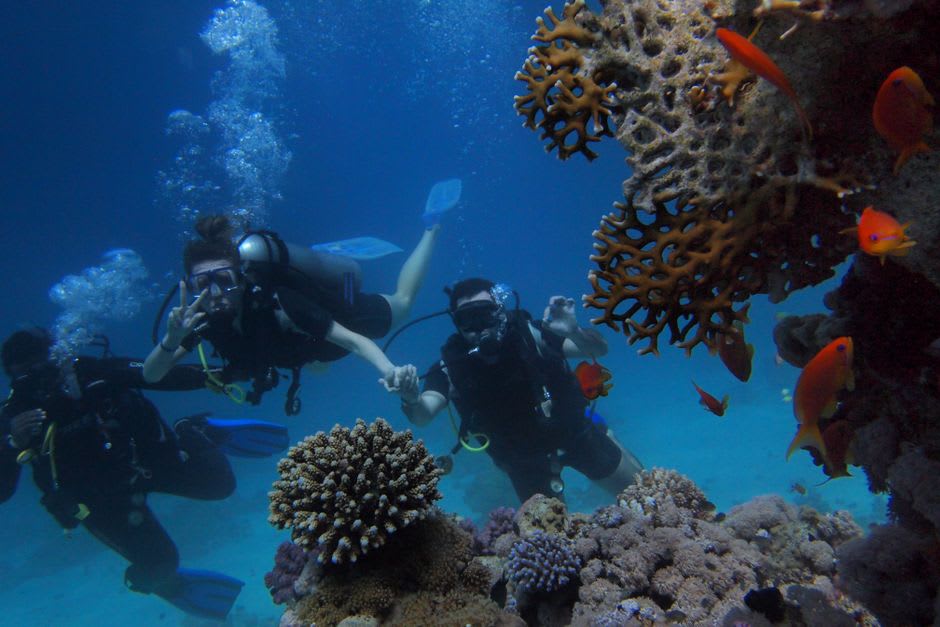
That is the real reason to come, in the end — the diving. The Gulf of Aqaba drops off steeply just past the shallows, and the reefs here are healthier than almost anywhere else in the Red Sea because the deep, narrow gulf flushes water constantly and keeps the temperature stable. I did two dives off a boat run by a Jordanian-Italian couple who have been diving these waters for twenty years, one on a reef wall thick with lionfish and turtles, another on the Cedar Pride, a deliberately sunk cargo ship now furred with soft coral and patrolled by a resident barracuda the dive guides greet by name. Coming up from that second dive, salt drying on my skin, watching the sun drop behind the hills of the Sinai across the water, I thought about how strange it is that a country famous for red rock and dry wadis also holds one of the best diving destinations in the Middle East, twenty minutes from the airport.
When to go: October through April for comfortable air temperatures and excellent visibility underwater; summer in Aqaba runs well over 40°C and the water, while still swimmable, loses some of its winter clarity. If you are combining it with Petra and Wadi Rum, put Aqaba last — it is the perfect place to decompress, literally and otherwise, after a week in the desert.