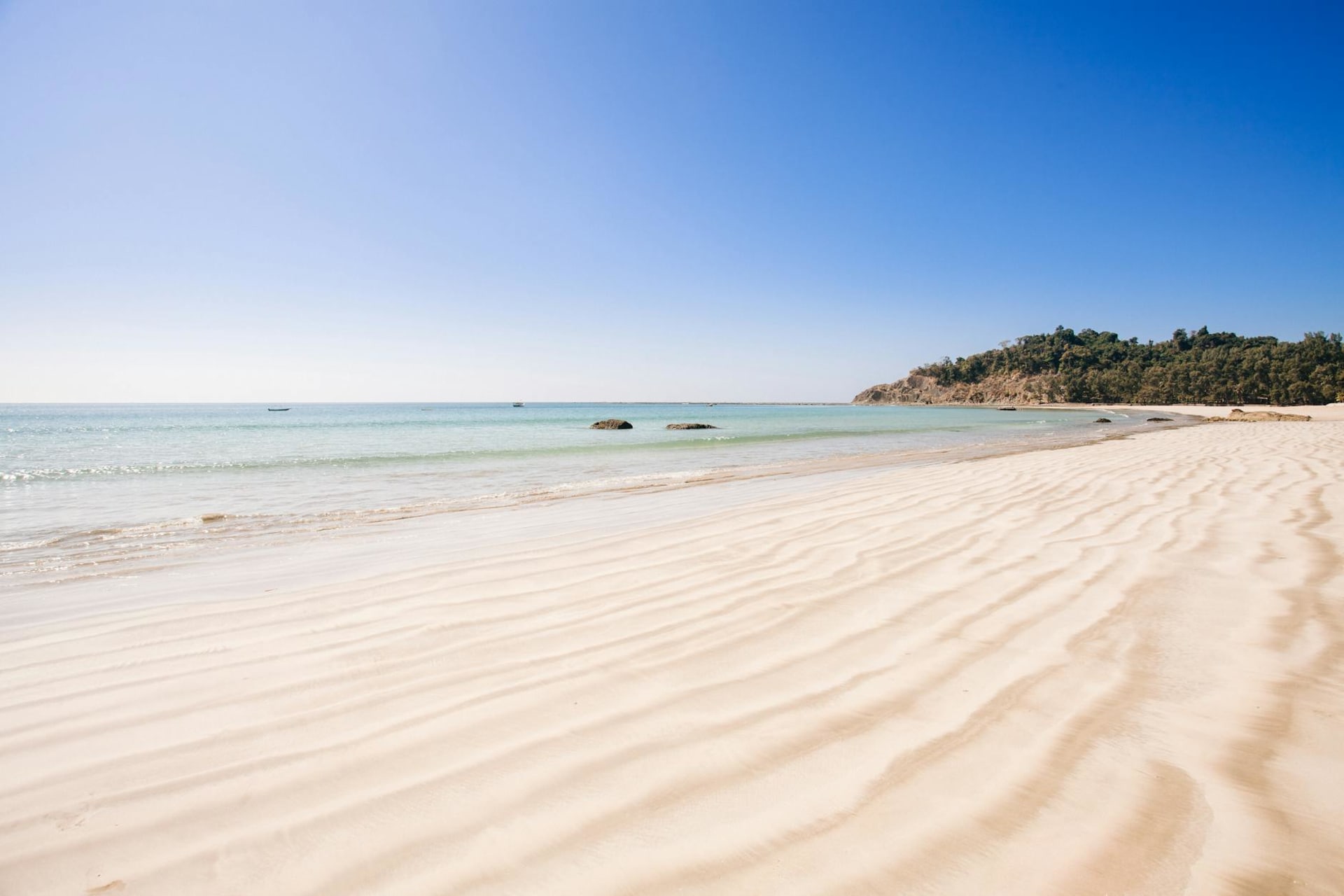
Ngwe Saung Beach
"Ngwe Saung is one of those beaches that makes you angry you didn't find it five years earlier."
Forty kilometres of undeveloped silver sand with fishing villages at each end and almost nothing in between.
I had read almost nothing about Ngwe Saung before we went. A single line in a forum thread — “like Ngapali but without the hotels” — and that was enough. We took the overnight bus from Yangon to Pathein, then a shared pickup truck that rattled west through paddy fields and teak groves, and by early afternoon we were standing on forty kilometres of sand that seemed to belong entirely to the herons.
The Colour the Name Promises
Ngwe Saung means Silver Beach in Burmese, and for once the translation earns its weight. The sand is not the white of Caribbean postcards — it is cooler than that, almost pewter when the clouds come in off the Bay of Bengal, shifting to a pale champagne in late afternoon when the sun drops low and the shadows lengthen across the tide pools. The water stays shallow for a long way out, warm enough to wade in without flinching, and at dawn it goes completely glassy. I woke before Lia one morning and walked south for an hour without passing another person, just the printed signatures of ghost crabs and the occasional orange buoy marking a net left out overnight.
The Villages at Either End
The beach is bookended by two fishing communities — Ngwe Saung village to the north and a smaller settlement around Lover’s Island to the south, where a causeway of exposed rock appears at low tide and connects the mainland to a wooded outcrop the locals use for picnics. In the northern village I ate mohinga for breakfast at a tea shop with no sign, just a woman with a clay pot over charcoal and a row of plastic stools facing the street. The broth had a weight to it — fermented fish paste, lemongrass, the faint bitterness of banana stem — that I have been chasing in lesser versions ever since. The shop did not seem to have a name. I found it by following the smell.
The Unexpected Quiet
What surprised me most was not the emptiness of the beach itself — I had braced for that — but how completely the outside world receded. There is one road into Ngwe Saung and it ends at the sand. No through traffic, no particular reason to be here unless the beach is why you came. One afternoon a local fisherman gestured us onto his longtail boat for no clear reason, motored us two kilometres south, pointed at a reef break we had not found on our own, and left. We swam there until the light went orange.
When to go: November through February offers dry skies, calm seas, and temperatures that stay below 32°C — the Bay of Bengal is swimmable and the roads are passable. Avoid the monsoon months of June through September when the surf turns rough and the pickup trucks stop running reliably.