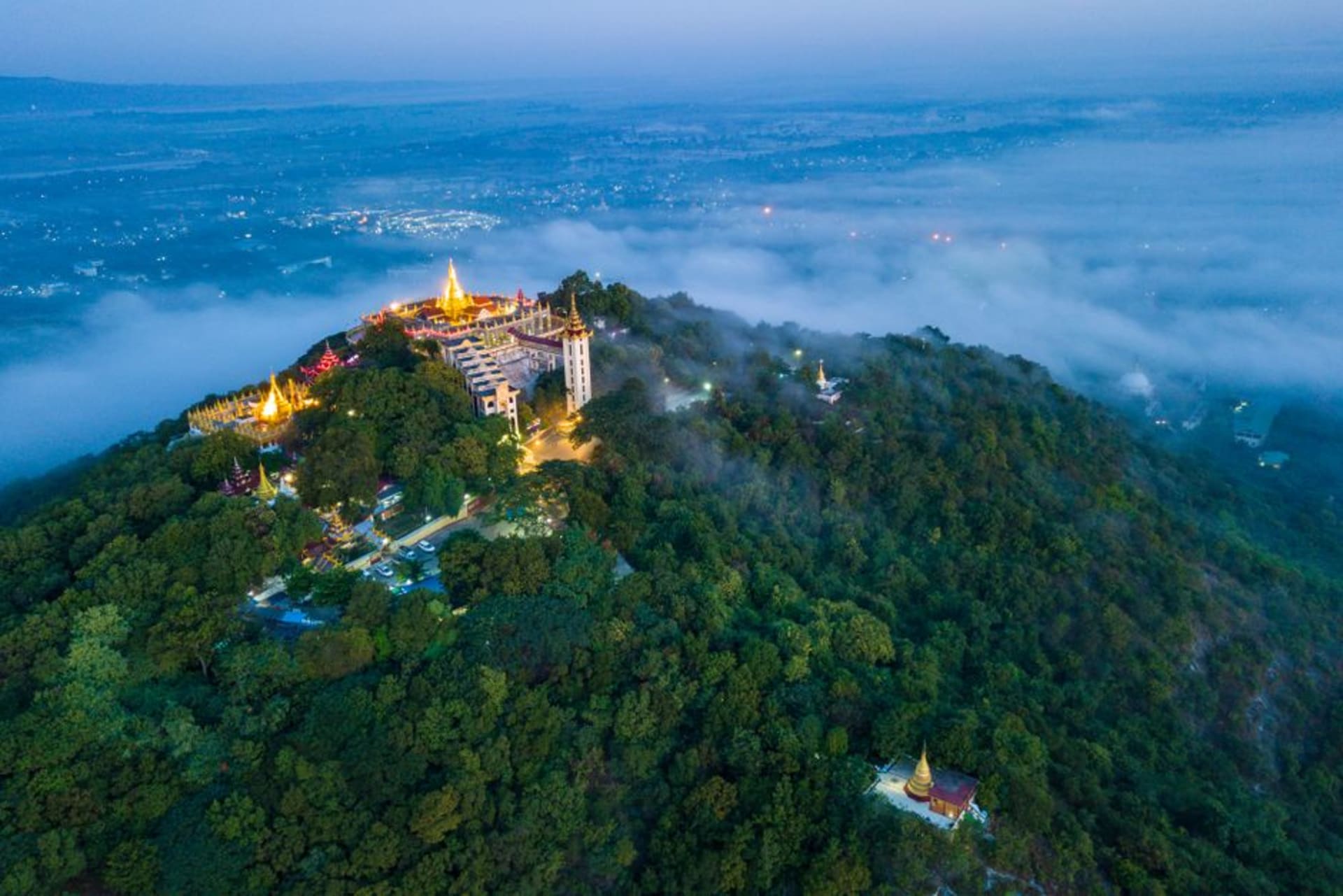
Mount Popa
"Somewhere around step four hundred, a monkey stole my sunglasses and I decided the nats had a sense of humor."
An extinct volcano crowned by a monastery on a volcanic plug, 777 steps and a troop of monkeys between you and the view.
We did Mount Popa as a day trip out of Bagan, the way most people do, and I remember being surprised by how suddenly it appears — you’re driving through this flat, dusty central plain, temples receding in the mirror, and then this dark green cone just rises out of nowhere with a gold-tipped rock spire sitting on top of it like something out of a dream. Our driver told us it was about fifty kilometers, an hour and change, and he wasn’t exaggerating how different the air felt once we got close. Mount Popa itself is an extinct volcano, hasn’t erupted in something like 250,000 years, but it’s Taung Kalat — the monastery complex balanced on a separate volcanic plug jutting up beside it — that everyone actually comes to see and climb.
Lia counted the steps out loud for the first hundred and then gave up, which is fair, because there are 777 of them, covered, winding up the rock in switchbacks, and by the halfway point I’d stopped counting anything except how much water I had left. The monkeys are everywhere and I mean everywhere — sitting on the railings, grooming each other on the steps, eyeing your bag with real intent. I’d read they could be aggressive about food and I believed it within about ten minutes, watching one snatch a bag of crackers clean out of a woman’s hand two people ahead of us.
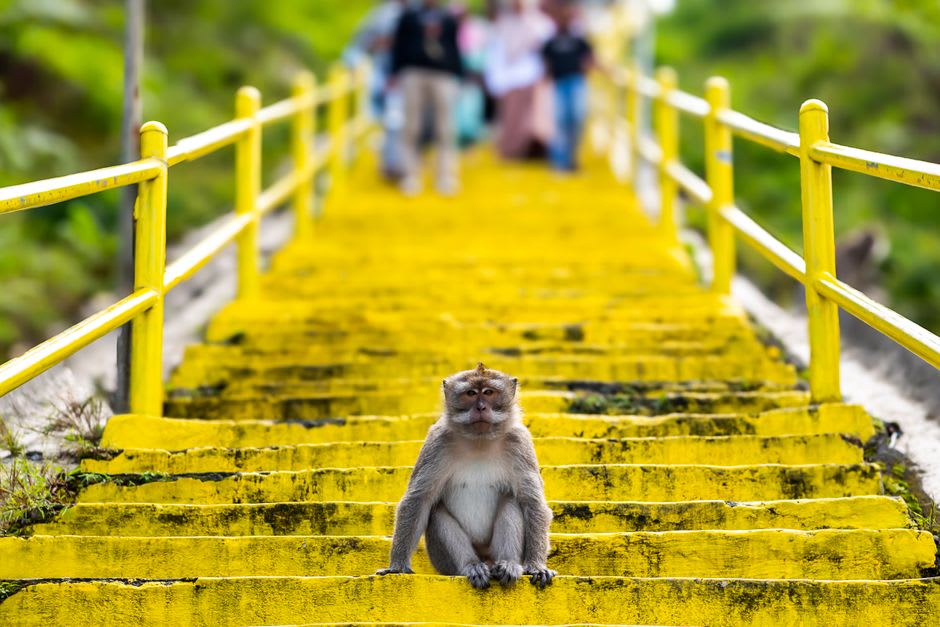
What stuck with me more than the climb, though, was learning what the place actually means here. Mount Popa is considered the spiritual home of the 37 Nats — these pre-Buddhist animist spirits that Burmese people have honored for centuries, often right alongside their Buddhist practice, not instead of it. There’s a whole shrine hall at the base with statues of the different nats, offerings of fruit and flowers piled in front of them, and watching Burmese families stop to pray there before starting the climb made it clear this isn’t a tourist curiosity dressed up for visitors — it’s a living pilgrimage site that happens to also have an incredible view.
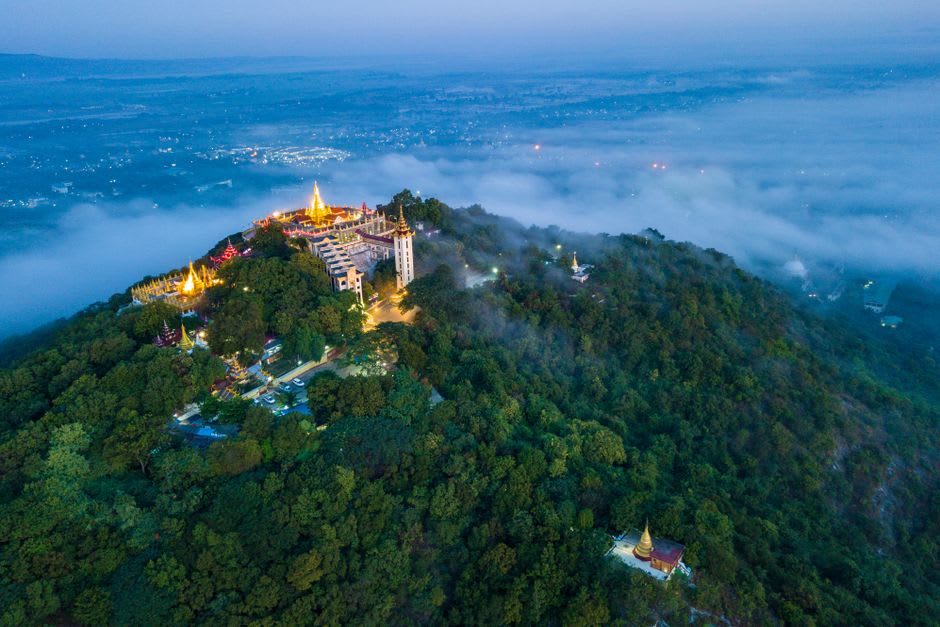
At the top, barefoot because you have to be, the gold stupas catch the light and the whole plain spreads out below in every direction — you can just make out the haze where Bagan sits. We stayed maybe twenty minutes up there before the heat and the crowd of other pilgrims pushed us back down, and on the way we stopped in Popa Mountain Park, the protected highland ecosystem around the base that’s been safeguarded since 1989, a genuinely green, cool pocket that felt almost unreal after the dry plain we’d driven through.
When to go: we went in December, and I’d steer you toward the same window — anytime from November through February, when the weather turns cooler and drier and those 777 steps, plus the walk around the park, are a lot more bearable than they’d be in the pre-monsoon heat.