Pechenga
"The monks have been here since the 1500s. The border fence came later. Both feel permanent."
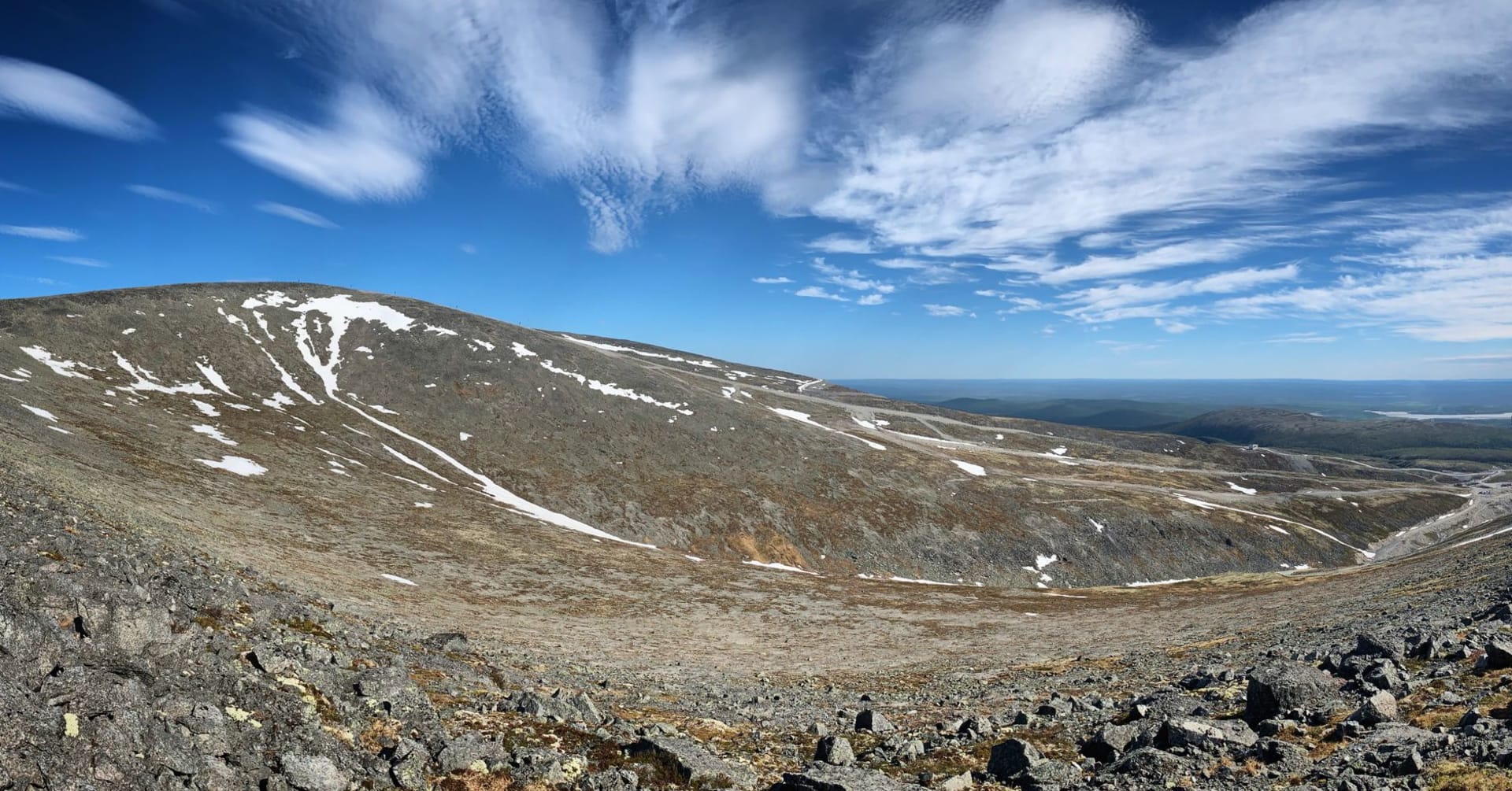
The drive west from Murmansk toward Pechenga tracks the Kola Fjord before turning into a valley that closes in on both sides, birch and spruce pressing closer to the road, until you arrive at a place where Norway and Finland are both within twenty kilometres and the landscape has taken on the particular quality of margins: a place that three countries have historically fought over and that as a result seems to belong somewhat uncertainly to each of them. The border checkpoints are visible in both directions from the highest points. On the day I drove it, a Russian military convoy was heading the other direction, unhurried, in the methodical way of things that have somewhere specific to be.
Pechenga has layers. The Pechenga Monastery — or Holy Trinity Trifonov Pechenga Monastery, to give it the full name — was founded in 1533 by a monk called Tryphon of Pechenga, who came north from Novgorod and seems to have decided that this remote river valley was the appropriate place to attempt the conversion of the local Sámi population to Orthodox Christianity. The Sámi relationship to this project was complicated. The monastery was destroyed by Finnish forces in 1589, rebuilt, destroyed again several times over the following centuries by Swedish and Finnish raids, burned to the ground in the Second World War, and rebuilt again after. The current buildings are largely Soviet-era reconstruction, but the site has been continuously occupied since the sixteenth century, and the monks in residence now carry that continuity with a matter-of-fact gravity.

A monk showed me around the main church without being asked — I had just arrived and was standing awkwardly near the gate, obviously uncertain about protocol — and we communicated in my extremely limited Russian, his complete absence of English, and a great deal of gesture. He showed me the place where the pre-war monastery icon was kept, a small dark painting of the kind that seems to absorb rather than reflect light, and explained its provenance with a certainty that transcended the language barrier. Whatever he told me, he believed it completely. This seemed like the correct relationship to have with your monastery’s five-hundred-year history.
The valley itself, away from the monastery, holds the kind of Cold War residue that the Kola Peninsula has in unusual concentration. Military installations, some decommissioned and recognisable only by the concrete foundations and cut fence wire, some still active in the vague unspecific way of Russian Arctic military infrastructure. The town of Pechenga — small, functional, built for workers rather than visitors — has a petrol station, a supermarket, and several apartment blocks that have the specific faded hopefulness of Soviet housing that has outlasted its original social context. I drank coffee at a canteen that also served as the post office, sitting at a table near a window that looked out on a courtyard where nothing was happening in the most complete possible way.

What Pechenga offers is precisely this: a place where the long history of the Russian north — the missionaries, the invasions, the Soviet militarisation, the post-Soviet uncertainty — exists in a concentrated form without being packaged for consumption. Nobody is performing this history. It is simply there, in the monastery and the ruins and the monks and the faded apartment blocks, simultaneous and unresolved.
When to go: Pechenga is accessible year-round, though the road can be difficult in heavy snowfall. Winter visits (November through March) give the monastery and valley their most atmospheric character. Spring and summer allow exploration of the surrounding forest and river valley. Note that approaching the Norwegian and Finnish borders requires awareness of restricted military zones — stay on marked roads and heed all signage.