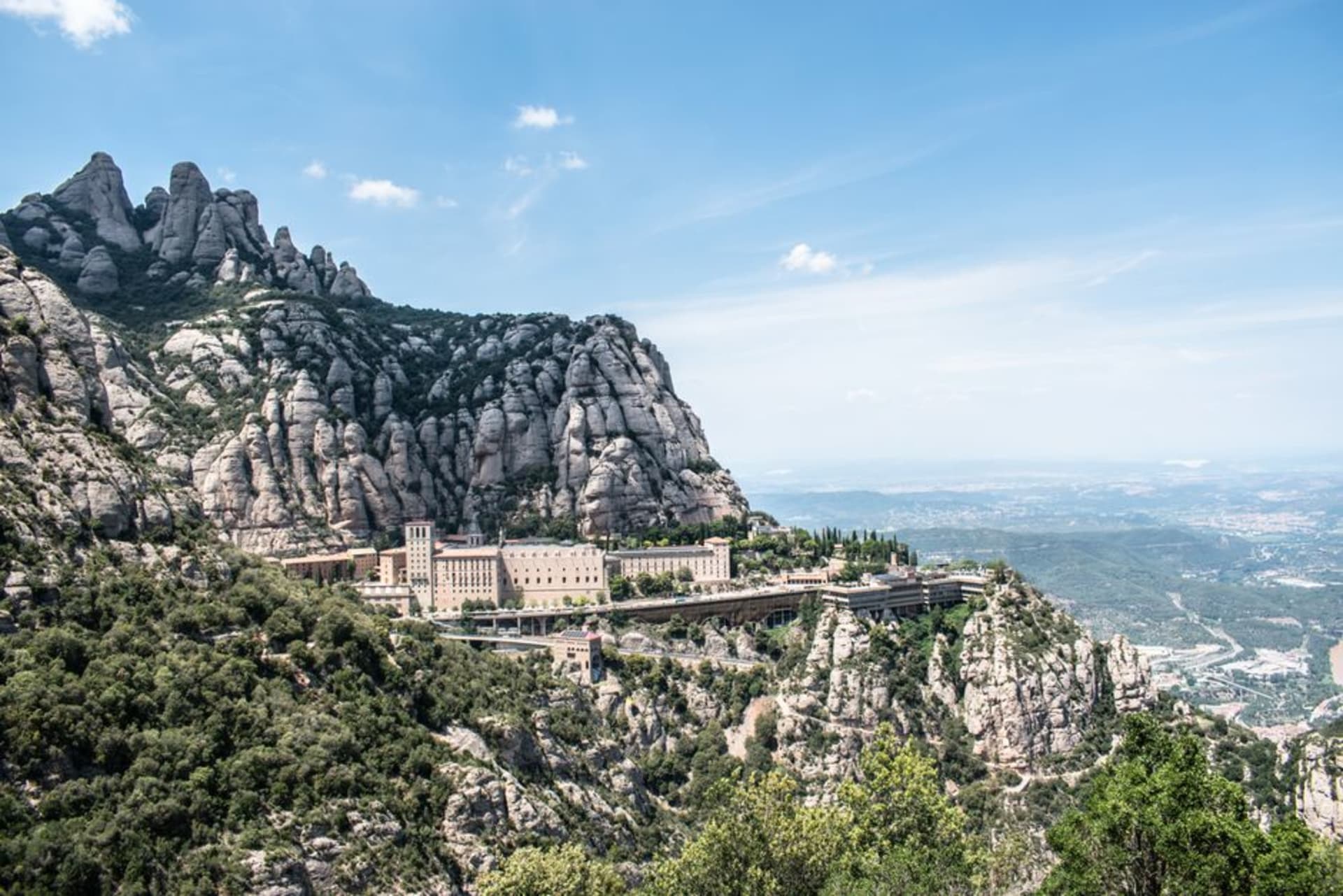
Garibaldi Hill
"I've stood in front of a lot of volcanoes. None of them made me this quiet."
A roadside viewpoint above Belham Valley where the buried town of Plymouth and Soufrière Hills unfold in one silent, staggering panorama.
We almost drove past it. Lia was reading the map on her phone, I was watching the road curve along Montserrat’s western coast, and then she just said “stop, stop here” and I pulled the rental onto the gravel shoulder without really knowing why. That’s Garibaldi Hill — no gate, no sign that shouts for attention, just a pull-off above the Belham Valley that happens to open onto one of the most complete views of catastrophe I’ve ever stood in front of. We got out, and neither of us said anything for a minute.
From the hill you’re looking down across the golf course and Old Road Bay, land that used to be manicured and ordinary and is now grey and folded, reshaped by pyroclastic flows and lahars that have been rewriting this stretch of coast since 1995. Beyond it, past the line where the road itself is no longer allowed to go, Plymouth sits half-swallowed under ash — a capital city you can see but not enter. I’d read about the exclusion zone before we arrived, but reading “buried town” and actually tracing the ghost of its street grid with your eyes are two completely different things. Lia found the old church roofline first and pointed it out to me without a word, just her finger tracing the shape.
What got me most, honestly, wasn’t the ruin — it was how ordinary the vantage point felt. We were parked near the Montserrat Golf Club, in the developed, everyday north-central part of the island, sipping water from a bottle that had gone warm in the car, and the volcano was just there, doing nothing, wrapped in a thin collar of its own steam. Soufrière Hills doesn’t perform for you. It just sits above everything, patient, and you’re the one who has to reckon with the scale of what it did without ever crossing into the zone that would put you at risk.

We stayed maybe forty minutes, longer than either of us expected, until a haze started creeping up around the summit and the light went flat. I remember thinking that this was the kind of place I’d want to come back to alone one day, just to sit with it. When to go: aim for a clear morning, December through April gives you the best odds, before the afternoon clouds roll in and swallow the summit the way the ash swallowed Plymouth.