Caribbean
Montserrat
"An entire capital city buried under ash — and the island kept going."
You do not accidentally end up in Montserrat. There are no direct long-haul flights, no cruise ships pulling into port, no all-inclusive compounds eating up the coastline. You get there by a twenty-minute prop-plane hop from Antigua, and the moment you land at the little Gerald’s Airport in the north — the old airport is buried under fifteen metres of volcanic debris — you understand that this island operates by different rules. The taxi driver who picked me up had evacuated in 1997 and come back three years later. He said it matter-of-factly, the way you might mention having moved flats.
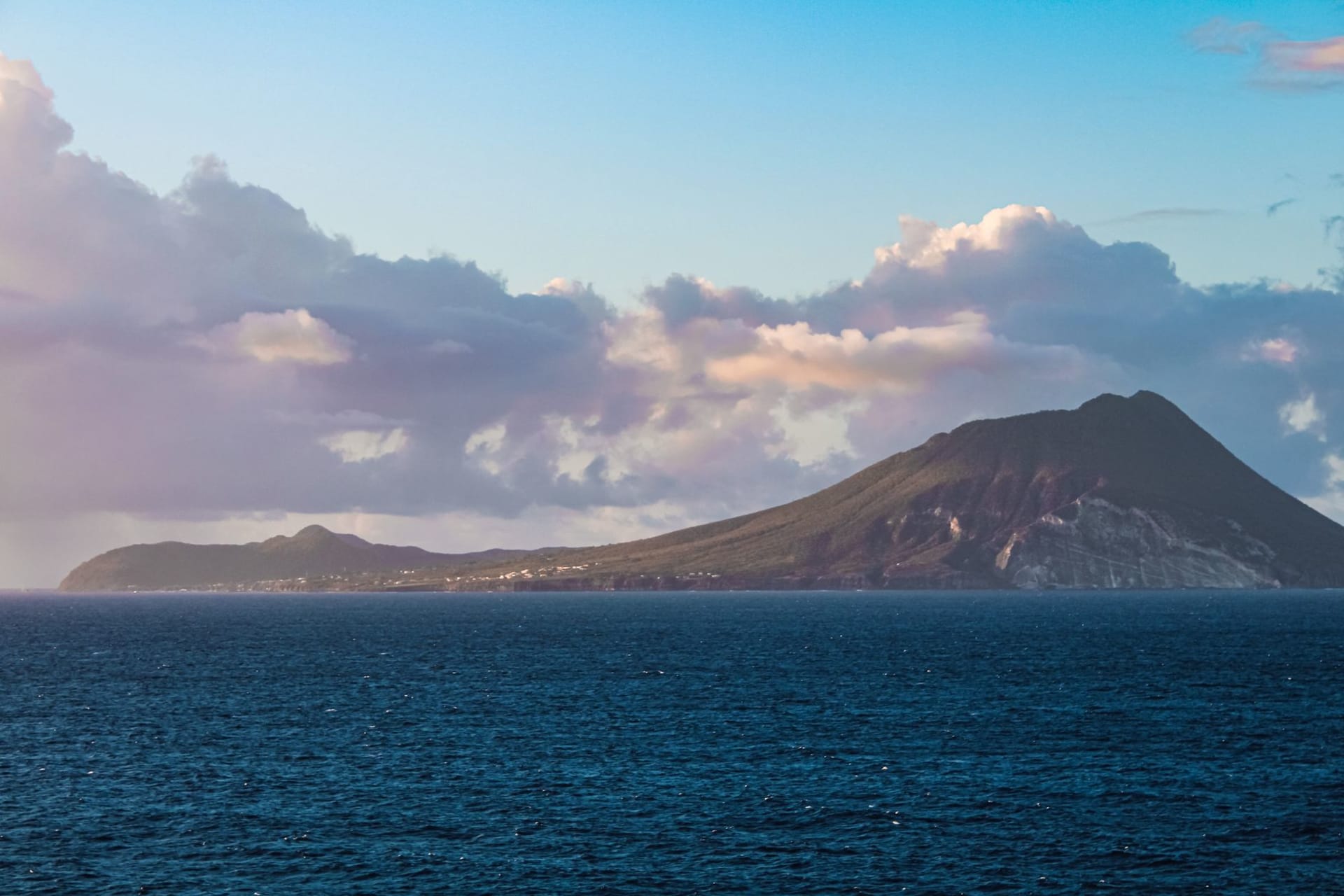
The Soufrière Hills volcano has been erupting in some form since 1995. Plymouth, the former capital, now sits inside an exclusion zone in the south — a ghost town entombed in grey pyroclastic material, church steeples and rooftops barely visible above the ash. You can see it from a viewpoint on the exclusion zone boundary: a once-functioning Caribbean town, silent and grey under a tropical sky. It is one of the most startling sights I have encountered anywhere, not because it looks dramatic — it is eerily still — but because you know people were buying groceries and going to school there thirty years ago. The volcano did not give much notice. The government gave even less.
What the eruption left behind, beyond the ruins, is a north that feels genuinely wild and unhurried. The hillsides are covered in dense rainforest — Centre Hills is a protected area of extraordinary biodiversity, home to the Montserrat oriole, found nowhere else on earth — and the black and grey sand beaches on the west coast have an almost melancholy beauty against the clear turquoise water. The island has around four thousand residents now, down from twelve thousand before the volcano. There are no real tourist crowds. The pace of life in Little Bay, where the new town is being built, has the quality of somewhere still figuring itself out, which makes it surprisingly easy to settle into. Eat at a roadside cook shop, follow the smell of goat stew and fried plantain. The peppers here are extraordinary — Montserrat’s seasoning pepper is a cousin of the Scotch bonnet but fruitier, without the punishing heat, and it finds its way into everything.
When to go: December through April is the dry season and the easiest time to visit — low humidity, reliable sunshine, and the sea calm enough to snorkel. I would aim for February or March. The summer months are hot and hurricane season runs June through November, though Montserrat’s small size and forested interior can make sudden rain feel like a feature rather than a problem.
What most guides get wrong: They treat Montserrat as a disaster tourism destination — the buried capital, the exclusion zone, the eruption story. That framing misses the point. The volcano is part of the context, not the attraction. What is actually compelling is the island’s stubborn refusal to become a ruin: the people who came back, the lime groves replanted on hillsides dusted with ash, the cricket ground rebuilt, the studio where Elton John and Sting and the Rolling Stones recorded in the 1970s — AIR Studios — destroyed in Hurricane Hugo in 1989 and only now being rebuilt, a second ghost and a second comeback. Montserrat is less a cautionary tale than a study in what people do when they decide to stay.