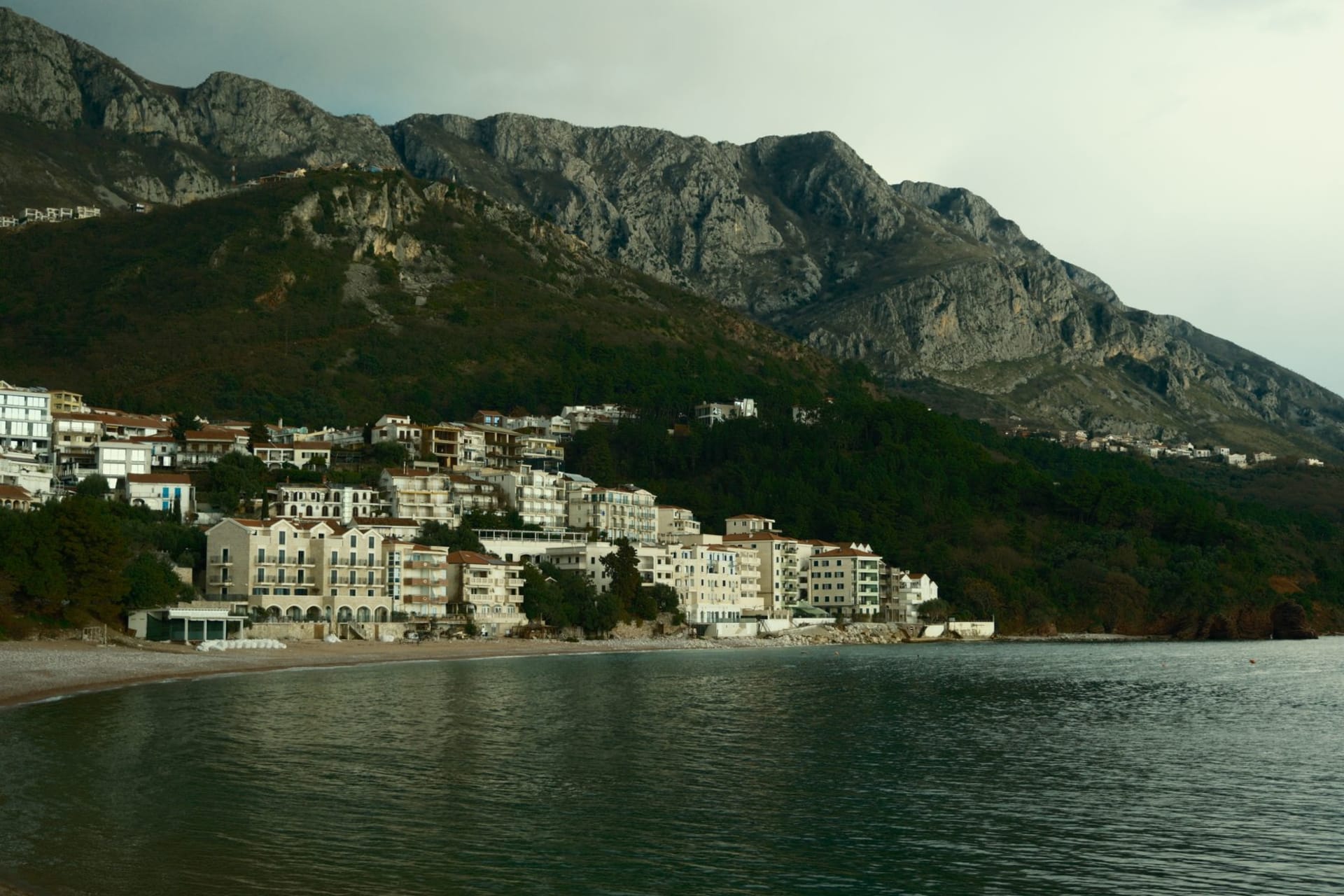
Ulcinj
"Cross into Ulcinj and you're still in Montenegro, technically. The muezzin says otherwise."
The call to prayer caught me off guard. I was walking through the old castle district of Ulcinj — the Stari Grad, perched on a rocky promontory above the sea at the southern end of Montenegro’s coast — when the sound came from one of the minarets below and moved through the stone lanes with a clarity that stopped me mid-step. I’d been in Montenegro for a week by that point, moving through its Venetian-inflected coast and Orthodox monasteries, and the sound reoriented something. Ulcinj is the majority-Albanian city in Montenegro, historically Muslim, culturally distinct from the Slavic north, and about forty minutes from the Albanian border. It is still Montenegro. It also feels, unmistakably, like somewhere else.

The old town is a castle — Ulcinj Kalaja, medieval walls on a limestone bluff above the sea — and the buildings inside have been rebuilt so many times through Ottoman, Venetian, and Yugoslav periods that the architecture is a palimpsest, each layer half-visible under the next. There are restaurants inside the old castle walls where you eat on terraces directly above the sea, the water audible against the rocks below. I had grilled sea bream and bread and a salad of local peppers, all of it simple, all of it right. The proprietor spoke Italian to me, which worked perfectly for both of us.
Beyond the old town, Ulcinj has Mala Plaža — the small beach below the castle, rocky and intimate — and Velika Plaža, the Long Beach, which at twelve kilometers is one of the longest stretches of sand on the entire eastern Adriatic. I walked part of Velika Plaža in the late afternoon and it was everything a long beach should be: wide sand, gentle waves, almost empty in September, the low sun making the water look like beaten copper. Near the Ada Bojana end, where the Bojana River meets the sea, a nudist island resort has been operating since the Yugoslav era and continues with admirable consistency.
The market in the lower town has its own character — a Mediterranean-Balkan hybrid where the stalls sell honey from mountain hives, dried figs strung on cord, local rakija in unlabeled bottles, and vegetables that look as though they were picked at the right time rather than the convenient time. I bought figs and honey and ate them sitting on the harbor wall watching the fishing boats adjust to the evening tide.

When to go: June and September are ideal. July and August bring serious beach crowds to Velika Plaža — Albanian and Kosovar visitors in particular, which creates a lively atmosphere but can overwhelm facilities. The old town is best in the shoulder season when the terraces above the sea aren’t stacked three layers deep. October brings quiet and the best light on the old castle walls, with the whole promontory essentially to yourself.