
Tara Canyon
"The Tara canyon reminds you that Europe still has places it hasn't fully domesticated."
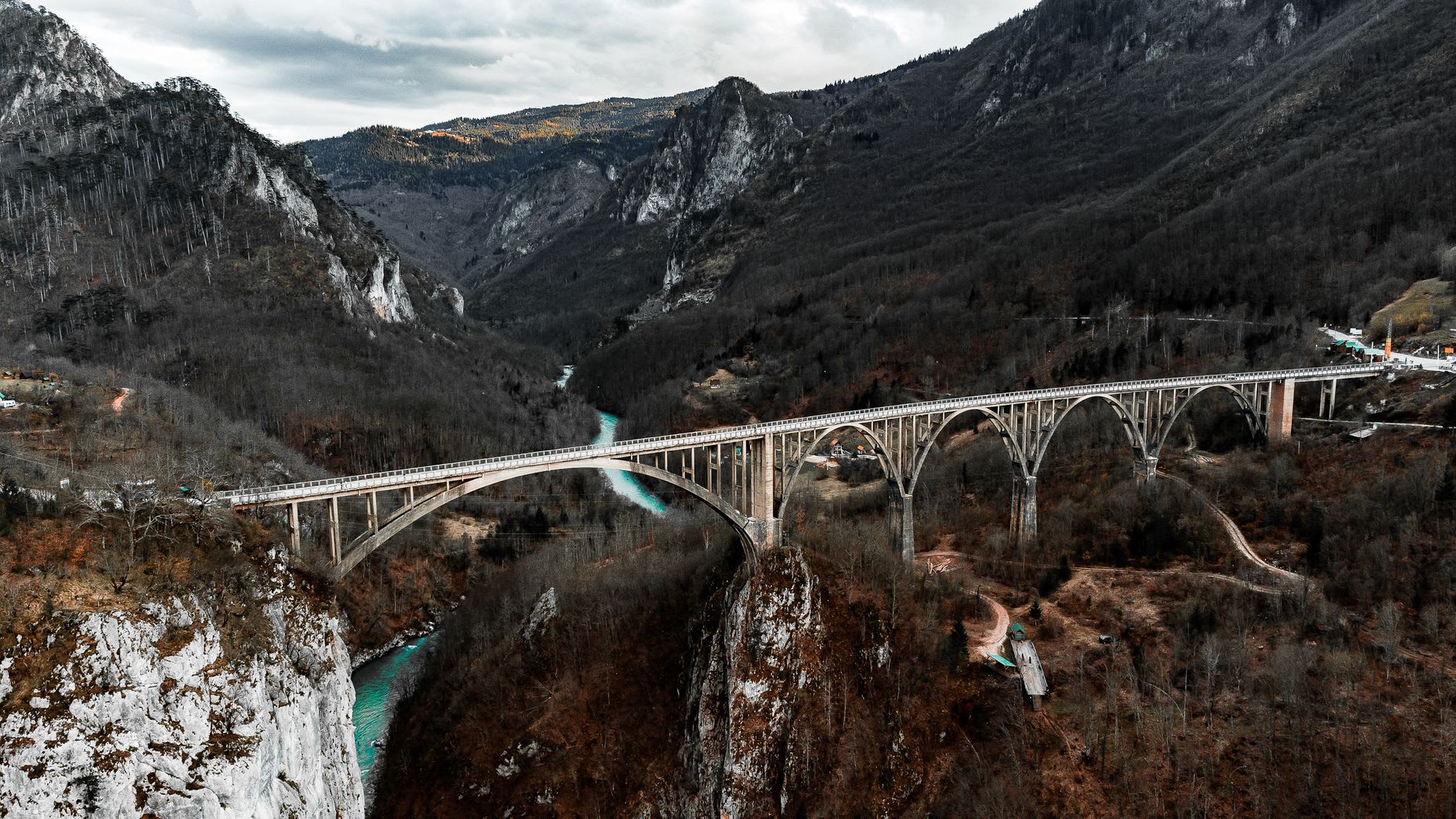
I heard the Tara before I saw it. Standing at the rim of the gorge near Đurđevića Tara Bridge, the sound came up from somewhere impossibly far below — a low, continuous roar, not loud exactly but present in the way a heartbeat is present, something you notice when you stop making other noises. Then I looked over the edge and understood the scale. The canyon drops 1300 meters in places. The Tara River at the bottom was a thin thread of white and green visible through a corridor of limestone walls and forest that seemed to go down until it reached a different country.
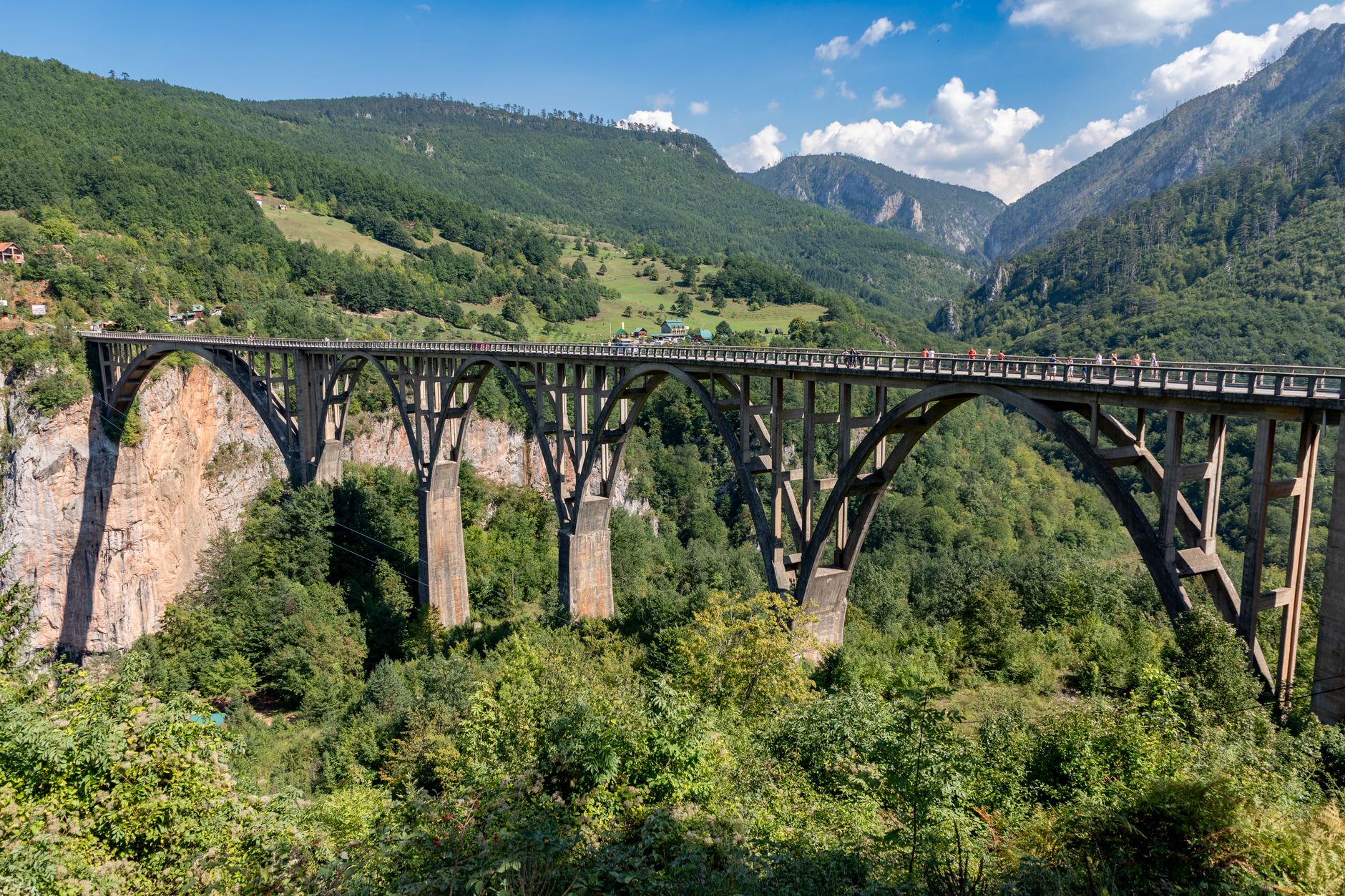
The bridge itself is part of the experience. Đurđevića Tara Bridge — a five-arched concrete span built by Italian engineers in the late 1930s — leaps the gorge at a height of 172 meters. During the German advance in 1942, one of the Montenegrin engineers who had built it blew up the central arch to slow the occupation. He was captured and executed. The bridge was rebuilt after the war. I stood at the middle of it for a long time, looking down at the forest far below and trying to calculate the distance, which the mind resists accepting. The wind off the gorge was cold even in September.
Rafting is the dominant reason people come to the Tara, and I was initially resistant to anything that felt organized. I did it anyway on day two and was entirely wrong to hesitate. The raft trip from Splavište to Šćepan Polje takes a full day and covers about eighteen kilometers. The river runs cold even in September — snowmelt from Durmitor — and the rapids in the upper section are genuine, class III in places, the kind that require full attention and reward that attention with a sustained adrenaline lasting several hours. But it’s the quieter stretches that stay with me: the raft floating slowly between walls that rise so high above you that the strip of sky is narrow and bright, the sound of the water, the cold air off the river in the afternoon heat, the entire world compressed to this green corridor.
Along the banks, the canyon has a forest ecology that barely feels European. Centuries-old black pine and fir push right to the water’s edge; you can hear woodpeckers working somewhere in the canopy. The operators set up camp on the gravel banks for multi-day trips, and the dinners around the fire — lamb stew, bread cooked in embers, local spirits that require no explanation — are part of what the river offers.
When to go: May through September for rafting. May and June mean higher water levels and faster rapids from snowmelt; July and August are peak season but the canyon’s depth keeps temperatures reasonable even in summer heat; September has lower water but clearer visibility and far fewer raft groups on the water. The canyon is accessible on foot year-round from the bridge and rim trails, which stay open in most winter conditions.