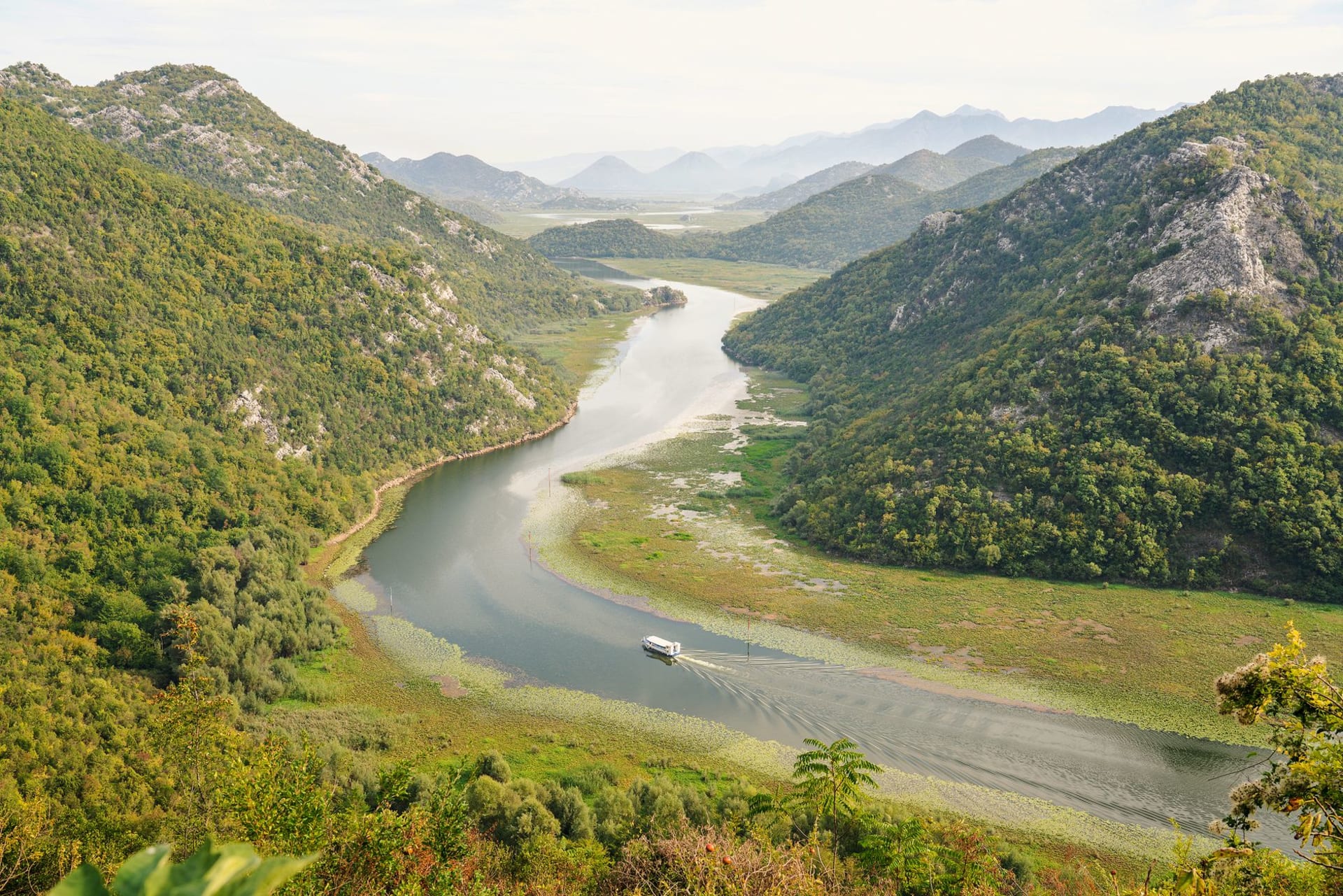
Lake Skadar
"The pelican doesn't care that you've come a long way. It is exactly where it intends to be."
I got to Virpazar before the morning fog had lifted and hired a boat from a man named Dragan who spoke no French and very little English but who understood, when I pointed at the pelicans visible through the mist, exactly what I wanted. We went out for two hours in a flat-bottomed wooden boat with an outboard motor just powerful enough to move us quietly through the reed channels. The water was black until the sun came through and turned it amber, then green, then a pale blue that matched the sky above.
Lake Skadar — Skadarsko Jezero in Montenegrin, Liqeni i Shkodrës in Albanian — is the largest lake in the Balkans, running across the border between Montenegro and Albania with a looseness that makes the political boundary seem beside the point. The Montenegrin side is national park; the Albanian side looks wilder. Dragan pointed toward Albania with something between pride and affection. The reed beds along the shores hold Dalmatian pelicans, cormorants, herons, and enough other species to make a serious birder’s hands shake. I saw a pelican from perhaps ten meters — an implausible animal, something from prehistory, enormous and utterly unconcerned with me.
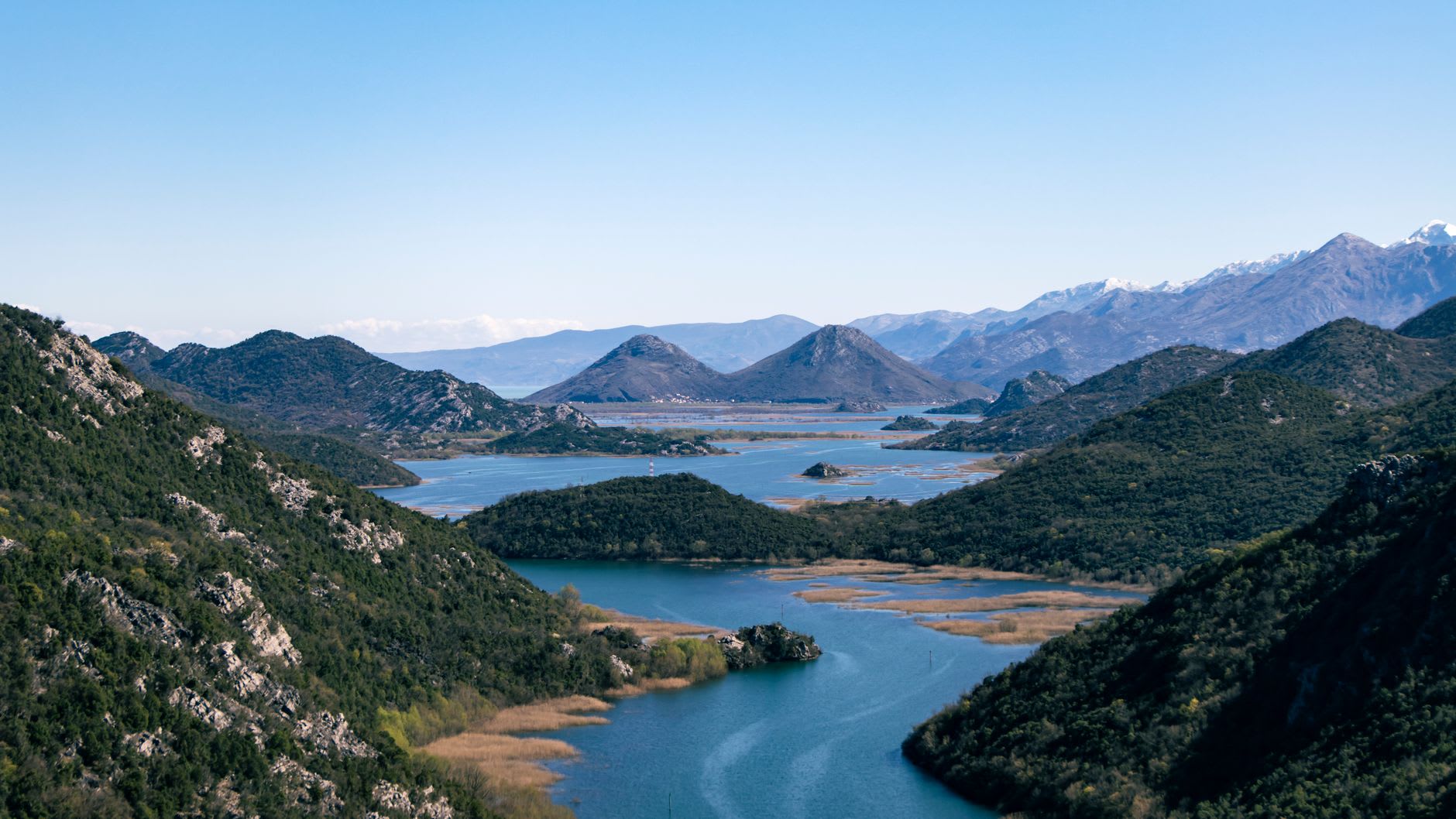
Virpazar is the main village on the lake’s edge — a small cluster of stone houses around a little square with a fountain and two restaurants. The restaurant on the water terrace serves grilled carp from the lake with bread someone made that morning, a fact confirmed by its texture and residual heat. I had lunch alone at a table with a direct view of the water, and the meal was so simple and correct that I found myself thinking about it later in the week. Carp is a difficult fish to love in many preparations. Grilled fresh over wood, its flesh still tight and the skin slightly crisp, with a plate of local salad and rough wine — this is the version that makes sense of it.
The lake has wine. The Crmnica region above the shore produces a red called Vranac that the Montenegrins drink with everything. I had it with the fish, which was the wrong combination and also the right one. The vineyards climb the hillsides above the water in terraces that catch the afternoon light, and you can walk up through them from the village in less than an hour.
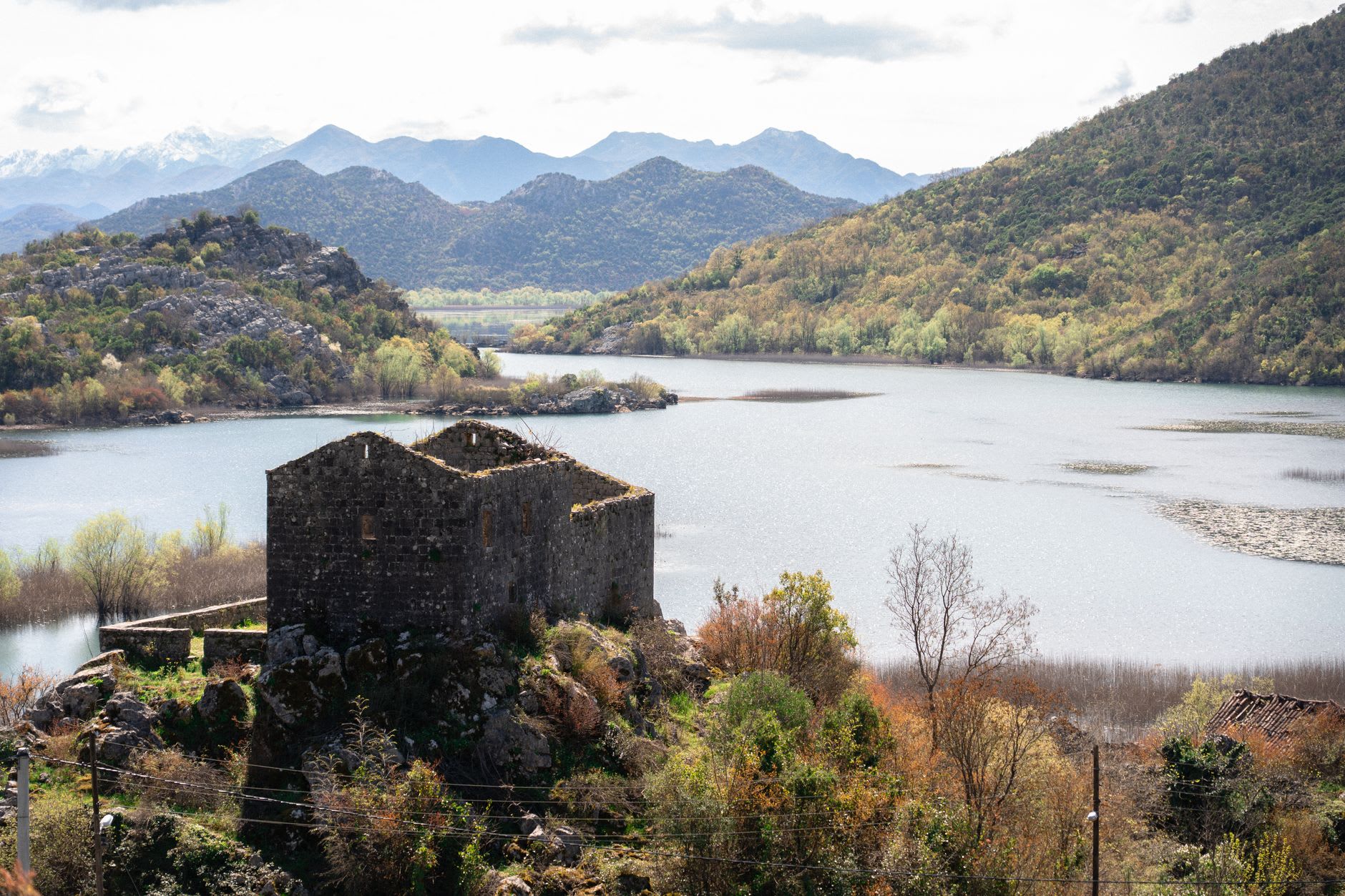
You can also walk the old caravan trails along the hillsides above the lake, passing abandoned medieval monasteries and Ottoman fortresses. The views from the ridgeline are vertiginous — the lake spread out below, pale and immense, the Albanian mountains rising on the far shore like a promise of somewhere else.
When to go: April through June for birds — the spring migration peaks in April and the water lily blooms begin in May, turning large sections of the lake pink and white. September brings the grape harvest in Crmnica and the lake is warm enough for swimming from the small beaches near Virpazar. July and August work but the heat on the water is intense; go out on the boat early morning and save the afternoon for the wine trail.