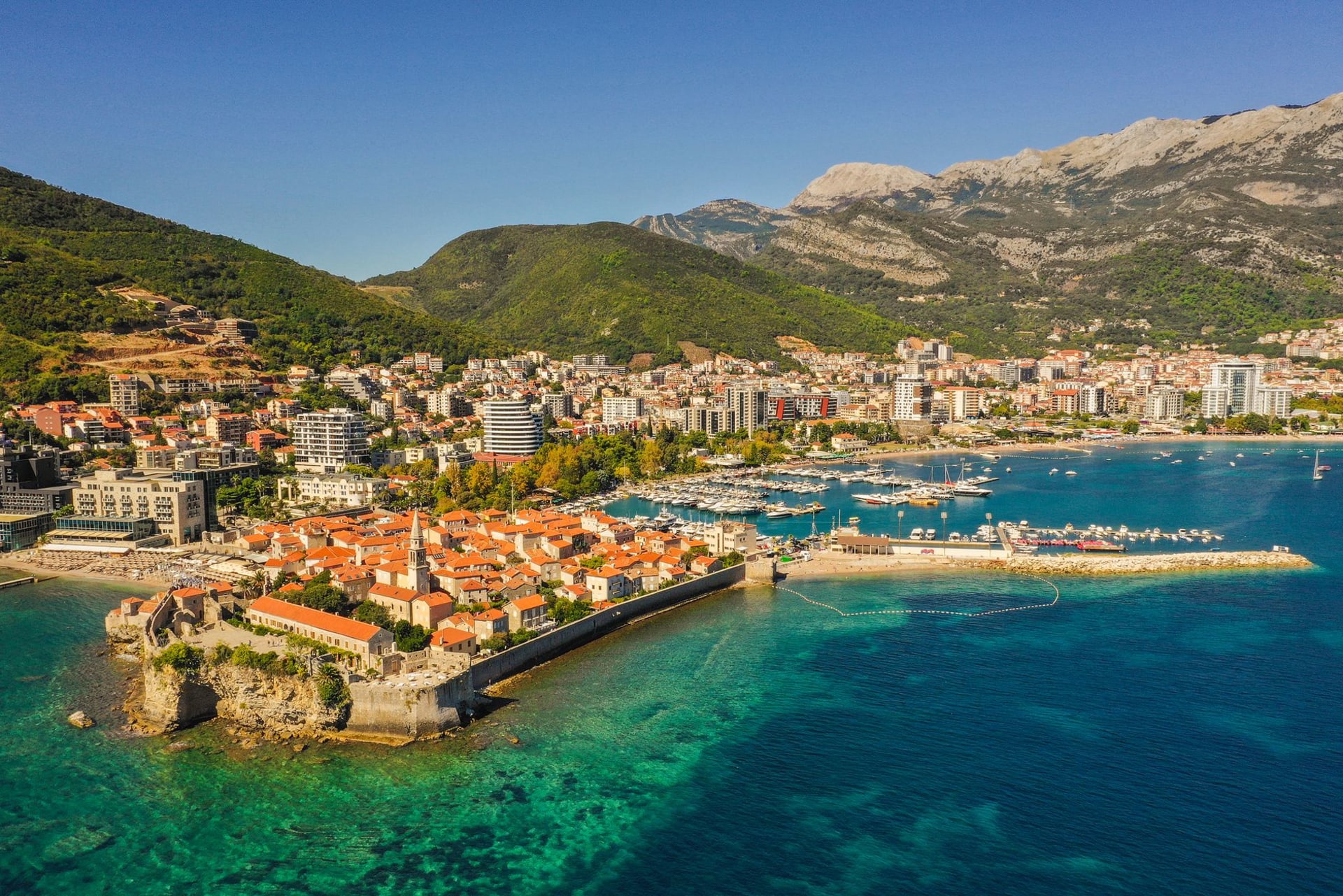
I made the mistake of arriving on a Friday evening in August. The main road into Budva was a slow-moving convoy of rental cars and tour buses, and the beach clubs along the Slovenska Plaža pumped bass from speakers the size of refrigerators. It was absolute chaos and I loved none of it. But I stayed because I’d read enough to know that Budva has a second version of itself available to the patient traveler — the one who wakes before the beach umbrellas are staked and the cocktails poured. I set my phone for five-fifteen and the next morning walked into the old town at six o’clock and found a different city entirely.

The Stari Grad — Budva’s medieval old town, a compact peninsula of Venetian limestone barely larger than a few city blocks — is startling when empty. The lanes are barely a meter wide in places, worn to a mirror shine by centuries of foot traffic. Flowers spill from window boxes onto walls that have been standing since the fifteenth century. The Citadela, the old fortress at the tip of the peninsula, was open early and I climbed its tower to look south toward Albania and north toward the long pale arm of Sveti Stefan — the island-hotel that has been photographed from every conceivable angle but still catches the eye at distance. The sea was green-blue in the shallows and deep navy further out, and a single fishing boat was coming in with whatever the night had produced.
The food in Budva is harder to navigate than in Kotor — the tourist apparatus is more developed, the menus more international, the prices more creative. But there are still places that got there before the renovation wave. I found a konoba on the back side of the old town where the grilled fish arrived with a bowl of blitva — that Swiss chard and potato combination the Adriatic coast claims as its own — dressed with olive oil good enough to drink. A carafe of the house white was four euros. Outside, two tables of Montenegrin families were having a late lunch with several generations and considerable volume. This is the version that requires some looking, but it’s there.

The coast around Budva has beaches of varying quality and crowds. Mogren — a ten-minute walk from the old town through a tunnel carved in the cliff — is two small coves connected by a path, and in the shoulder season it’s genuinely lovely. The beach clubs that dominate the main strand become quieter in May and October to the point where you can hear the actual water.
When to go: May through mid-June is the sweet spot — the sea is warm enough, the crowds are a fraction of July’s, and the old town at dusk is genuinely romantic. October gives you similar quiet with fewer opening hours. Avoid July and August unless you specifically want the summer festival scene, in which case Budva delivers it completely.