
Biogradska Gora
"Some forests have been managed. This one has merely been left alone, and you can feel the difference within ten steps."
I came to Biogradska Gora because a man in Kolašin told me it was the last place in Montenegro nobody had figured out how to ruin yet, and I have a weakness for that kind of recommendation. It sits in the Bjelasica mountains, a tight pocket of land that a Montenegrin prince set aside in 1878 so that nobody would ever cut the trees. They never did. What’s left is one of the last three primeval forests in Europe — trees that have lived and fallen and rotted on their own schedule for five hundred years, with nobody tidying up after them.
Lia and I drove in from Kolašin on a road that narrows until you start doubting your decisions, and then the forest opens onto Lake Biograd, a glacial lake the color of strong tea. There were maybe six other people there. A family eating bread on a bench, an old man fishing without much conviction, and the two of us, standing at the water’s edge feeling slightly underdressed for how serious the silence was.
The lake and the loop
There’s a flat trail that circles Lake Biograd, about three and a half kilometers, and it’s the kind of walk that doesn’t ask much of you while quietly giving back a great deal. The water on the morning we went was perfectly still, holding an upside-down forest in it, and the only sound was the occasional plop of something landing on the surface — a leaf, an insect, I never found out. Lia walked ahead and I kept stopping, which is our usual arrangement on a trail.
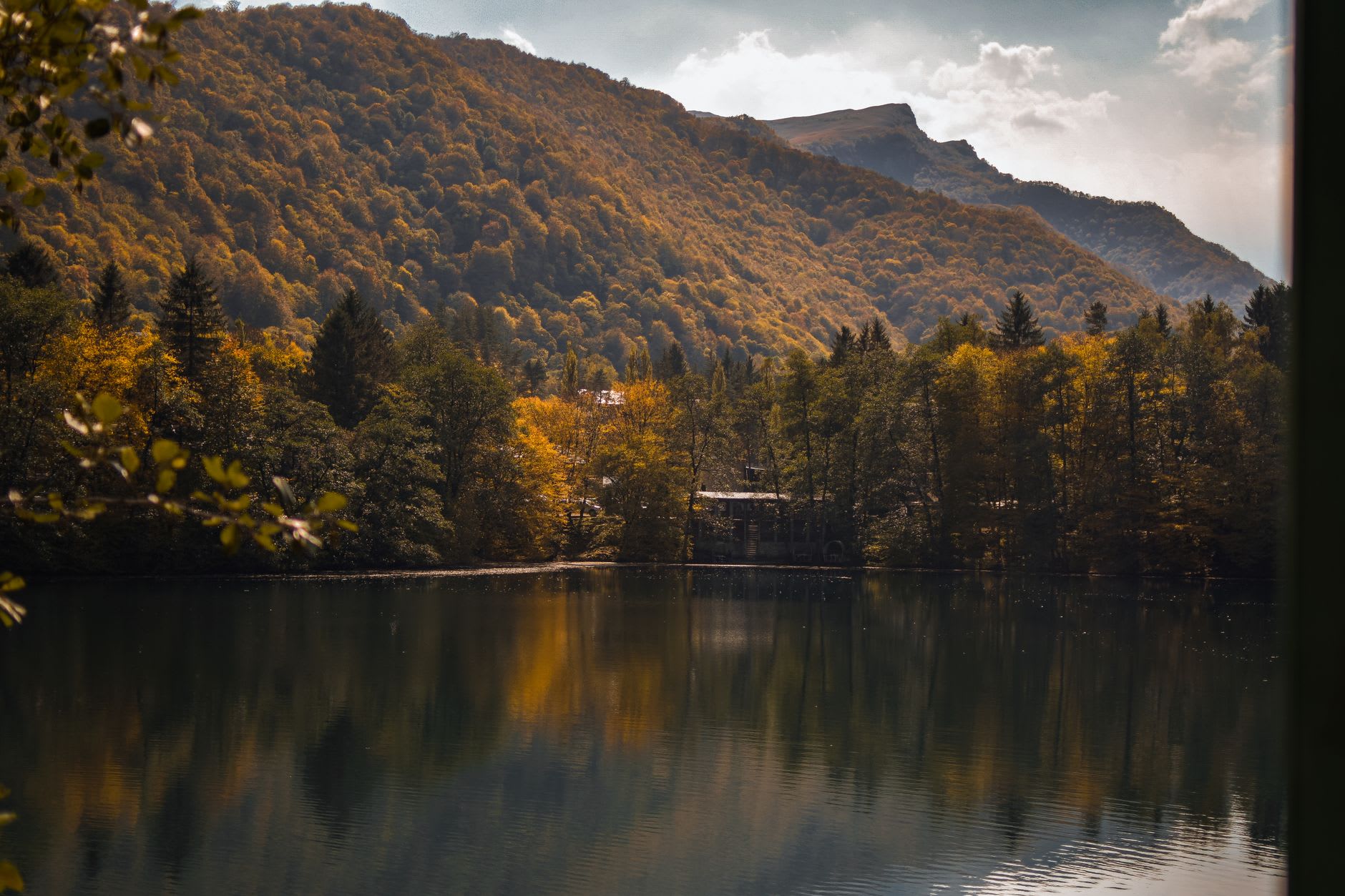
What struck me most were the fallen giants. In a managed forest, a dead tree gets hauled away. Here they’re left exactly where they drop, and they become the whole drama of the place — vast trunks furred green with moss, mushrooms growing in rows along them, saplings rising straight out of their decaying backs. There’s a beech somewhere along the eastern shore that a ranger told me is over five hundred years old. I stood under it longer than was reasonable. It was alive when none of the cities I love existed in their current form, and it will probably outlast my opinions about it.
Going higher, eating simply
If you want more than the lake loop, the trails climb up into the Bjelasica peaks, and the forest thins into alpine meadow grazed by sheep. We didn’t go far that day — the lake had slowed me down to a pace that made ambition feel rude — but the views back down over the canopy are worth the sweat for anyone with more discipline than I had that morning.
Near the lake there’s a small katun — a traditional herders’ settlement — where a family serves cicvara, a buttery cornmeal dish that sits in your stomach like a decision you won’t regret, along with sheep’s cheese and kajmak and bread. We ate at a wooden table with the lake behind us and didn’t talk much. It seemed like the right forest to be quiet in.
When to go: Late September and early October, when the beeches turn and the summer day-trippers from the coast have gone home. Summer is green and pleasant but busier; winter buries the access road in snow. Bring layers — even in warm months, the air under that old canopy stays cool and slightly damp, which is exactly part of its charm.