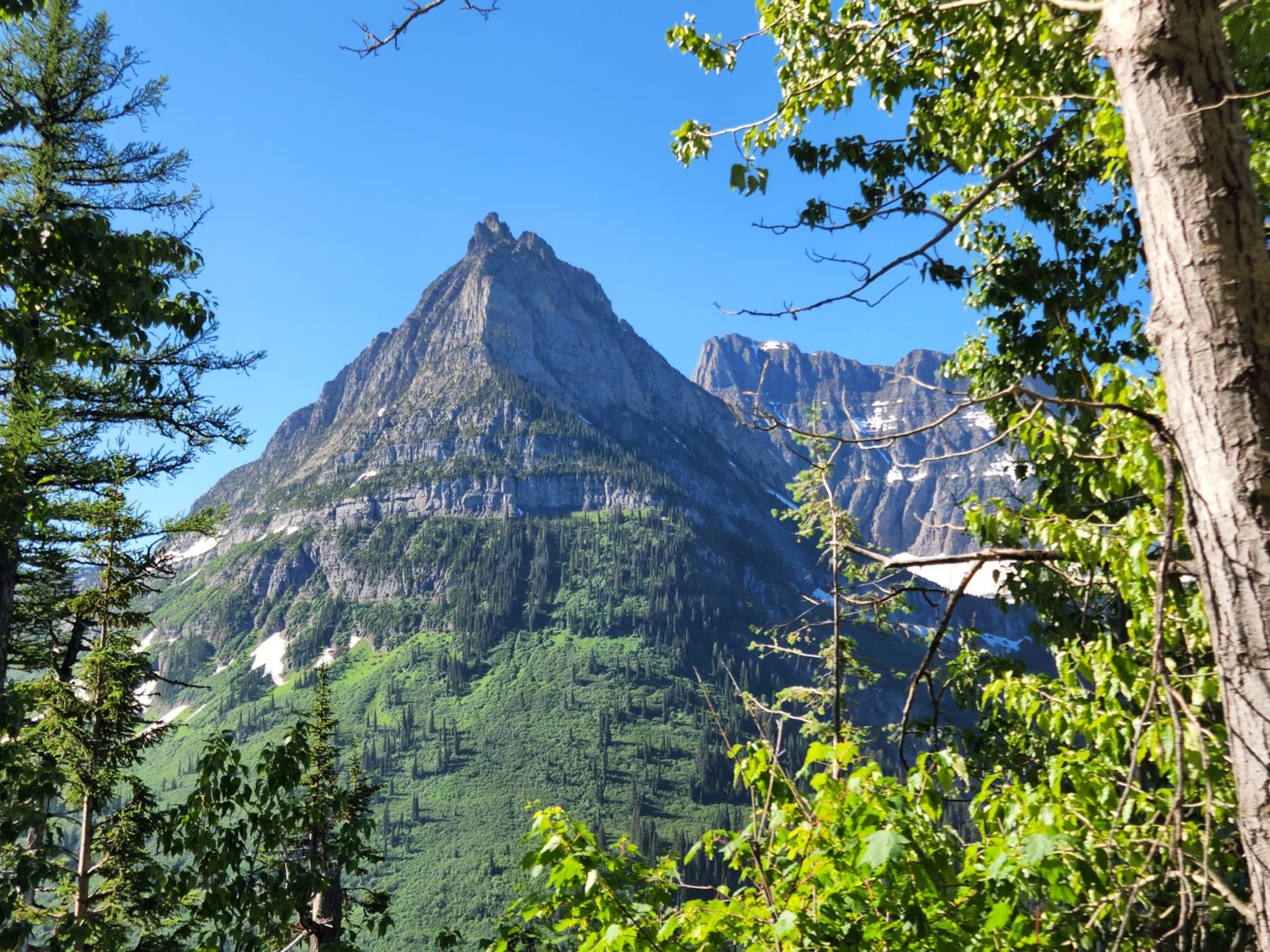
Glacier National Park
"The glacier is retreating faster than I can find words for it — and the blue it leaves behind is devastating."
I came around the switchback above the Loop and the entire west side of Glacier opened below me in one unannounced motion — valley after valley stacked into the distance, each one a different shade of green, the peaks above them so sharp they looked like they’d been carved that morning. I pulled over and just stood there with the engine ticking and my coffee going cold. Going-to-the-Sun Road does this. It gives you scale that a camera cannot hold and an elevation gain that your ears register before your eyes do.
The park’s signature experience is the road itself: fifty-two miles of engineering that clings to cliff faces, tunnels through ridgelines, and crests at Logan Pass at 2,025 meters. But what the road shows you is only the introduction. The real glacier country begins when you leave the car.

The trail to Grinnell Glacier starts at the Many Glacier Hotel and climbs through meadows full of beargrass — those strange white pompoms that bloom only once every seven years — past two smaller lakes and over a moraine edge before depositing you at the glacier’s lower lip. The ice is blue in a way that seems chemically impossible, the kind of blue that makes you think the color itself has been compressed under millennia of snow. I arrived at noon in September when the light was direct and the reflection off the ice was almost painful. A ranger told me matter-of-factly that Grinnell has lost more than seventy percent of its volume since 1850. I ate my sandwich quietly after that.
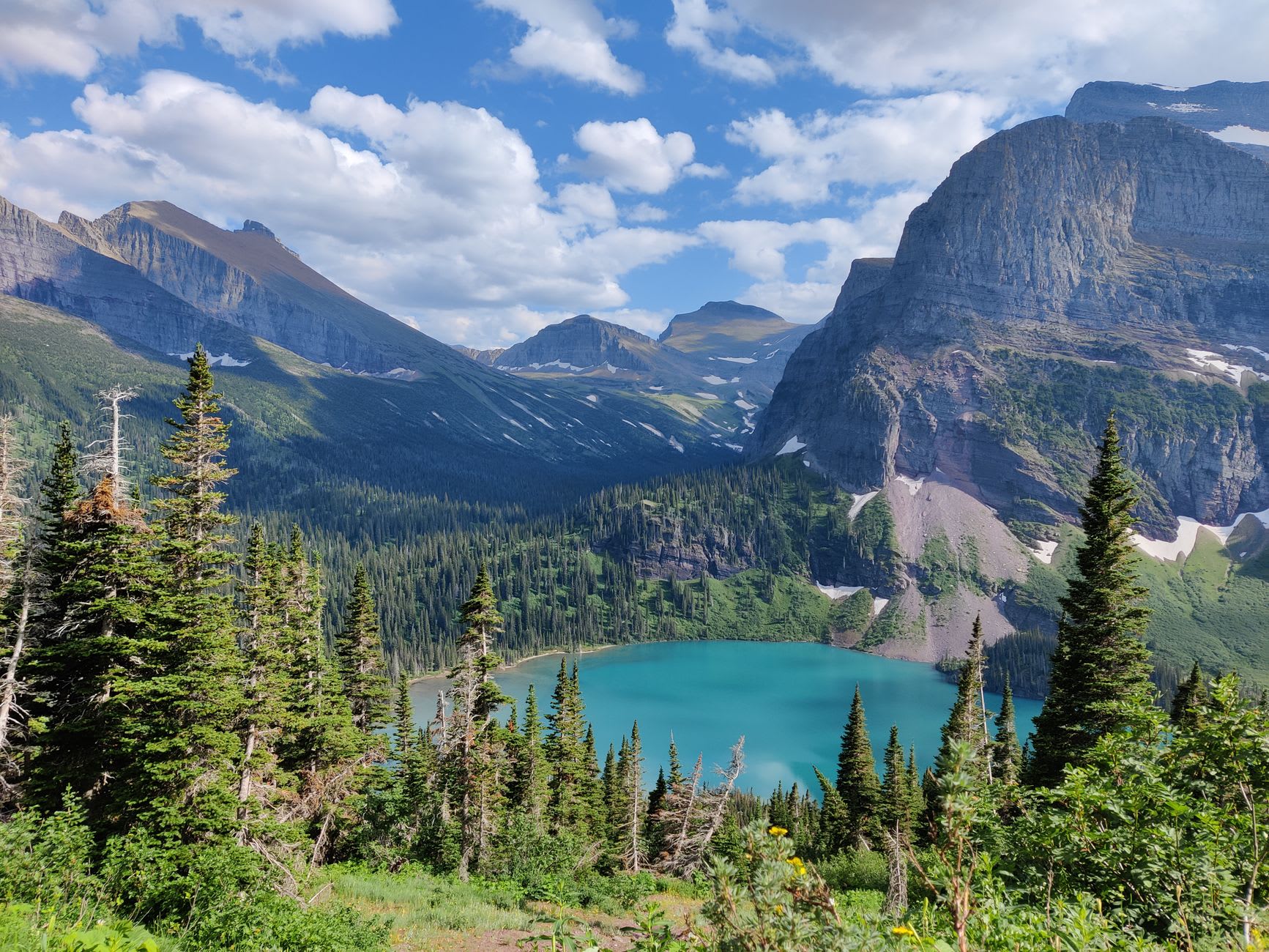
Logan Pass, at the road’s summit, has a quality I wasn’t expecting: mountain goats that simply do not care about humans. They graze on the boardwalk margins, climb above the visitor center roof, and occasionally wander through the parking lot with the entitled ease of animals that know they are on the right side of the law. Above the pass, the Hidden Lake trail crosses a high plateau that in late summer fills with wildflowers so dense and various they feel extravagant — Indian paintbrush in orange and red, purple lupine, yellow glacier lilies still pushing through patches of snow. The lake itself, when you finally see it through the notch in the ridge, sits in a bowl so perfectly formed it looks like it was placed there.
The Many Glacier area on the park’s east side operates at a different emotional frequency than the west. The Hotel, a Swiss chalet improbably dropped at the edge of Swiftcurrent Lake, was built in 1915 and has barely changed in feeling. The dining room serves trout that came from a river forty minutes away. From the hotel dock at dusk, the reflected mountains in the lake go pink and then deep purple and then disappear into the dark so gradually you don’t notice you’ve lost them.
When to go: The Going-to-the-Sun Road typically opens fully in late June or early July, depending on snowpack. August is peak season with full trail access but genuine crowds. September is the best month — the light goes golden, the crowds drop sharply after Labor Day, huckleberries ripen along every trail, and the first dustings of snow hit the upper peaks. Book lodging inside the park many months in advance for summer; for September, a little less lead time is needed but still plan ahead.