Americas
Montana
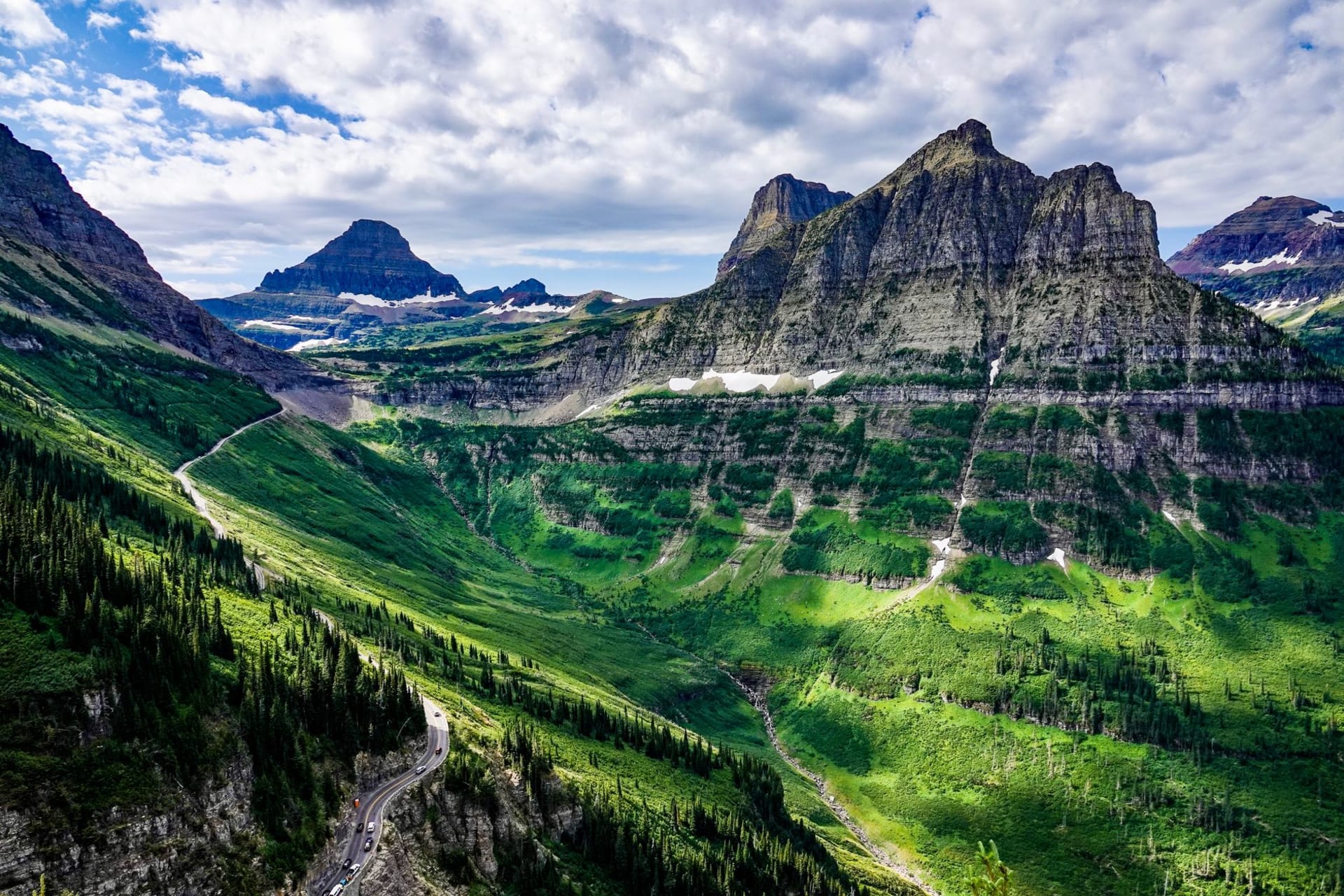
"I pulled over on Going-to-the-Sun Road and just stood there, completely undone."
I didn’t expect Montana to be emotional. I’d been driving for hours from Missoula, climbing slowly through lodgepole pine forests along the Going-to-the-Sun Road, when the valley opened up below me and I understood what “big sky country” actually means — not a slogan, not a metaphor, but the literal physical fact of a horizon so unobstructed it bends. The scale here operates differently than anything I’ve encountered in the Alps or the Sierra Nevada. Glacier National Park doesn’t just look dramatic; it makes you feel small in a way that takes a few hours to shake off.
The park has over two hundred named lakes, and most people see one or two from the road and call it done. That’s the version that feels like a screensaver. The actual Montana reveals itself on foot: a seven-kilometer push through subalpine meadows to Grinnell Glacier, where the ice is blue in a way that feels almost artificial; the trail to Hidden Lake at Logan Pass where mountain goats walk past your knees without concern; the east side of the park at Two Medicine, which sees a fraction of the visitors and retains the quality of somewhere genuinely remote. In September, after the summer crowds thin and before the first serious snow, the whole place turns amber and copper and the light goes golden at four in the afternoon. That’s Montana.
The towns are worth understanding too. Whitefish is a ski resort that manages not to be insufferable about it — a proper main street with a decent taco joint and a bar where ranch workers and snowboarders share the same stools. Kalispell has a farmers market in summer with flathead cherries that taste like something a French grandfather would have grown. In Browning, on the Blackfeet Nation, the Museum of the Plains Indian tells a version of this landscape’s history that the national park interpretive signs studiously avoid.
When to go: Mid-June through mid-September for Glacier’s full road access and navigable trails. The Going-to-the-Sun Road doesn’t fully open until late June some years. September is the best month — lower crowds, fall color beginning, wildlife moving toward lower elevations. Avoid July 4 weekend entirely.
What most guides get wrong: They tell you to book lodging inside the park and spend your whole trip on the one road everyone drives. The east side of Glacier — the Blackfeet corridor, Two Medicine, Cut Bank — is wilder and nearly empty. And the park’s less famous neighbor, the Bob Marshall Wilderness to the south, has no roads at all. If you actually want to be alone in this landscape rather than photograph a mountain from a car window, that’s where to go.