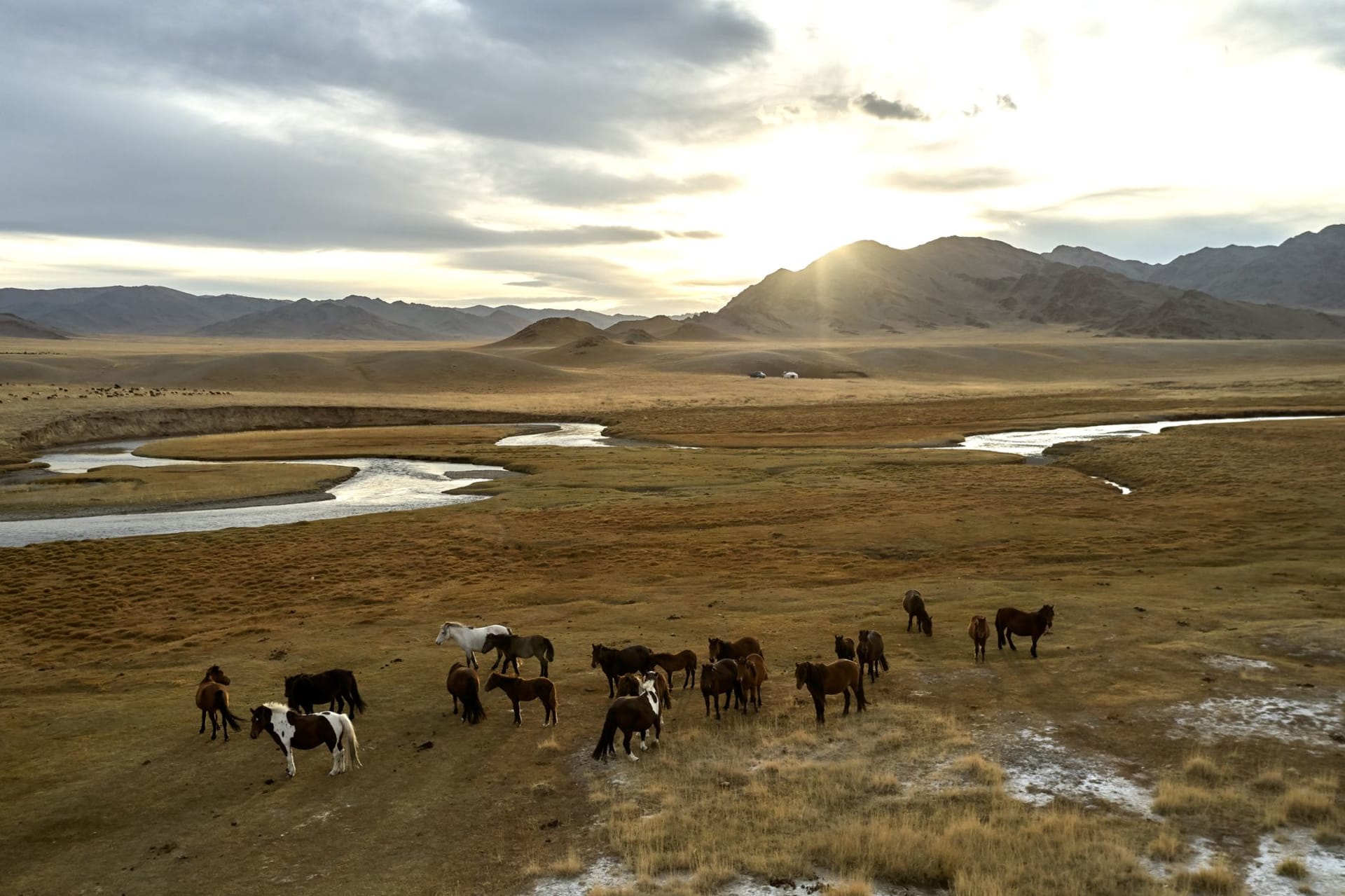
Terkhiin Tsagaan Lake
"The lake is white in the name only. What it actually is, in the late afternoon, is the most specific shade of blue I have found."
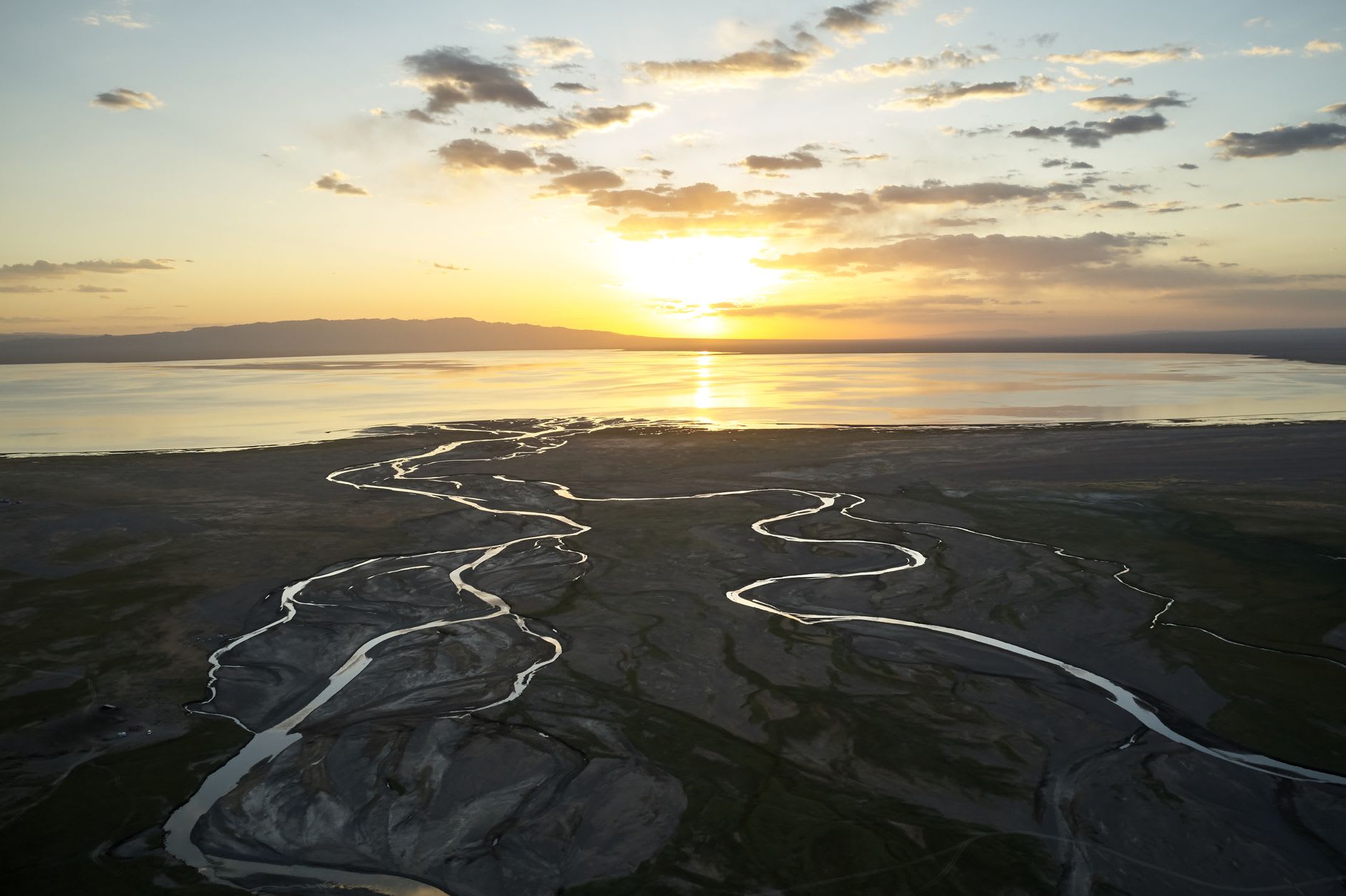
The name means White Lake, which is either a translation problem or an early observation made in different light than I arrived in, because Terkhiin Tsagaan Lake in the late afternoon of my first day was the colour of the interior of an abalone shell — blue and green simultaneously, with a particular luminosity that comes from water very shallow over white volcanic sand. The Mongolians named it for the way it looks in winter, when it freezes to an opaque silver-white and the lava fields around it are covered in snow. In August, there is no white. There is that blue, and the black cone of Khorgo volcano rising from the western shore, and the silence of the Khangai highlands, which is the silence of a place that never had many people and now has fewer.
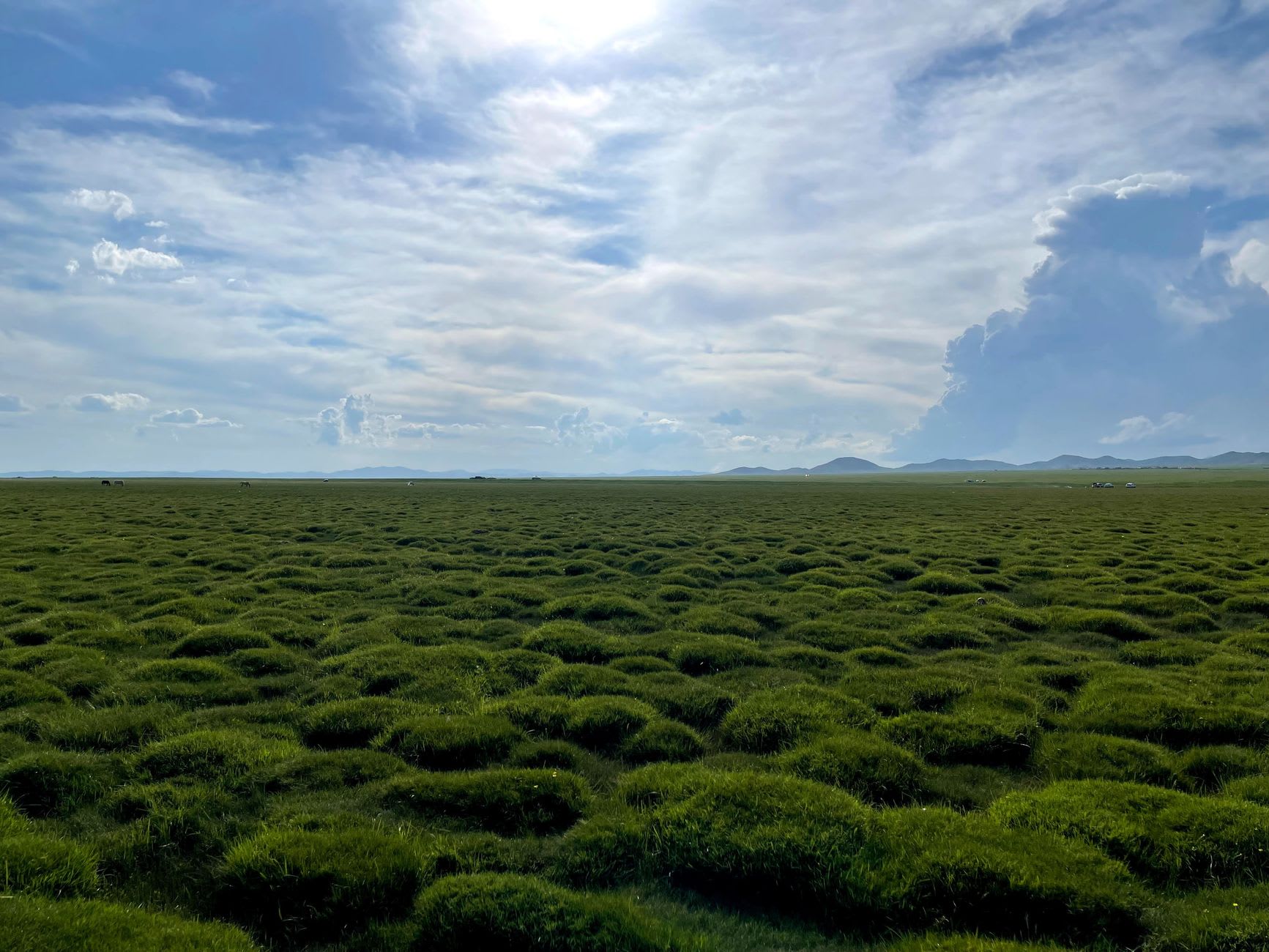
Khorgo volcano is the geographic fact that made the lake possible. The eruption that built the cinder cone — roughly eight thousand years ago, though geological dating in this region has large margins — sent a lava flow down the valley of the Terkhiin River, damming it and creating the lake behind the basalt plug. The lava field around the volcano’s base is still visible, a black broken surface where nothing grew for millennia and where even now the vegetation is tentative, the grasses and wildflowers finding purchase in the cracks of cooled rock. The climb to Khorgo’s summit — a forty-minute walk up the cinder slope — ends at the crater rim, from which you look down into a bowl of dark volcanic rock and across the lake below, both of them products of the same event, one made of solid fire and one of the water that eventually gathered in the depression the fire left.
I swam in the lake on the third afternoon, which required a commitment that my body negotiated reluctantly and my pride would not let me abandon. The water was cold in the specific way of mountain lakes fed by snowmelt — not painful at first, then increasingly purposeful, then after a minute or two simply cold in a way that feels structural, as if the cold were built into the water’s molecules. I swam to a small basalt island fifty metres from shore and back, and climbed out feeling the way you feel after a decision that was stupid at the time and is now a good story. The woman at our ger camp handed me a towel and a bowl of suutei tsai without comment. The tea was the correct temperature and the salt in it was exactly right.
The lake is fished by the families who camp along its shore — taimen and lenok, the large salmonids of Central Asian rivers, are present in numbers that attract serious fly fishermen who arrive with equipment that seems excessive for any landscape this remote. The taimen, which can reach a metre in length and behaves like a fish that knows it is the largest thing in the water, is a protected species in most of the river systems north of here, but some catch-and-release fishing is permitted on the lake with local guides. I watched a French angler spend six hours working a particular section of shoreline with complete absorption, catching two fish and releasing both, and then eating khorkhog with us at the camp as if the day had been a complete success. Which, by his account, it had.
When to go: July and August for swimmable weather, full lake access, and the wildflowers on the lava fields. June is cooler and less crowded. September brings dramatic light and near-empty campsites but the nights turn genuinely cold. The area is inaccessible in winter due to road conditions, and the lake is frozen through April.