Khar Us Lake
"A pelican in the middle of Mongolia felt like a typo. I counted eleven of them before I believed my own eyes."
A vast wetland at the foot of the Altai where reed beds hide pelicans, the second-biggest lake in Mongolia goes almost entirely unvisited.
Khar Us Lake is Mongolia’s second-largest by surface area, sitting in Khovd province at the eastern edge of the Great Lakes Depression, fed by meltwater and rivers draining off the Mongol Altai, and it is, as far as I could tell during my visit, almost entirely unvisited by anyone outside a small circle of ornithologists and the herder families who’ve worked its shores for generations. I went because the same paleontologist friend who’d told me about Nemegt mentioned, almost as an aside, that Khar Us held one of the largest Dalmatian pelican colonies in Asia, and the sentence “pelicans in Mongolia” stuck with me long enough to justify the detour.
The lake itself is shallow and extensively fringed with reed beds — some of the largest reed marshes in Central Asia, according to the ranger I spoke with at the small protected-area office near the shore — and the combination of open water, marsh, and the dramatic snow-streaked Altai backdrop gives it a landscape character unlike anywhere else I found in Mongolia: part alpine, part wetland, entirely its own thing. I spent a morning in a small wooden boat with a local guide, poling through reed channels too narrow for a motor, and the birdlife emerged gradually rather than all at once — first cormorants, then herons, then, rounding a bend into a wider lagoon, a raft of roughly a dozen Dalmatian pelicans, enormous and improbable, riding low in the water with the specific unhurried dignity that seems to belong to pelicans everywhere.
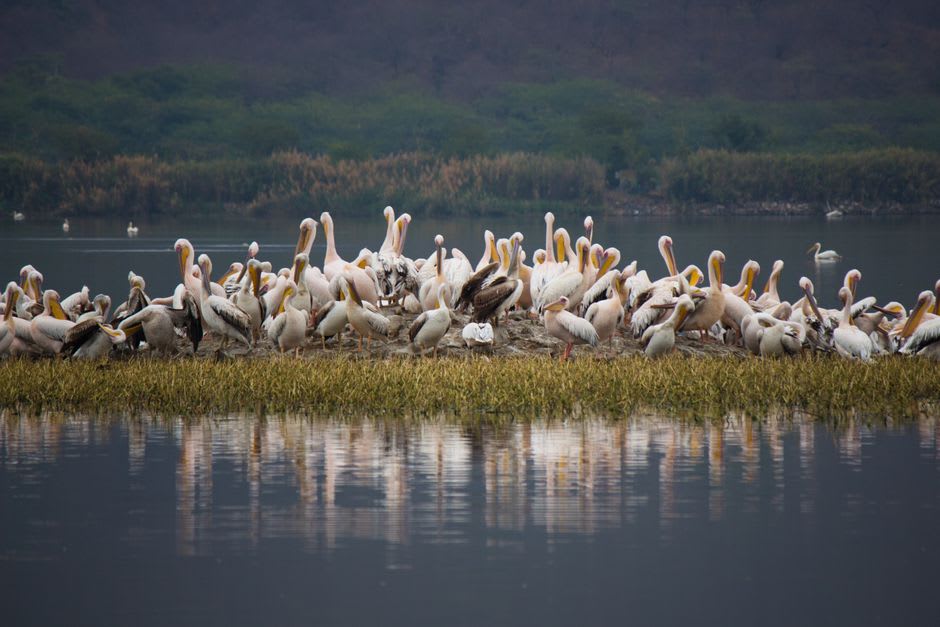
The guide, a young ranger named Oyun who’d studied wildlife management in Ulaanbaatar before requesting a posting back to her home province, told me the pelican population here had been recovering steadily after decades of pressure from fishing conflicts and habitat disturbance, and that the lake’s remoteness — genuinely difficult to reach, with the nearest town of any size, Khovd, still an hour’s drive away over rough roads — had become, almost by accident, its greatest conservation asset. Nobody comes here easily enough to disturb it much.
We beached the boat on a low sandy point in the early afternoon and ate a simple lunch of bread and dried curd while watching the mountains behind the lake hold their snow even in the warmth of a summer afternoon, a reminder of how much elevation and how much winter this whole basin sits beneath even when the lake surface itself feels almost temperate.
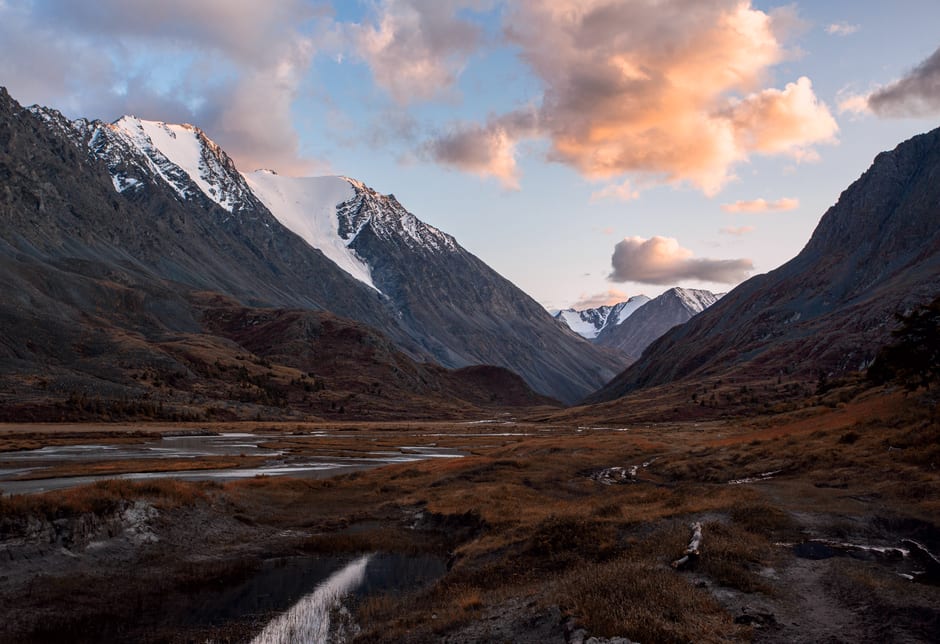
Khar Us asks for real effort to reach and offers, in return, one of the more genuinely surprising wildlife encounters I had anywhere in the country — a wetland this rich, this quiet, and this thoroughly ignored by the tourism map felt like a small secret I was lucky to be let in on.
When to go: May through September for the pelican colony and general accessibility. Bring a guide familiar with the reed channels — the marsh is easy to get disoriented in without local knowledge.
Keep exploring
More from Mongolia
 mongolia
 Khogno Khan Uul
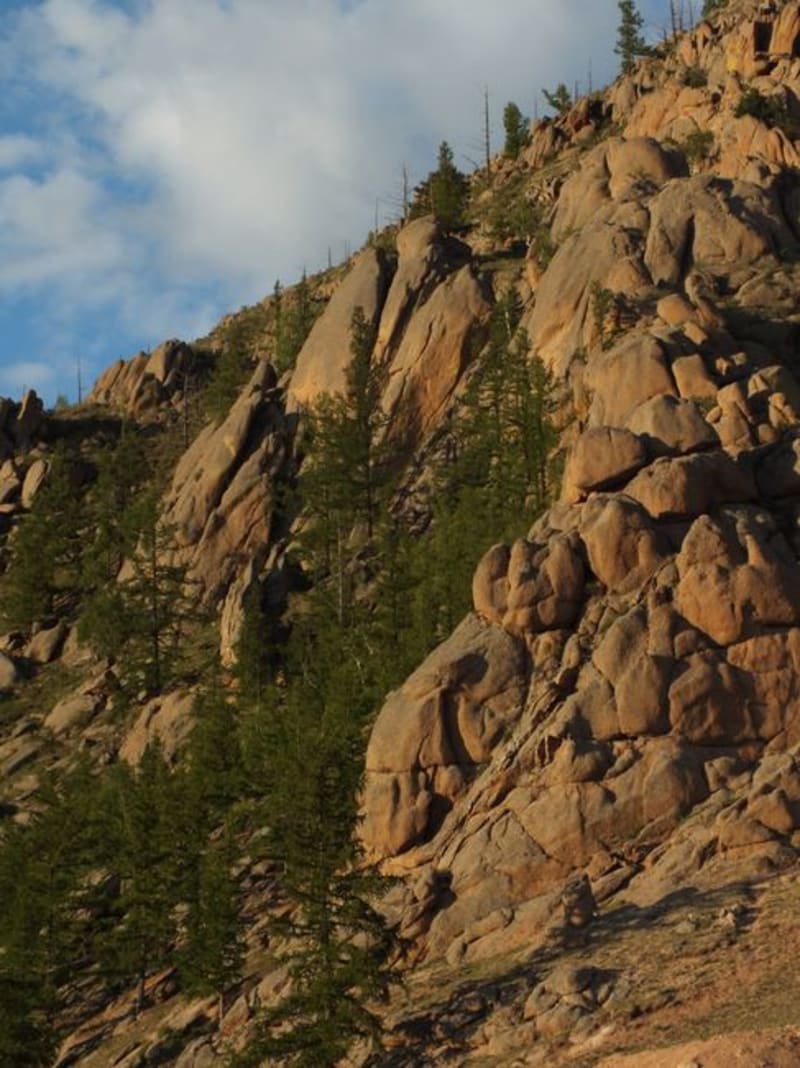
A sacred granite mountain between the capital and the Gobi, with a ruined monastery on its slopes and a small dune field at its base that feels like a preview of the desert still to come.
Explore mongolia
 Khongoryn Els
The singing sand dunes of the Gobi, a wall of mountainous sand that rises three hundred metres straight out of the gravel desert and groans like a distant engine when the wind moves it.
Explore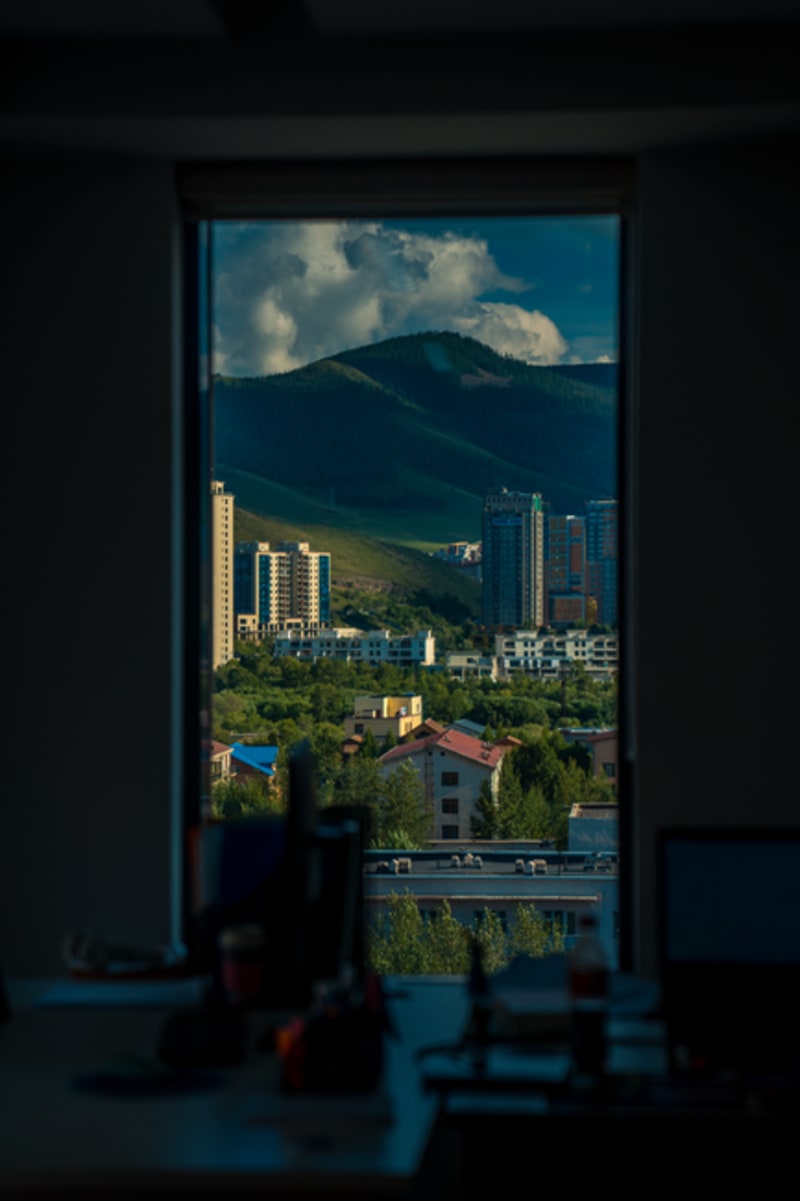 mongolia
 Khovd
A river town at the crossroads of western Mongolia's ethnic patchwork, where Kazakh, Torguud, and Uriankhai communities share a market and a mountain skyline.
Explore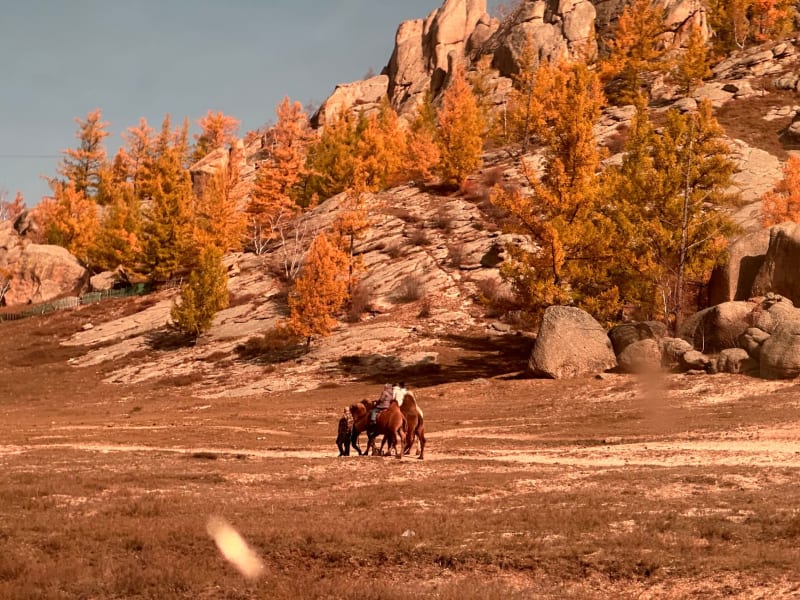 mongolia
 Khustai National Park
Where the world's last truly wild horse was brought back from extinction, running free across river valleys it left a century ago.
Explore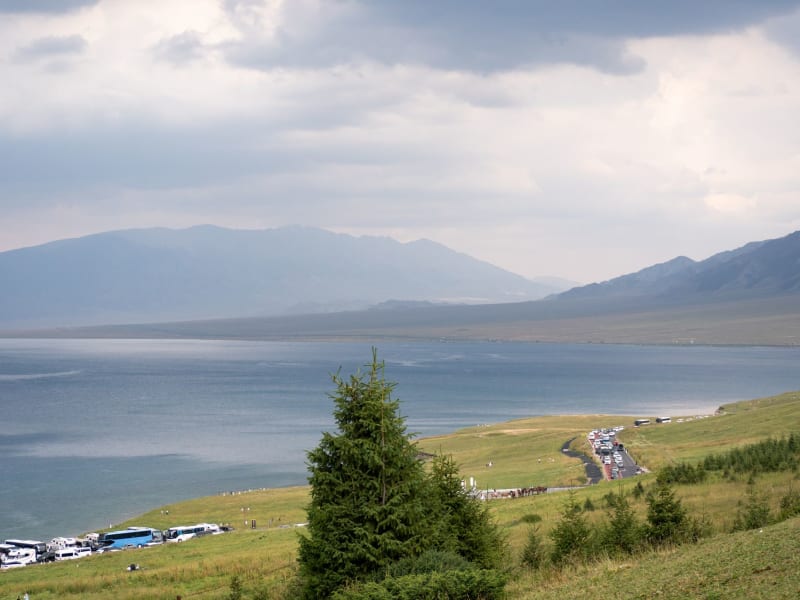 mongolia
 Khövsgöl Lake
Mongolia's deep-north freshwater sea, so clear you can see the bottom at fifteen metres and so cold it slows thought to a useful pace.
Explore mongolia
 Manzushir Monastery
A ruined mountainside temple complex an hour from Ulaanbaatar, half-swallowed by pine forest, with a museum, a giant granite footprint, and enough silence to make the capital feel imaginary.
Explore