Erdenet
"This city didn't grow. It was built, on purpose, in a handful of years, around a hole in the ground. You can feel the design in every straight street."
Mongolia's third-largest city, built almost overnight around one of the world's biggest copper mines, and a strange, honest window into the country's Soviet-era industrial past.
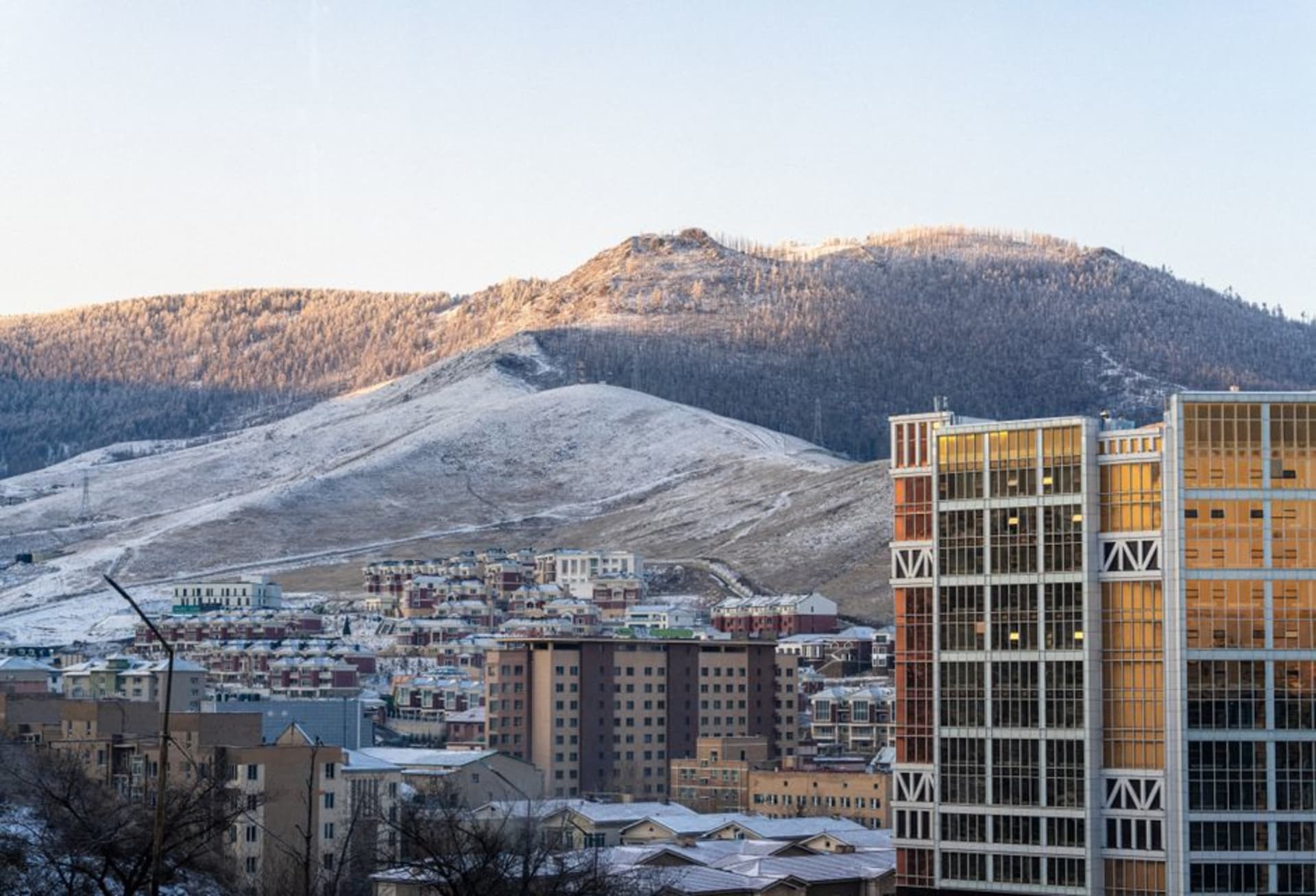
Erdenet doesn’t pretend to be anything other than what it is, which I found refreshing after weeks of steppe romanticism. The city exists because of copper — specifically, the enormous Erdenetiin Ovoo deposit discovered in the 1960s and developed jointly by Mongolia and the Soviet Union into one of the largest copper and molybdenum mines on earth, with a planned Soviet-style city built around it from scratch starting in 1974. There was no town here before the mine. Everything — the wide boulevards, the concrete apartment blocks, the central square with its faded mosaics — was designed and built within a remarkably short window, and the result is a genuinely unusual urban environment in a country otherwise defined by nomadic tradition and a relatively young, organically grown capital.
I arrived expecting an industrial eyesore and found something closer to a time capsule: Soviet-era apartment blocks arranged in the tidy, over-planned grid typical of planned socialist cities, murals and mosaics from the 1970s and 80s still intact on several buildings, a central cultural palace with the kind of monumental concrete architecture that has become almost fashionable again among a certain kind of design tourist, though Erdenet sees essentially none of them. The mine itself is not generally open to casual visitors, but its scale is visible from several vantage points around town — a vast open pit and processing complex that employs a meaningful fraction of the city’s population and defines the entire local economy in a way few single facilities do anywhere.
I spent an evening at a small restaurant near the central square with a mining engineer named Ganbold, who’d grown up in the city as the child of one of the original Soviet-era technical workers, a mixed Mongolian-Russian household that was apparently common in Erdenet’s early decades. He talked about the strange dual identity of a city built explicitly as an industrial project rather than growing from any older settlement, the way that gave residents a specific kind of civic pride tied to production statistics and engineering achievements rather than the older cultural touchstones most Mongolian towns draw on. “We don’t have an old temple,” he said. “We have an ore-processing plant that’s more productive than plants twice its age elsewhere. That’s our monument.”
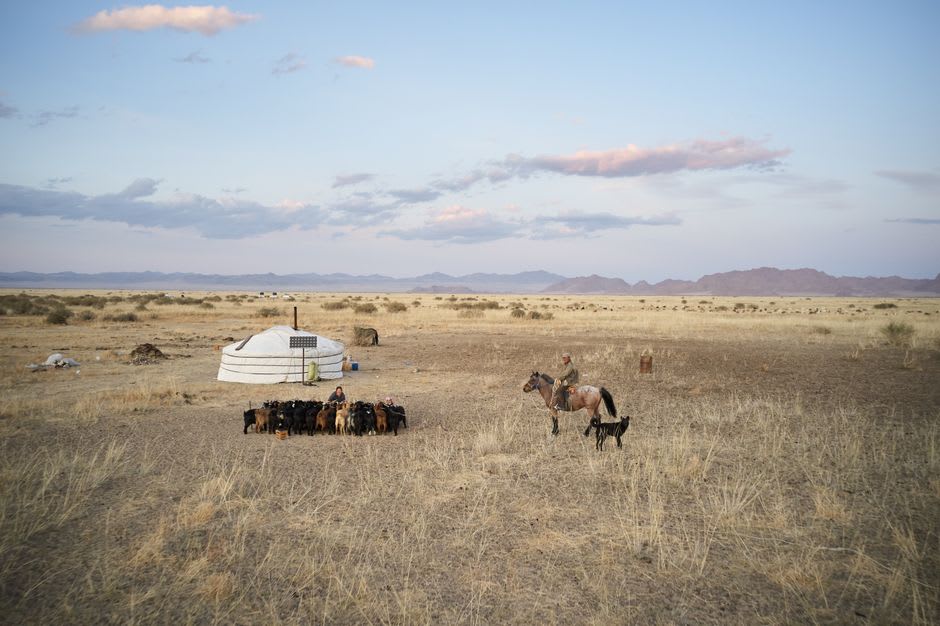
The surrounding countryside softens the industrial edge considerably — forested hills rise close around the city on most sides, and a short drive out delivers you back into the kind of green, pastoral landscape that feels at odds with the concrete grid you just left, herders grazing livestock within sight of the mine’s massive tailings ponds, an odd but oddly Mongolian juxtaposition of the pre-industrial and the aggressively industrial sharing the same valley.
Erdenet isn’t beautiful in any conventional sense, and I wouldn’t recommend it as a first stop in Mongolia. But as a piece of twentieth-century history you can still walk around in, largely unrestored and unmarketed, it’s one of the more honest places I found in the country.
When to go: Any season works for the city itself; summer is more pleasant for exploring the surrounding hills. There’s little reason to visit outside a broader northern Mongolia loop that includes Bulgan or Amarbayasgalant.