Fontvieille
"Every principality needs somewhere to put its warehouses. Monaco put flowers there too."
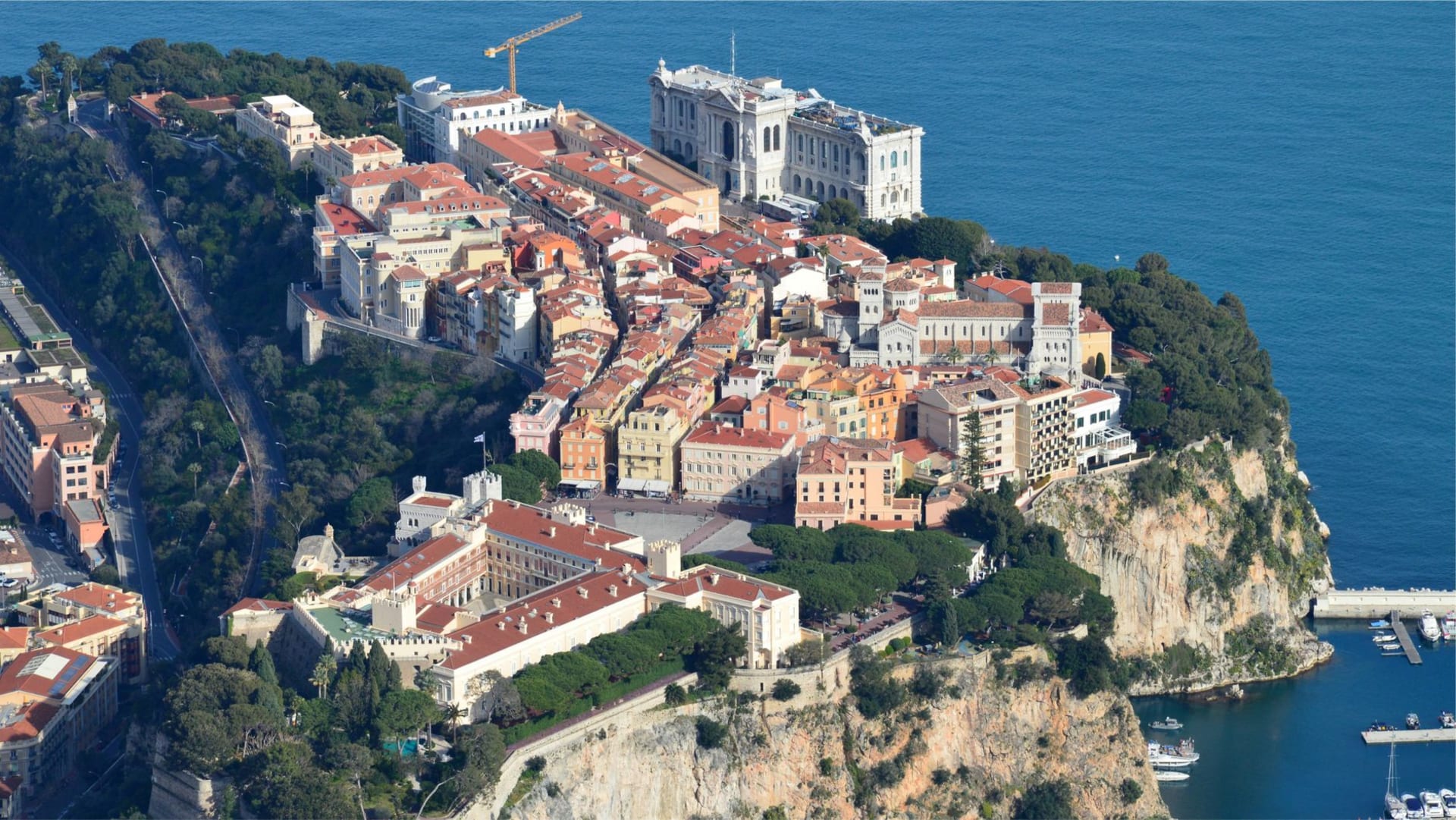
Fontvieille is the part of Monaco that nobody puts on a postcard, which is precisely what I like about it. It is the youngest quarter of the principality — reclaimed from the sea between the 1960s and 1980s on landfill that now hosts light industry, workshops, commercial warehouses, and the heliport from which the principality’s more aerially minded visitors arrive. The streets here are wide and functional. There are loading bays. There is a mechanic. Coming to Fontvieille after a morning in the Casino square or on the Rocher feels like coming up for air, which is not a metaphor you would expect to apply to an industrial zone, but Monaco’s particular intensity makes it apt.
Prince Rainier III was an obsessive collector of automobiles, and his collection — over a hundred vehicles ranging from a nineteenth-century steam carriage to the Formula 1 cars he himself raced in his youth — is housed in a museum in Fontvieille that is genuinely excellent by any international standard. I spent two hours there and could have spent more. The cars are arranged chronologically, each one in remarkable condition, and the progression from horse-era carriages through the Belle Époque, the pre-war racers, the postwar American monsters, and the modern F1 machinery tells a story about the twentieth century that is at once entirely frivolous and entirely gripping. The prince’s personal Lancia Aurelia B20 from 1952, in a particular shade of red that does something to the light, is the car I keep thinking about.

The Roseraie Princesse Grace — Princess Grace’s rose garden — occupies a small promontory at the port of Fontvieille and is one of those quietly beautiful places that requires nothing of you except to be present in it. Four thousand rose bushes, three hundred and fifty varieties, planted in beds that slope gently toward the sea wall. In May, when the roses are at peak, the smell reaches you before you enter the gate. On a weekday morning in the low season I had the whole thing nearly to myself, walking the brick paths between beds labeled with names like Peace and Papa Meilland and Climbing Cecile Brunner, stopping at the one named Princesse de Monaco itself — white-edged with pink — and taking my time in a way that Monaco’s more famous attractions rarely allow.
When to go: May is the moment for Fontvieille’s rose garden — the blooms are at their height and the fragrance is exceptional. The car museum is worth visiting in any season and is particularly good on rainy days when the indoor atmosphere suits the machines. The quarter as a whole is better mid-week, when the commercial rhythms of the loading bays and workshops give it a working energy that disappears on weekends.