
Tipova Monastery
"We came for a monastery and left feeling like we'd crawled into the memory of a river."
A cave monastery carved into a limestone cliff above the Dniester, where centuries of silence still echo through the rock.
Lia found Tipova on a map almost by accident, a squiggly brown line an hour and a half north of Chisinau that our rental car’s GPS insisted didn’t lead anywhere useful. It leads somewhere extraordinary. We parked near the village and walked down through scrubby oak toward the gorge, and the first view of the cliff stopped us both mid-sentence: a 90-meter wall of pale rock dropping straight into the Dniester, pocked with dark openings like a honeycomb someone had carved by hand. Because that’s exactly what it is. Monks started hollowing churches and cells into that limestone around the 11th century, and they kept at it, on and off, for something like seven hundred years, which makes Tipova one of the largest rupestrian monastic complexes in this part of Europe. Standing at the top rim of the gorge, I couldn’t quite process the timescale of it — generations of men chiseling their faith into a cliff face, one narrow cell at a time.
The path down is steep and a little exposed in places, and I remember gripping a metal handrail bolted into the rock while Lia went ahead with her camera, chasing the light bouncing off the river below.
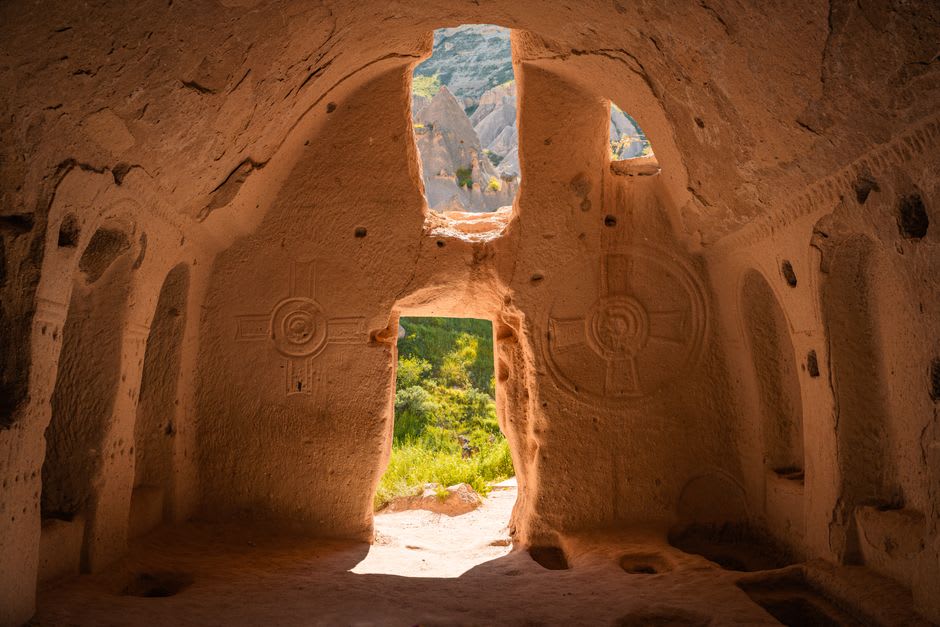
Inside, the cave church was cool and smelled of beeswax and damp stone, a small icon corner glowing under a single candle. A caretaker, an older woman wrapped in a headscarf, pointed us toward a black gap in the back wall and said something in Romanian that Lia translated roughly as “the wishes are down there.” That’s the Grotto of Wishes, an underground passage that apparently threads almost two kilometers into the rock. We only went in twenty or thirty meters with a phone flashlight before the ceiling dropped low enough that I chickened out, but even that short stretch left my palms sweating in a way no cathedral ever has.
We climbed back out along the gorge rim to see the Rausor waterfalls, a modest but lovely cascade tumbling into the same valley, and sat there eating the bread and telemea cheese we’d bought that morning at a roadside stand outside Orhei. A local hiker we got talking to swore that Stefan cel Mare, the great Moldovan ruler, married Maria Voichita right here at Tipova — legend more than documented fact, he admitted with a shrug, but the kind of story that sticks to a place like this.
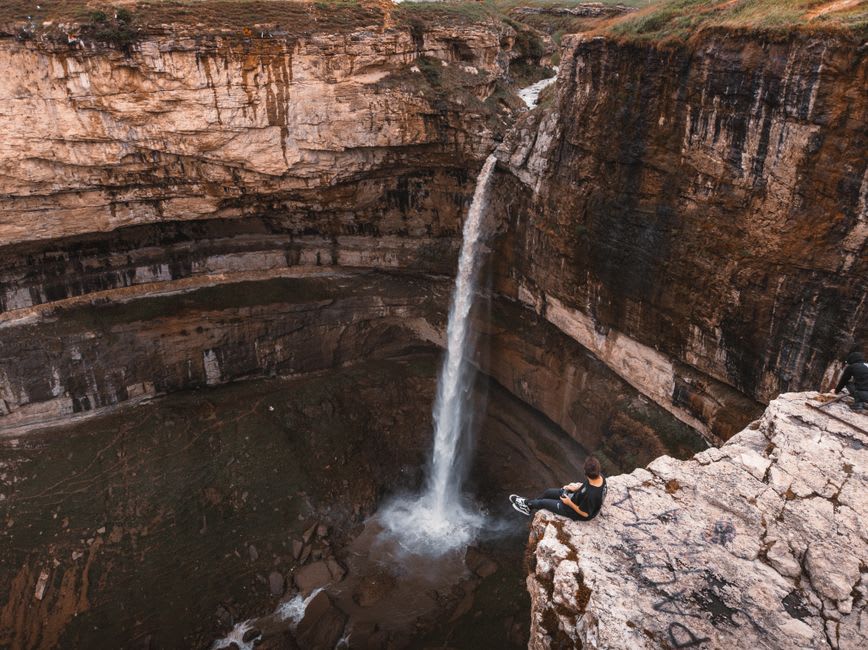
When to go: We went in late June, and I’d steer you toward that May-to-September window too — the cliffside trails and the path down to the waterfalls turn slick and genuinely risky once the weather sours, and this isn’t a place you want to be picking your way down in the rain.