
Orheiul Vechi
"The monk answered the door in rubber sandals, blinked at me, and asked if I wanted tea."
I had been warned that the road to Orheiul Vechi was difficult and that I should go by minibus rather than taxi because the drivers knew the route. What I hadn’t been warned about was the moment the landscape simply changes — a flat, agricultural Moldova of sunflower fields and straight roads that abruptly gives way to a limestone gorge cut by the Răut River, and then suddenly, on the far side of the gorge, a cliff face riddled with dark openings that from a distance look like the eyes of something enormous looking back at you. It is one of those views that makes you pull out your camera before you’ve consciously processed what you’re looking at.
The site is layered in time in a way that the human mind genuinely struggles to process all at once. People have lived in these cliffs for six thousand years — Dacian tribes, Greek colonists, Tatar invaders who built a city here in the fourteenth century. The cave monastery itself was established in the thirteenth century by Orthodox monks who found in the carved limestone the same combination of isolation and beauty that monks everywhere have always sought. Some of those caves are still occupied. I knocked on what appeared to be a small wooden door set into the rock face and a monk in his sixties answered, wearing rubber sandals and a black cassock, blinking into the afternoon light. He asked, in Romanian, if I wanted tea.
I had the tea. We sat at a wooden table in a room that was partly natural cave and partly hewn by hand, with an icon in one corner and a small wood-burning stove in another. His Romanian was slow enough for me to follow and he spoke about the site with the proprietary calm of someone who has lived next to something extraordinary long enough that its extraordinariness is simply background. He had been here seventeen years. Before that he was an engineer in Chișinău. The transition from engineer to cave monk is not one I could reconstruct from the conversation, and I did not press.
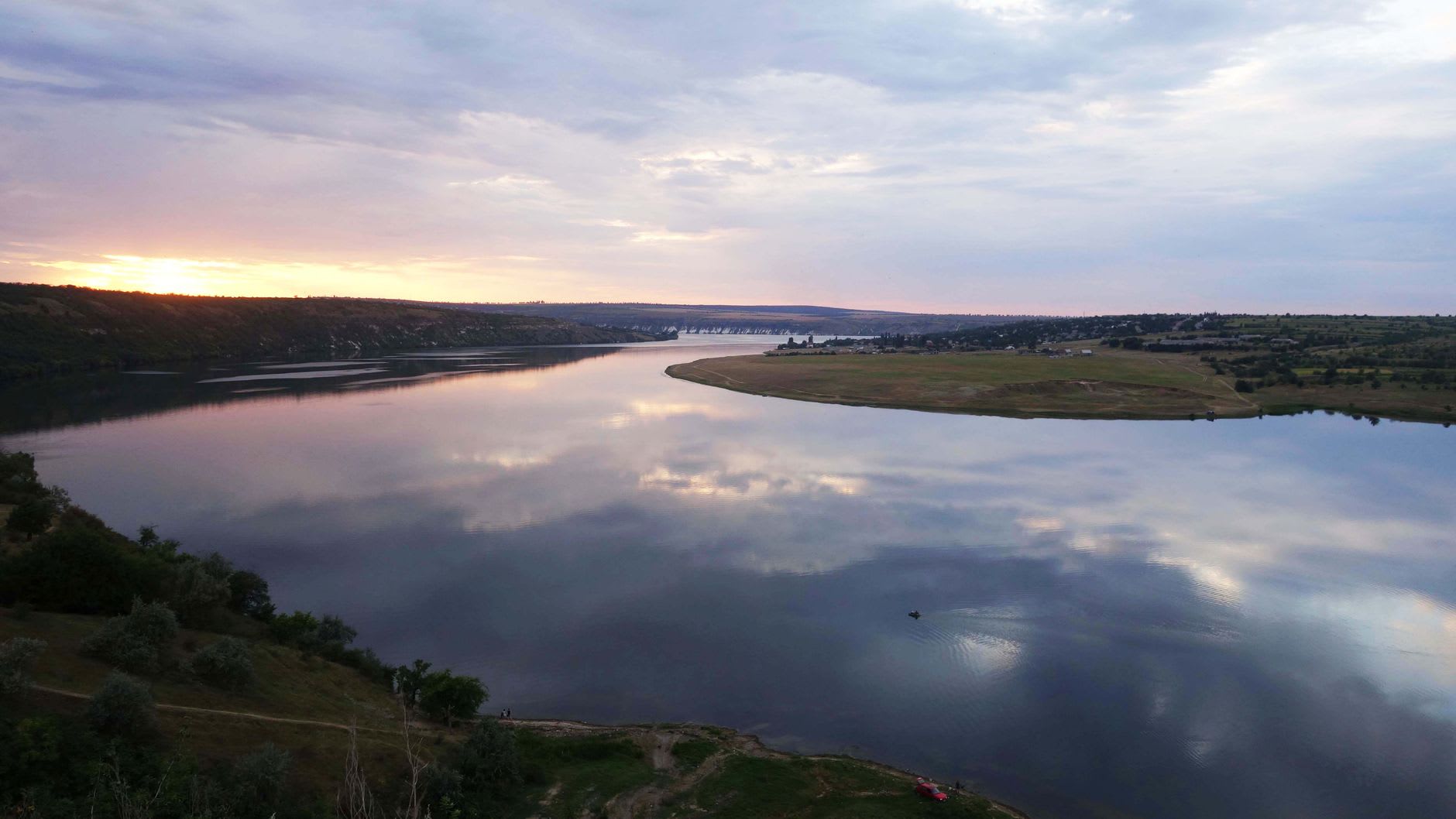
The walk along the cliff top offers the kind of panoramic view that tends to stop thought. The Răut curves through the gorge below in broad S-bends, green and slow, and the valley is so quiet that you can hear the water from two hundred meters above it. Across the gorge, the village of Butuceni sits in a fold of the hills — a genuinely medieval arrangement of houses and orchards and a wooden church, unchanged in ways that would be remarkable anywhere but are somehow especially affecting here, in a country that is itself so rarely seen.

I ate lunch in Butuceni at what I can only describe as a woman’s kitchen that had a sign in the window. Chicken and potatoes with dill, a cucumber salad dressed in sunflower oil, and a glass of wine that she produced from a ceramic jug she kept behind the stove. The wine was rough and cold and tasted of the particular mineral sharpness of limestone-soil grapes, and it was the perfect version of itself for that specific afternoon in that specific kitchen.
When to go: May through September offers the best walking conditions and the valley is green and dramatic. Autumn brings the vineyards to harvest color. The site is open year-round but the cave monastery keeps irregular hours — arriving by mid-morning gives the best chance of catching it open. The drive from Chișinău is about an hour.