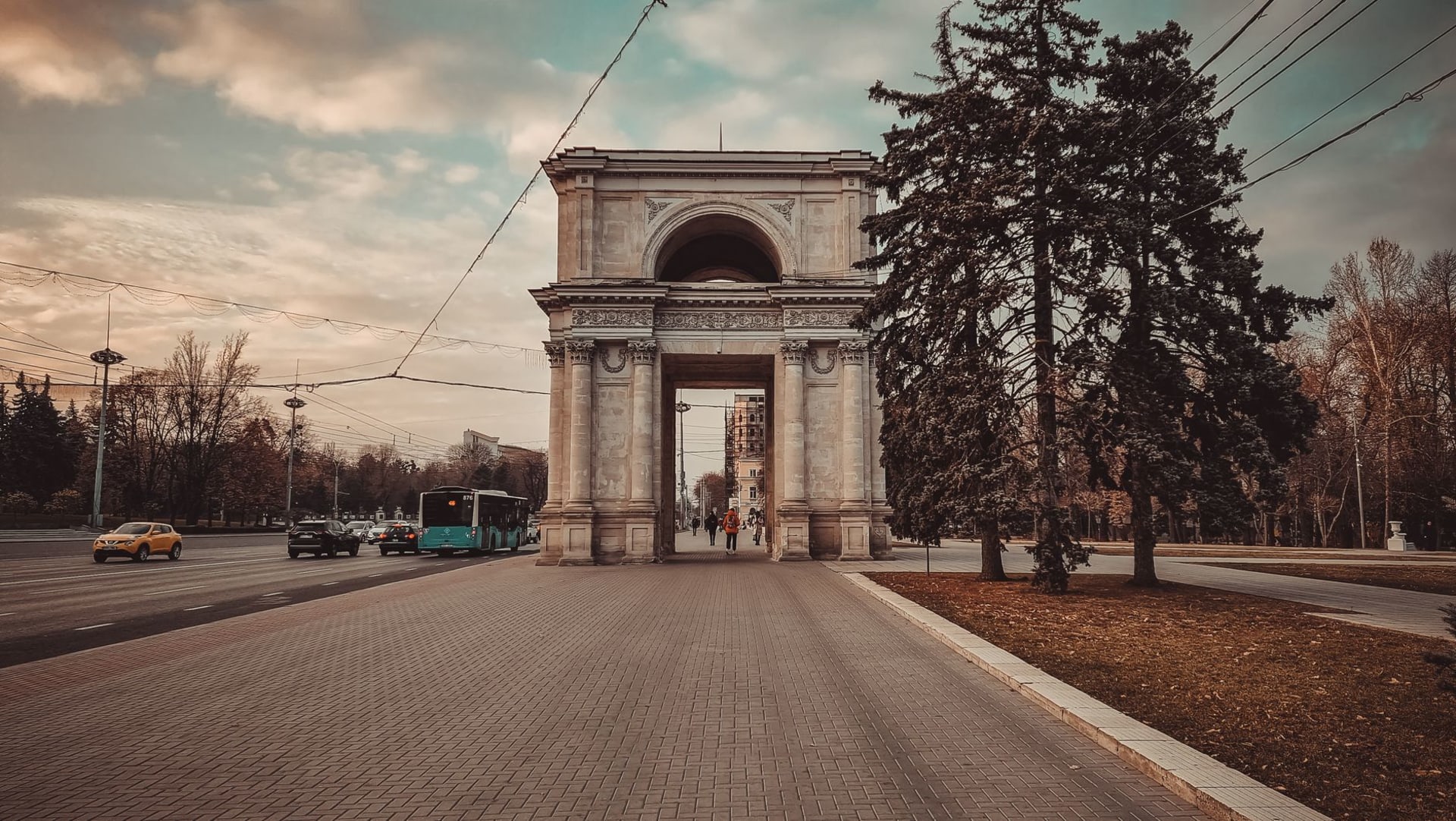
Chișinău
"The city looks ordinary until the second day, when it suddenly, irreversibly does not."
I arrived in Chișinău on a Thursday evening and made the rookie mistake of judging it by its main boulevard. Stefan cel Mare runs straight and wide and official through the center, flanked by ministry buildings and Soviet triumphal geometry, and if you stay on it too long you’ll catch a bus home convinced you’ve seen enough. I nearly did. Then a woman at my guesthouse drew a small map on a piece of paper, circled a street called Armenească, and said “go tomorrow morning, you’ll understand.” She was right.
Armenească in the early morning smells of coffee and bread and something faintly fermented — the wine bars don’t close until late and the smell lingers in the limestone walls. The street is lined with two-story houses from the nineteenth century, painted in flaking pastels, with courtyards visible through iron gates. This is the old city that survived Soviet planning more or less intact, and walking it you understand that Chișinău was once a prosperous Bessarabian town with a distinct culture, not just an administrative unit of the USSR. The wine bars don’t open until noon but the cafés are full of students and old men reading newspapers in Romanian and Russian, sometimes switching mid-sentence.

Piața Centrală on Saturday morning is the truest version of the city I found. The market sprawls across several blocks and has the organized chaos of a place where commerce and sociology are the same thing. Women from villages two hours away sell bundles of dried herbs and walnuts still in their shells and home-pressed sunflower oil in old plastic bottles. One woman had a folding table entirely covered in different jars of pickled things — peppers, garlic, small cucumbers, something purple I couldn’t identify. I pointed at the purple. She handed me a sample on a plastic fork. It was beet and horseradish, and it was extraordinary. I bought three jars and ate them over the following week with bread from the bakery around the corner from my room.
The National Museum of History is worth two hours if you have any patience for context. The Dacian and Roman sections are what you’d expect, but the twentieth-century wing is something else — a careful, unflinching account of the Soviet period, deportations, collectivization, the famine of 1946-47 that killed tens of thousands. Moldovans talk about this history without the frozen affect you sometimes encounter in countries still working through trauma. It is present, processed, and discussed. At the end there is a room about wine, which Moldova treats with the same historical seriousness, and that tonal shift — from famine to viticulture — is jarring in a way that tells you a lot about the national character.

For dinner I ended up at a place that didn’t have a sign, just a handwritten menu board and six tables. The zeamă — Moldova’s essential sour chicken soup — came in a ceramic bowl the size of a small basin, with a swirl of sour cream and a cloud of dill, and it tasted like the best cold-weather food I have eaten anywhere in Eastern Europe. Then mămăligă with brânza cheese and more dill. Then a glass of Fetească Albă that cost less than a coffee in Paris. The city started to feel, by the time I walked home along the night-quiet boulevard, not like a place I’d misjudged but like a place that had let me in.
When to go: September and October are peak wine-season, and the city is at its most animated. May and June bring milder weather and fewer crowds. The Saturday market runs year-round and is worth organizing a trip around.