Tiradentes
"Tiradentes is what happens when a town decides beauty is enough of a purpose."
I came to Tiradentes on the steam train from São João del-Rei — an hour of green hills and old iron bridges, the locomotive puffing and smelling of something between coal smoke and nostalgia. The train dates from 1881 and runs on a narrow-gauge track that once carried diamonds and provisions out of the serra. It was Saturday, and the car was full of Brazilian families who had dressed for the occasion: grandmothers with hats, children pressed against the windows. By the time we pulled into the small station, I was already predisposed to like the place.
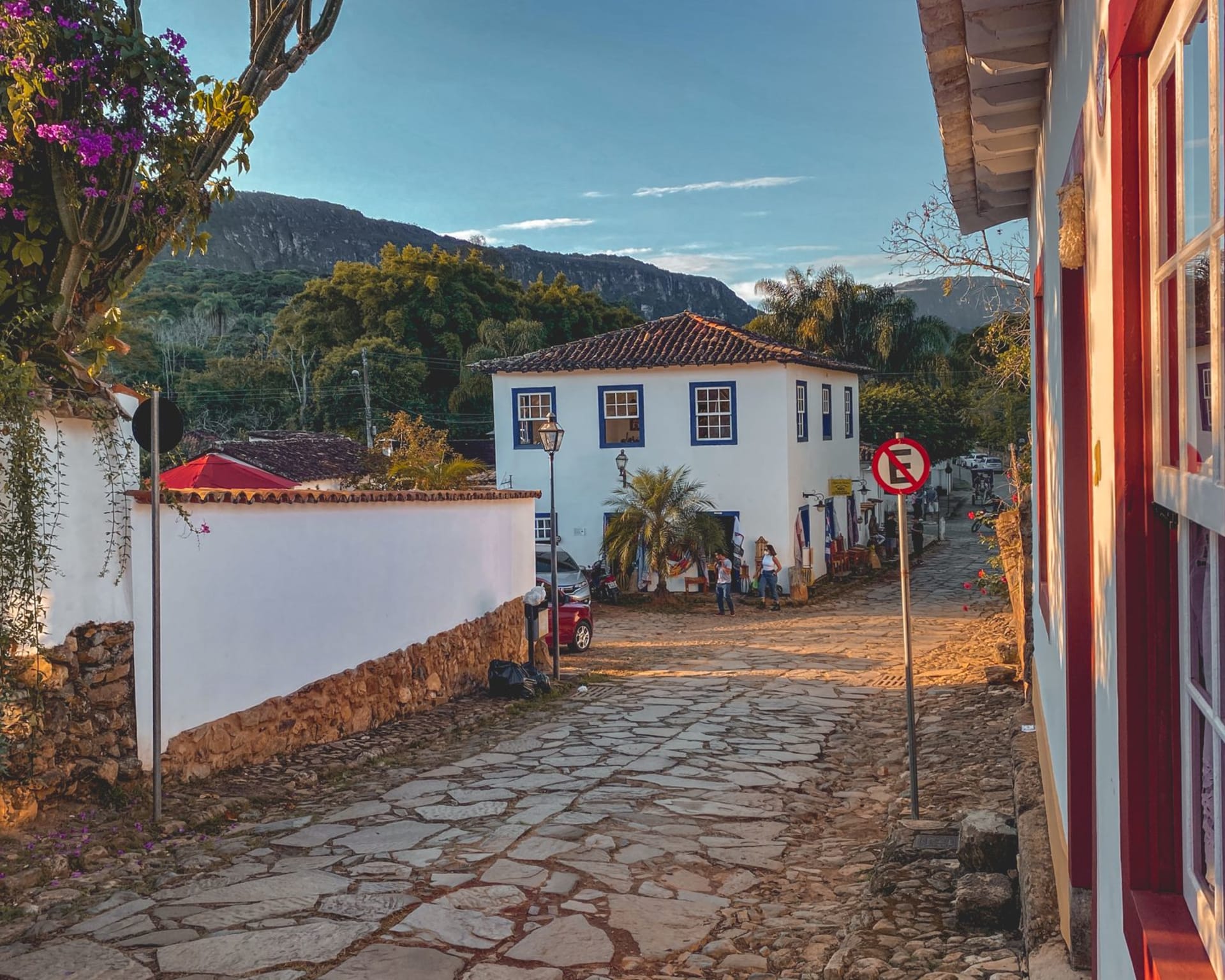
Tiradentes is small enough to walk in an afternoon, and composed enough to make you feel the composition. White facades with blue window frames, cobblestones worn smooth and slightly concave from three centuries of use, the Serra de São José rising green and abrupt behind everything. The main street — Rua Direita — is less a street than a careful arrangement of prettiness: antique shops, ceramics studios, restaurants with tables on the pavement. It tips occasionally into the precious. But there are enough horses tied to posts and enough old men playing cards in the shade to keep it honest.

The church — the Igreja Matriz de Santo Antônio — holds what is said to be the highest concentration of gold per square meter of any church in Brazil, which is saying something in a state that built thirteen baroque churches in Ouro Preto alone. Inside, every surface glows: carved wooden altarpieces covered in gold leaf, a pipe organ brought from Portugal in the eighteenth century, painted ceilings that curl with angels and drapery. It is an extravagance so absolute it becomes a kind of argument — an argument about faith and wealth and what happens when they meet in a place where the gold was literally beneath your feet.
The food in Tiradentes has become, over the last decade, quietly serious. Chefs from São Paulo and Rio have moved here, drawn by the produce coming down from the hills and the pace of life. A slow-braised pork with cassava cake and a reduction of local cachaça that I ate in a garden restaurant behind a colonial house stayed with me for the rest of the trip. The wine list was genuinely considered. Outside, through the garden wall, a horse grazed in the adjacent lot with the unbothered calm of an animal with no concept of gastronomy.

The serra behind the town is walkable and largely empty. A trail climbs through cerrado scrub to a ridge where you can see the rooftops below arranged like a model village — terracotta and white, improbably intact. Up there the wind picks up and the temperature drops and the silence is that particular kind that comes from elevation and the absence of roads. I sat on a flat rock and ate an orange and felt, as you sometimes do in places like this, that the landscape had been waiting for you to do exactly that.
When to go: April through July brings dry weather and cooler temperatures. The Festival de Gastronomia in July draws chefs from across Brazil and is worth the crowd. Weekends year-round are busy; if you want the town at its quietest, arrive on a Monday or Tuesday.