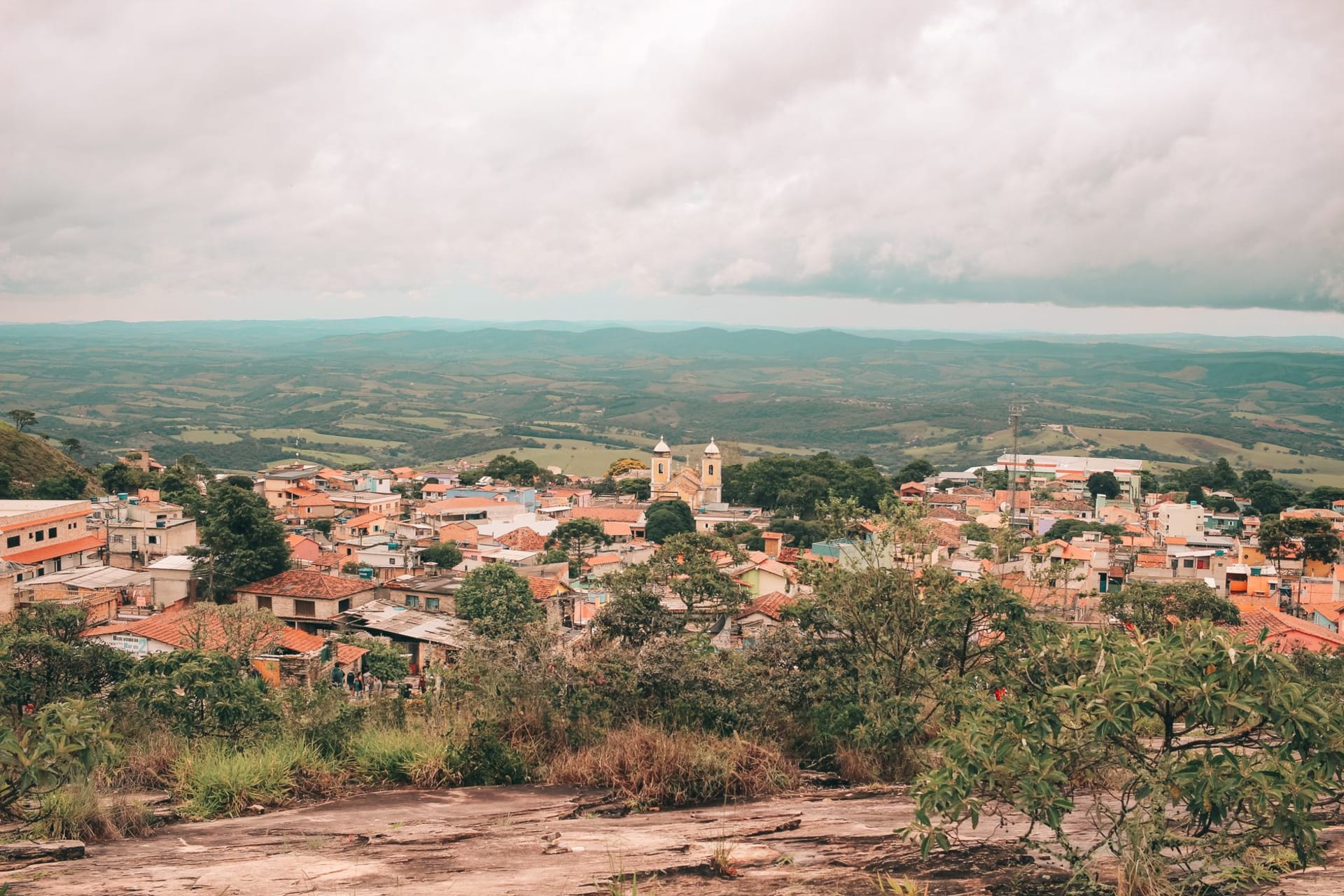
Serro
"In Serro, the cheese is not a product. It is a practice, passed down hand to hand since the eighteenth century."
I came to Serro without a plan, which turned out to be the correct approach. The town sits in a valley of the Serra do Espinhaço, four hours north of Belo Horizonte on a road that gets progressively smaller and more beautiful as it climbs, and it receives few foreign visitors and makes no particular effort to attract them. What draws people — Brazilians who know, mostly — is the cheese. The queijo Serro is one of five protected artisan cheeses from Minas Gerais, made from raw milk by the same techniques brought from Portugal in the eighteenth century, and eating it in the place where it’s made is a reminder that the version you find vacuum-packed in other cities is a photocopy.
I arrived early in the morning when the town was still more fog than town. The Praça João Pinheiro, the main square, was empty except for a man hosing down the cobblestones outside a bakery and a dog investigating the foot of a colonial lamppost with tremendous methodical interest. I went into the bakery, whose name I never caught, and bought a pão de queijo that had just come out of the oven. It was the size of a tennis ball and deflated slightly when I bit into it, the interior still steaming, the cheese sharp and faintly sour and pulling into strings in a way that the frozen supermarket version has never once managed. I stood on the pavement in the mist and ate it in three bites and immediately wanted another.

The town’s historic churches are genuinely old and genuinely uncrowded — the Igreja Nossa Senhora do Carmo, up a flight of steps, has a painted ceiling of almost theatrical exuberance in a building otherwise so simple it looks poor. The contrast is the whole point. Eighteenth-century Minas had a habit of putting extraordinary interiors inside austere exteriors, as if saving the extravagance for those who had earned access. Walking around Serro’s churches in the afternoon, with the streets largely empty and a few women talking in a doorway and the particular quietness of a town where the economy is cows and stone and time, felt closer to how the colonial interior of Brazil must have felt than anywhere more obviously beautiful.
The fazendas — farms — that produce the protected cheese are in the hills above town, and several receive visitors if you know to ask. A woman at the pousada where I stayed arranged it: a morning drive up a dirt track to a stone dairy where the farmer and his daughter were pressing the morning’s milk into rounds, the whey draining through cloth, the smell of raw milk and stone floor and something slightly funky underneath that I associate now entirely with Serro and nowhere else. They sold me two rounds. I carried them back to Mexico in my luggage, wrapped in cloth, and they survived the journey. They were perfect at room temperature with a glass of red wine.

The Festas do Divino Espírito Santo, held in June, is the event that draws Brazilians from across the state — a popular religious festival that fills the streets with processions, music, and an abundance of the local food that makes Serro’s relative obscurity feel almost deliberately protective, as if the town has calculated that a certain amount of invisibility is the price of keeping what it has.
When to go: May through August for dry weather and the festas season. June is the peak of local celebrations. Serro is a two-stop trip best paired with Diamantina to the north, which shares the same dry mountain landscape and the same relationship between colonial history and everyday life.