
Ouro Preto
"Every church here was built by people who knew they were living on borrowed time — and they built accordingly."
Brazil's most intact baroque city, where thirteen churches crown a cold hillside that once dripped with colonial gold.

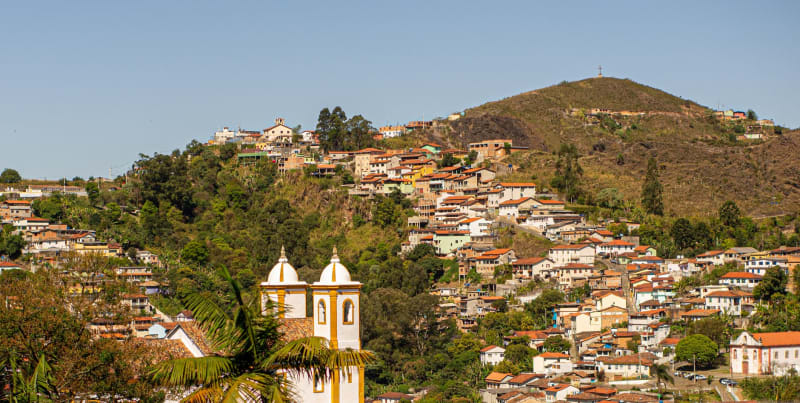
I arrived by bus from Belo Horizonte, the last hour spent winding up into hills that felt more like the Serra da Mantiqueira than anything I associated with Brazil. The town appeared slowly through the windows — a bell tower first, then a cluster of terracotta roofs, then the whole improbable panorama of Ouro Preto laid across a ridge at 1,100 meters, churches rising at every angle, the sky unusually blue for a country I associate with wet heat. I stepped off the bus and felt the altitude in my chest. Then the cold. Nobody warns you about the cold in Minas Gerais.
Ouro Preto means Black Gold, and the name refers to the oxidized gold mixed with iron ore that slaves and freed men pulled from these hills through the eighteenth century. The Portuguese took their cut in the form of taxes, the church took its cut in the form of donations, and what remained went into stone facades, gilded interiors, and the most concentrated baroque architecture in the Americas. There are thirteen churches here. On my first morning I tried to visit all of them and gave up after five, not from fatigue but from a kind of aesthetic saturation — at some point the gold-leaf altars and painted ceilings blur into each other, and you need to sit in a praça and eat something before you can see clearly again.

What cuts through the saturation is Aleijadinho. António Francisco Lisboa — called the Little Cripple because disease stripped him of the use of his hands — designed churches and carved soapstone here with chisels strapped to his arms, producing work of such concentrated intensity that standing in front of it feels like an interruption. The decorative program of the Igreja de São Francisco de Assis, which he designed almost entirely, is the single most impressive thing I saw in Minas Gerais. The medallions, the portals, the carved movement of stone made to look like cloth or cloud — it is the work of someone operating at a frequency most artists never reach. I stood in front of it for an hour in light rain and forgot to be cold.
The town itself, once you leave the main praça, reveals its domestic side in alleyways so steep that the cobblestones have been cut into shallow steps. Old women in doorways, cats sleeping on windowsills, a smell of wood smoke and something frying. A boteco on the Rua São José served me a prato feito — rice, beans, collard greens, and a piece of chicken in sauce — for a price that made me feel I was stealing. The beer came cold and sweating in a small squat bottle. I ate alone at a plastic table in the afternoon shade and felt, briefly, like I was living rather than traveling.

The Museu do Oratório, housed in a chapel building near the Igreja do Carmo, stopped me in a way I hadn’t expected. It holds hundreds of portable altarpieces — oratories — small carved wooden cases, some no bigger than a shoebox, that traveling merchants and mine workers would carry for private prayer. The objects are humble and intricate at once, and they carry a presence that the grand churches, for all their gold, sometimes lack. Faith as a portable thing. Faith as something you carry in your pocket through mountains.
When to go: April through September for dry weather and manageable temperatures. June and July bring cool nights and festas juninas — the street parties are genuinely local rather than curated for visitors. Avoid December through February: the rains are heavy and the cobblestones become rivers.
Keep exploring
More from Minas Gerais
 minas-gerais
Salinas
The undisputed cachaça capital of Brazil, where small-batch distilleries age spirits in native wood barrels and the town smells faintly of fermentation.
Explore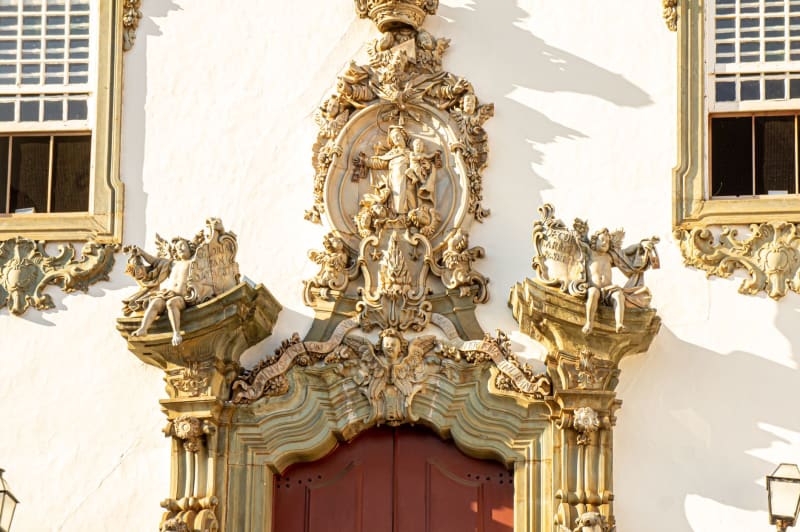 minas-gerais
São João del-Rei
A colonial town split by two rivers and connected to Tiradentes by a steam train that has run continuously since 1881.
Explore minas-gerais
São Thomé das Letras
A stone town on a quartzite plateau where UFO believers, hippies and miners have lived side by side since the 1970s.
Explore minas-gerais
Serro
A forgotten colonial town in the mountains where the queijo minas has protected origin status and time moves at the speed of cattle.
Explore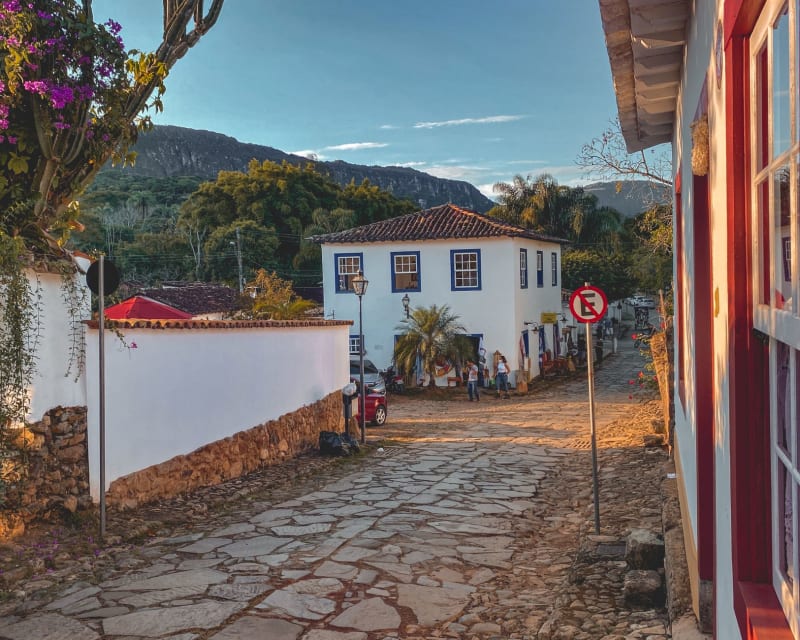 minas-gerais
Tiradentes
A colonial town so composed it looks painted, with horses in the streets and a restaurant scene that punches well above its size.
Explore minas-gerais
Belo Horizonte
Brazil's third city, designed on a grid and promptly outgrown, where the Mercado Central and the snack culture are better reasons to visit than any guidebook admits.
Explore