Congonhas
"The prophets don't look at you. They look through you, at something further away."
Congonhas is not on the way to anything. It sits in the hills south of Belo Horizonte, a working-class town of tile factories and evangelical churches, unremarkable in nearly every direction. You come here for one reason: the terrace of the Basilica Bom Jesus de Matosinhos, where twelve life-sized prophets carved from soapstone by Aleijadinho stand in the open air, each one a separate argument about what a human body looks like when it is seized by something larger than itself. I arrived early in the morning, before the tour buses, and had the terrace to myself for twenty minutes. That was enough.
I had seen photographs. The photographs do not prepare you for the scale, or for the way the figures are placed — not in a row but in conversation with each other across the space, each turning slightly toward or away from the others. Jonah rears back in what might be triumph or terror. Daniel stands with a composed ferocity that reads differently depending on which angle you approach from. Isaiah holds a scroll with a grip that looks urgent, as if the words inside still need delivering. Aleijadinho carved all of this in the 1790s, disease having by then taken his fingers, working in soapstone because it was soft enough to shape with the tools he had left. The result is a series of figures that feel like they were made from the inside out.

Inside the basilica, the Passion chapels run down the hillside in a sequence — six small buildings, each containing life-sized polychrome wooden figures depicting scenes from Christ’s arrest and crucifixion. The figures are painted in colors that have faded just enough to feel authentic, the expressions somewhere between theatrical and genuinely anguished. It is a devotional installation on a scale I’ve encountered nowhere else, and it has a cumulative effect: by the sixth chapel you are walking more slowly, speaking more quietly, which is almost certainly the point.
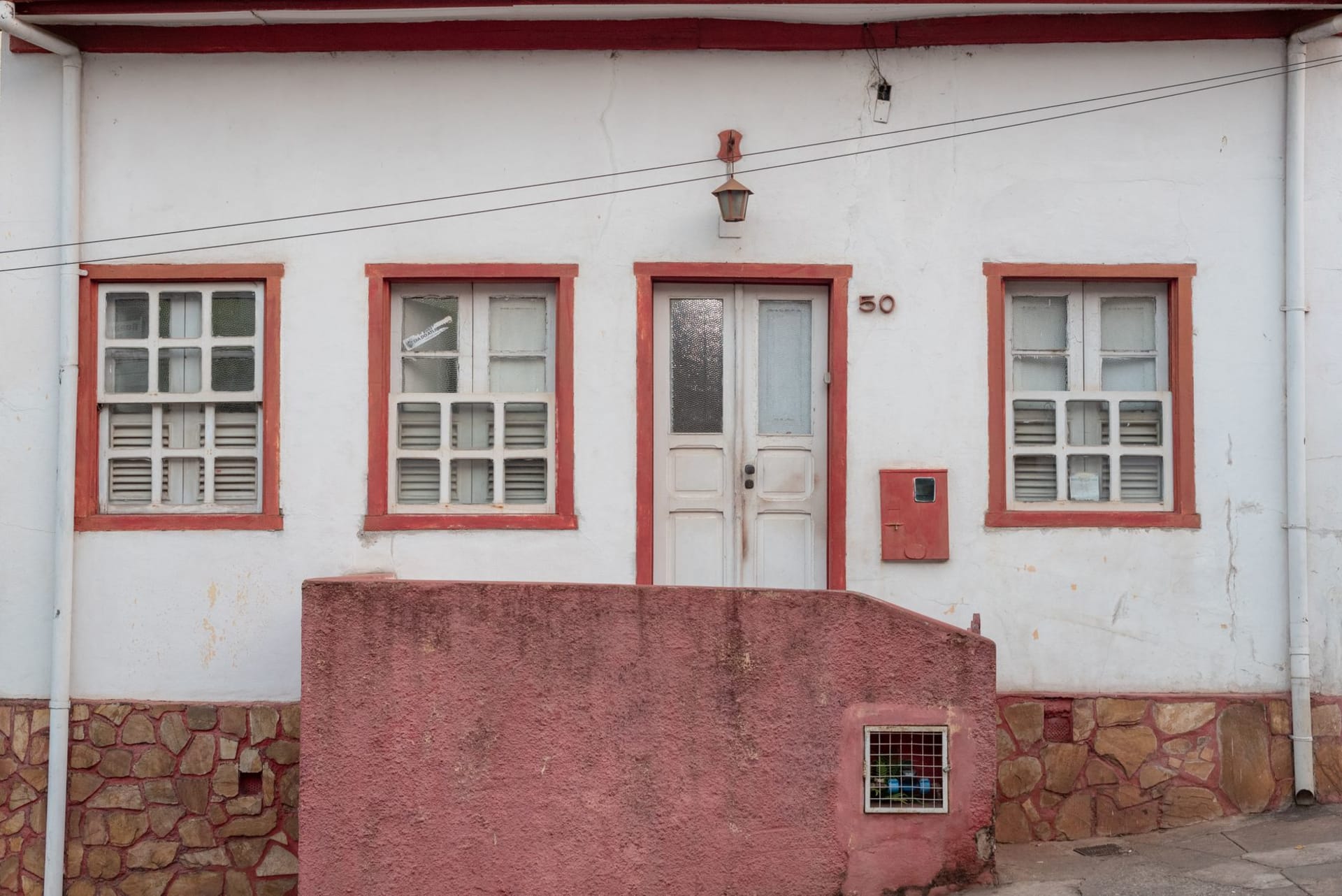
The town below is worth a short walk simply to recalibrate. Congonhas is not a tourist town that has learned to perform authenticity — it is an actual place, with a market square selling fruit and hardware, children in school uniforms, a bus station that smells of diesel. I ate lunch at a self-service restaurant near the market: beans with smoked sausage, rice, a salad of grated beet, and a guaraná that came out of a machine already cold. It cost almost nothing. After the transcendence of the terrace, the ordinariness felt like a kind of kindness.

There is a viewing platform at the back of the basilica grounds where you can see both the sculptures and the town and the hills beyond, all at once. Standing there, it struck me how strange the juxtaposition is — this concentration of extraordinary art in a place that most people drive through without slowing. Brazil is full of moments like this, where the greatest things are in the most improbable locations. It feels less like an accident than a choice, as if the art wanted somewhere real to live.
When to go: Any dry-season month works — April through September. Arrive before 9 a.m. to have the terrace to yourself before the tour groups arrive from Ouro Preto. The figures are outdoors and the light is best in the early morning or in the hour before sunset when the soapstone takes on a warm grey tone.