
Belo Horizonte
"BH doesn't try to be beautiful. It just feeds you until you stop noticing."
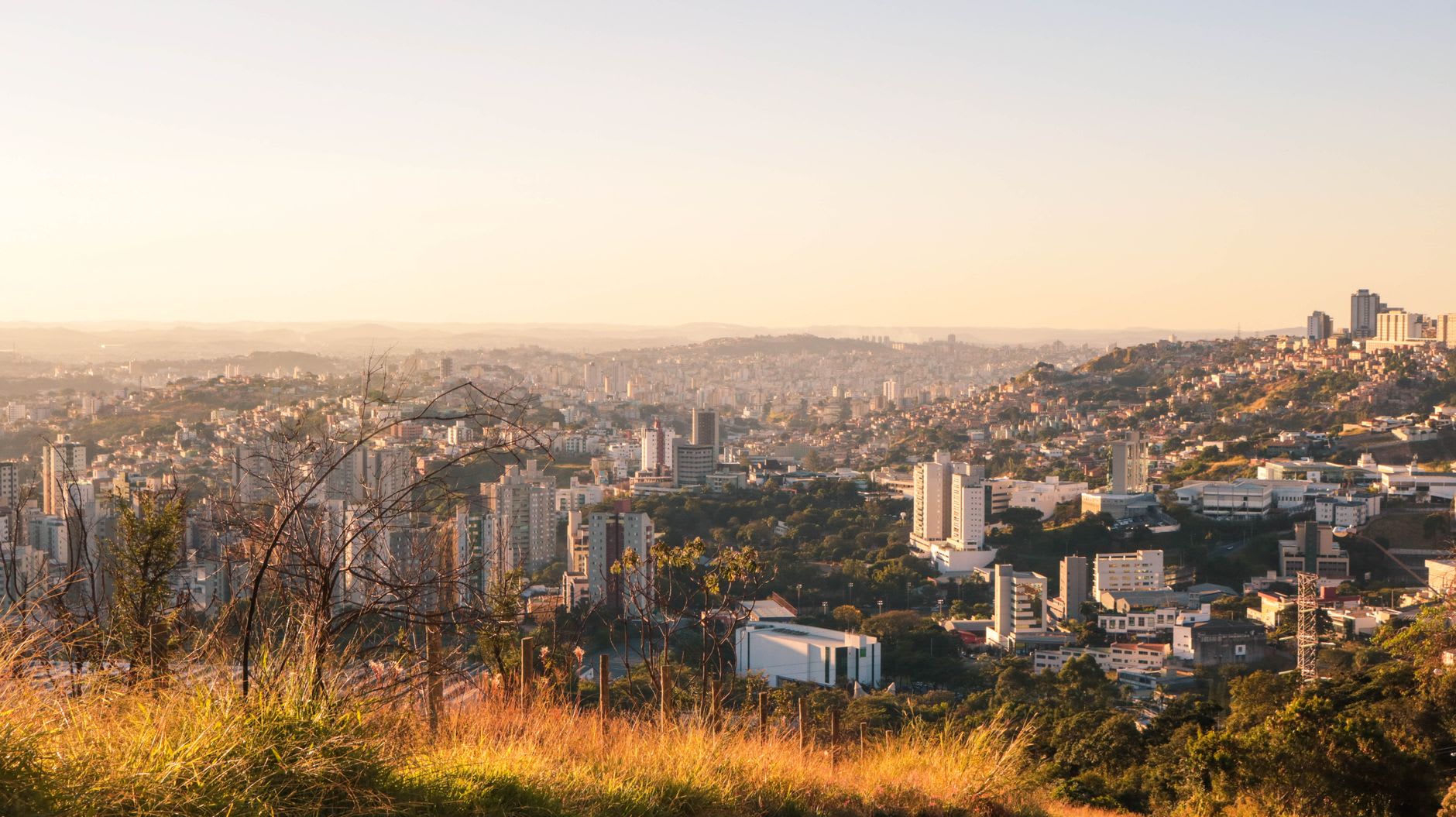
Belo Horizonte was planned at the end of the nineteenth century to be the rational capital of a rational new state — a grid of wide avenues, a sensible altitude, a name that translates as Beautiful Horizon and describes, in the flattest possible way, the ring of mountains visible on clear days from the city center. The plan worked and then the city promptly doubled and tripled and sprawled beyond every boundary, acquiring the sprawl and energy and contradictions of any large Brazilian city. What you get now is a place that never quite delivers on its architectural ambitions and far exceeds them in its food.
I spent my first hour in BH doing what everyone does: walking through the Mercado Central on Avenida Augusto de Lima, a covered market that has been operating since 1929 and now hosts over four hundred stalls selling everything from live animals to artisanal cachaça. The smell changes every twenty steps — dried herbs, then raw meat, then the sweetness of pão de queijo coming out of a wood oven, then dried beef, then the sharp bite of a hundred kinds of hot sauce in small bottles. I ate a pastel de queijo at a standing counter and burned the roof of my mouth on the filling and didn’t care. The woman behind the counter gave me a look that suggested this happened constantly.
The Pampulha neighborhood, twenty minutes north by taxi, is where Oscar Niemeyer built his first major civic project in 1943 — a complex of leisure buildings arranged around an artificial lake commissioned by JK, then the city’s mayor. The Igreja de São Francisco de Assis sits closest to the water, a curved parabolic form with ceramic tile murals by Portinari running across its exterior in vivid blues and ochres. Niemeyer was thirty-five when he designed it, still finding his language, and the church has the energy of someone who has just realized what they can do. The whole complex — casino, ballroom, yacht club, church — was built to show the world what a modern Brazil might look like. It still does, in the way that mid-century optimism always looks both dated and aspirational at once.
Back in the city center, the Savassi neighborhood is where BH’s café culture concentrates. Tiny bars spill onto the pavements in the early evening, and the Mineiro tradition of petiscos — small plates, the same impulse as tapas — means that the tables fill with food alongside the beer and cachaça. I sat at a table on the Rua Pernambuco with a portion of torresmo — fried pork rinds, still hot, salted heavily — and a chopp, and watched a Friday evening unfold. The city around me had the specific energy of a place where people work seriously and then stop seriously, and the stopping was happening all at once.
The Museu de Arte da Pampulha occupies the old casino building by the lake — curves and columns and a ramp that spirals up through the interior in that Niemeyer way that makes staircases feel like arguments. The collection is a good regional one, strong on Brazilian modernism, and the building itself is the real exhibit. Late afternoon, when the light off the lake comes through the windows sideways and the interior goes golden, it is one of those spaces where architecture stops being background and starts being the point.
When to go: Belo Horizonte functions year-round. April through September avoids the summer rains and the worst heat. The Comida di Buteco festival in April — a competition between traditional neighborhood bars for the best petisco — is one of the best weeks of the year to be in the city.