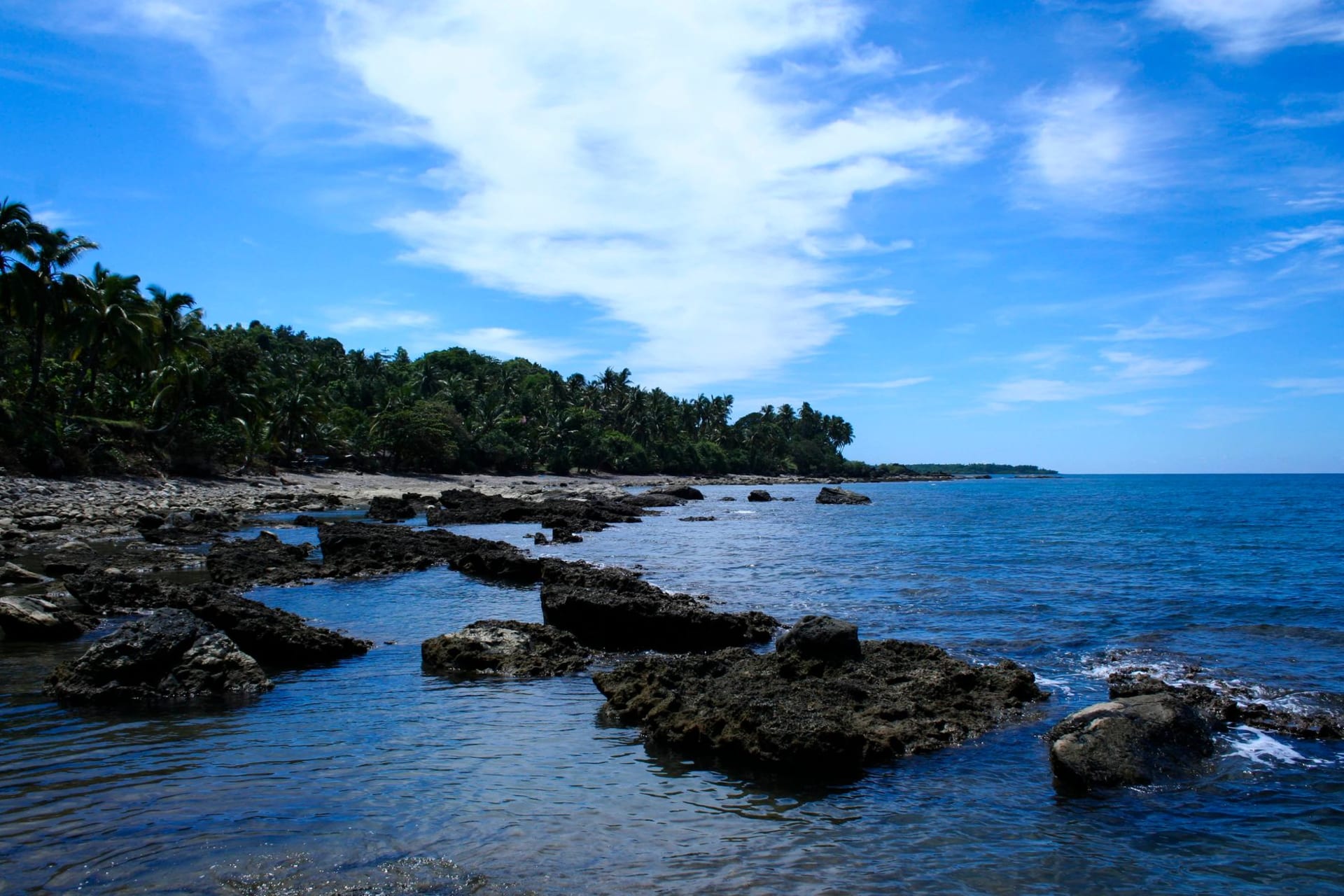
The canoe operator didn’t offer commentary. He navigated the mangrove tunnels by instinct, ducking under branches that scraped the hull, moving us through corridors of green light and brown water until the trees opened and the walls appeared — basalt columns stacked by hand, some of them weighing fifty tons, rising from the lagoon in configurations that shouldn’t exist. I don’t mean that as hyperbole. I mean that standing at the edge of Nan Madol, watching rain dimple the water between the artificial islets, you feel a specific kind of vertigo that comes from encountering something enormous and unresolved. No one knows exactly how they moved those stones. No one knows quite why they built here, on open water, instead of on Pohnpei’s forested hillsides a few hundred meters away.

The Saudeleur dynasty built Nan Madol starting around the twelfth or thirteenth century — a ceremonial and political capital spread across ninety-two artificial islets, connected by canals, the whole complex covering roughly eighteen square kilometers of shallow reef. They brought the basalt from a quarry on the far side of Pohnpei, which means they transported it by raft across open ocean. At its height, thousands of people lived and worshipped here. Then, sometime in the sixteenth century, the Saudeleur rulers were overthrown and the city was gradually abandoned. The jungle advanced. The lagoon reclaimed the canals. When outsiders first documented it in the nineteenth century, the oral traditions spoke of sorcery, of rulers who fed on turtles, of a power so absolute it collapsed under its own weight. UNESCO listed it as a World Heritage Site in 2016, which has done almost nothing to increase visitor traffic. I spent an afternoon in the rain without seeing a single other foreign traveler. That is not something that happens at significant ancient sites. That is not something that happens anywhere.
The scale of individual structures compresses your sense of time. The main ceremonial precinct, Nandauwas, has walls four to eight meters high. I ran my hand along the stacked columns and they were cool despite the afternoon heat, furred with lichen at the base. A heron stood on a nearby wall with the absolute stillness of something decorative, then folded into the air without urgency. The sound was mostly water and rain and the occasional creak of mangroves. Pohnpei is one of the wettest places on earth and Nan Madol sits in its own microclimate — storms gather and dissipate in cycles of twenty minutes. I got soaked and dried out twice before the canoe came back for me.

Back on the main road, my driver — who hadn’t spoken for most of the trip — mentioned that some Pohnpeians still believe the site is spiritually active. Not as folklore, but as practical caution. He did not elaborate. I didn’t push. There are places where the most respectful thing is to accept the silence as sufficient.
When to go: Nan Madol is accessible year-round, but the approach by boat is easier in calmer conditions from December through April. Morning visits avoid the most intense afternoon downpours. Bring shoes you don’t mind ruining — the site involves wading.