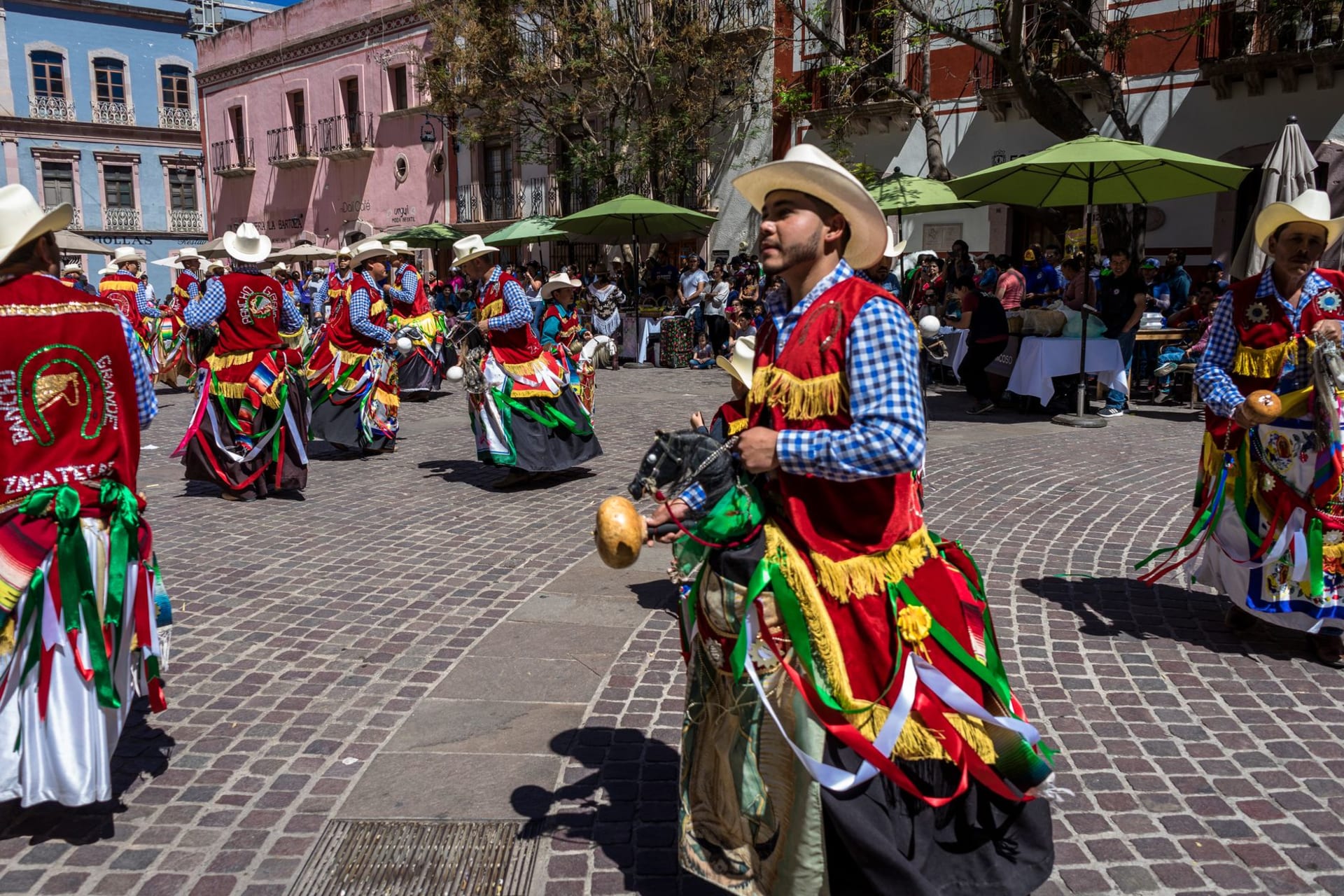
Zacatecas City
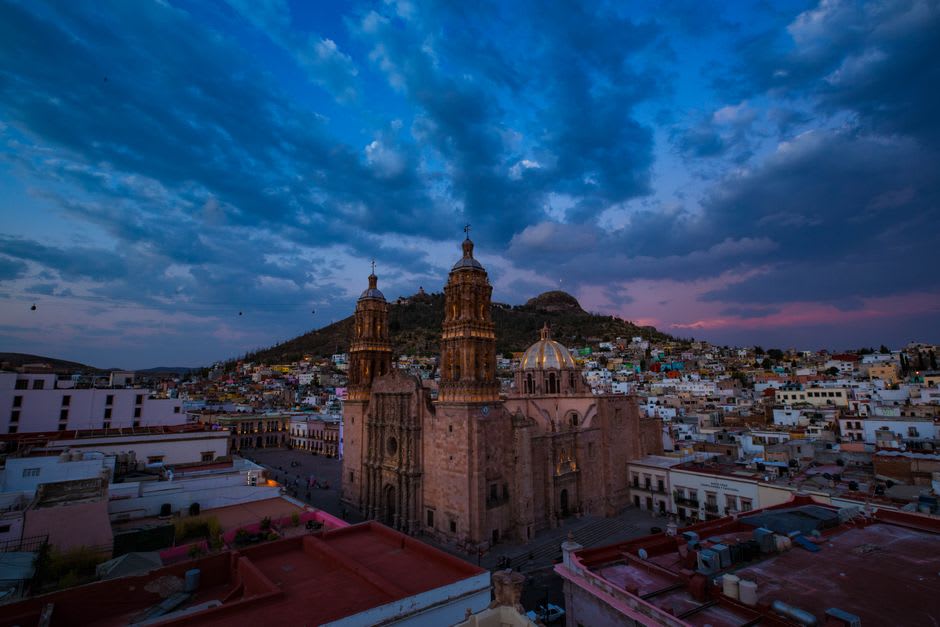
"From the cable car at dusk, the cathedral goes from pink to copper to something almost red. There is no other city in Mexico that looks like this."
I arrived in Zacatecas City at dusk on a bus from Guadalajara, a journey that crosses the transition from the lowland bajío into the dry high-altitude north, and the city appeared on its hillsides in a color I wasn’t expecting: pink. Not a subtle pink — a deep rose-pink, the cantera volcanic stone that everything here is built from, catching the last of the light against a cobalt sky. The bus wound down into the valley and I watched the buildings go from pink to gold to terracotta as the light faded. By the time I reached the hotel, I understood that this was something specific.
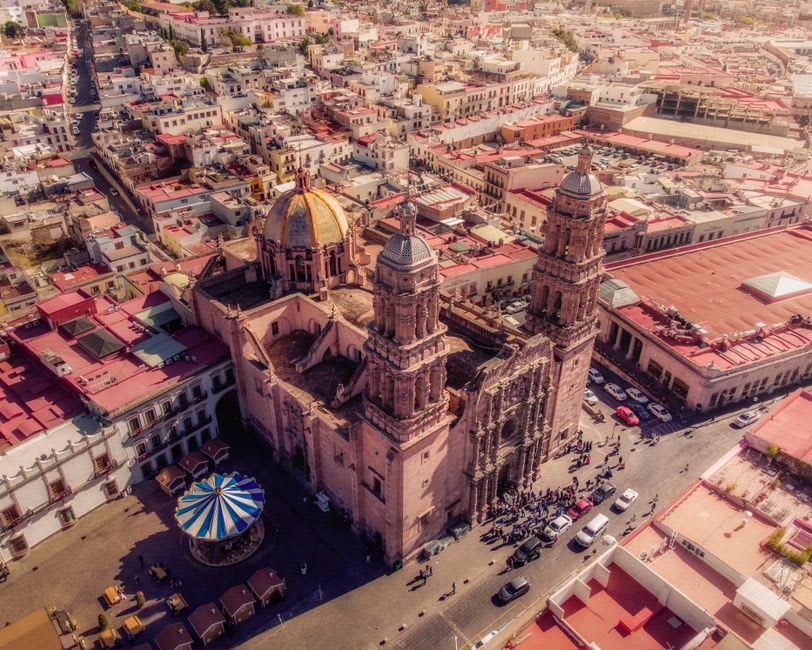
Zacatecas is a UNESCO World Heritage city, and it deserves that designation. The historic center sits in a narrow canyon between two hills at 2,450 meters altitude — higher than Mexico City — built almost entirely from cantera rosa, the pink stone quarried in the surrounding mountains. The streets are narrow and often stepped. The buildings are uniformly rose-colored. And at the center of everything, the cathedral is a churrigueresque facade of ornamental density that makes the baroque churches of southern France look restrained by comparison.
The Cathedral and the Stone
The Cathedral Basílica of Zacatecas is among the most elaborate churrigueresque facades in the Americas. The style, which developed in eighteenth-century Spain and arrived in New Spain with particular force, involves a kind of architectural excess: every surface covered with carved ornament, columns within columns, saints and angels and foliage accumulating across the stone in a way that becomes almost organic, as if the building is growing. In Zacatecas, this is done in cantera rosa, and the pink softens the density — it makes the excess feel somehow warm rather than severe.
I sat on a bench in the plaza at sunset and watched the cathedral change color over the course of twenty minutes. It goes from rose to gold to copper to something almost red before the light fails entirely and the facade goes grey in the dusk. The plaza fills at this hour — couples, families, vendors selling corn and paletas, a brass band setting up in the kiosk. I have sat in front of the cathedrals at Oaxaca, Morelia, and Puebla, all extraordinary. Zacatecas is different. The color is the difference.
Down the Mine
Mina El Edén was a working silver mine from 1586 until the twentieth century, and entering it is one of the more disorienting experiences available in a Mexican city. You take a miniature train into the mountain — a small clanking thing that runs along original extraction tracks — and the temperature drops immediately and the rock closes in and you are abruptly several hundred meters underground in tunnels cut by colonial-era workers using hand tools and the labor of people who had very limited choices about being there.
The museum inside explains the extraction process, the labor conditions, the history of silver production that made Zacatecas one of the wealthiest cities in New Spain. The mineral wealth of this city funded a significant portion of the Spanish colonial empire — the silver of Zacatecas went to Madrid and to Manila and circulated through the early global economy in ways that shaped the world. The walk through the tunnels is not long but it is sufficiently underground to recalibrate your relationship to the city above. Coming back out into the thin Zacatecas air and sunlight feels earned.
The Teleférico and the Masks
The teleférico — the cable car running between the two hills that bracket the city — is not subtle tourism, but it earns its reputation at dusk. The ride is five minutes and the view is the entire city below: pink buildings cascading down the valley walls, the cathedral at the center, the surrounding desert hills going purple. I rode it twice. The second time I was alone in the car and the light was at exactly the right angle and I was not performing enjoyment for anyone.
The Museo Rafael Coronel is housed in the ruins of a Franciscan convent — roofless rooms open to the sky — and contains thousands of Mexican folk masks, pre-Columbian through twentieth century, covering walls and filling cases. It is one of the strangest and most absorbing museums I have visited anywhere in Mexico.
Reach Zacatecas by overnight bus from Mexico City (seven hours) or a short flight. Stay in the centro — there are several hotels in colonial buildings within walking distance of everything. Three nights minimum: one to walk the center and the mine, one to do the teleférico at dusk and the Rafael Coronel museum, one to go slowly.