
Teúl de González Ortega
"I had the entire archaeological zone to myself — one caretaker with a key, stone structures aligned to catch the winter solstice sunrise, and a canyon dropping four hundred metres on three sides."
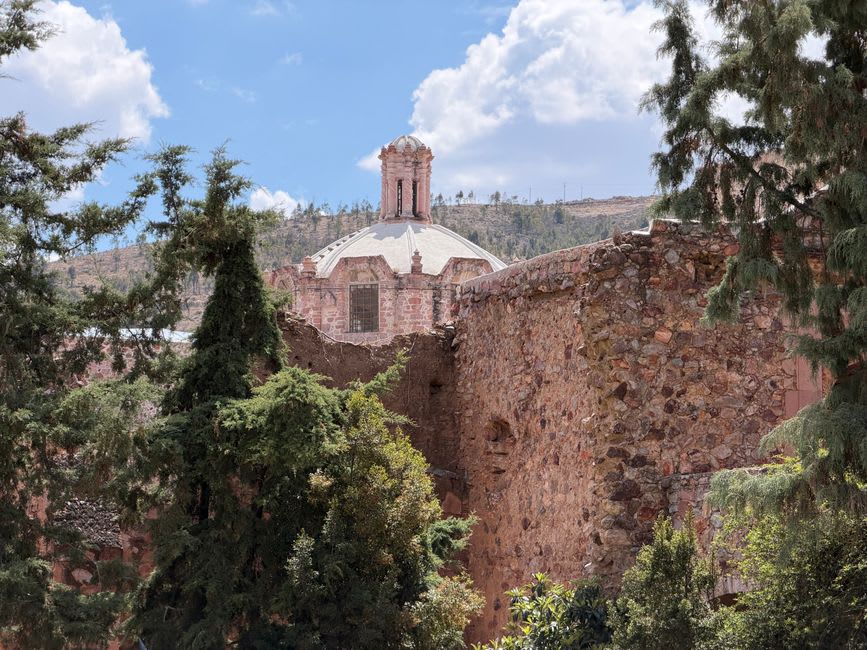
I came into Teúl on the old road, which follows the mesa edge and gives you the Juchipila canyon at intervals, as though revealing it gradually is some kind of courtesy. By the time I reached the town it was late afternoon, the light on the canyon walls going orange and then rose. I sat in the car at the edge of the plaza longer than I intended, trying to understand the scale of what I was looking at. The town was quiet in the way ranching towns in this part of Zacatecas go quiet on weekday afternoons: horses near the presidencia, one fonda still open, wood smoke from somewhere I couldn’t locate.
A Fortified City Above a Canyon
The caretaker’s name was Rodrigo. He lives adjacent to the archaeological zone and holds the key — literally a padlock on a chain, which constitutes the full extent of the site’s visitor infrastructure. I arrived at eight in the morning and found him already up, already made coffee, and he offered me some in a small plastic cup before walking me in.
Teúl was a major pre-Hispanic city, built on this mesa because the mesa is a natural fortress: the Juchipila canyon drops away on three sides, and the fourth is the only viable approach. From here, whoever controlled Teúl controlled the trade routes moving between Mesoamerica and what is now the American Southwest — turquoise, copper, obsidian, things that mattered enormously to the civilizations of both regions. The structures that remain are substantial: ceremonial platforms, residential areas, a layout showing deliberate planning over centuries of occupation. Several buildings were aligned to catch the winter solstice sunrise, which Rodrigo explained with the calm matter-of-factness of someone who has said it many times but still finds it worth saying. There were no other visitors. There were no signs in English. There was a great deal of silence.
Ranching Country at Altitude
Teúl is a Zacatecan ranching town in the way a few places in Mexico still genuinely are: not folkloric, not decorated for anyone’s idea of authenticity, but functionally and economically. The morning I walked the market — a loose collection of stalls along the main street below the church — the conversations around me were about cattle prices and a fence dispute somewhere in the sierra. A woman sold me gorditas stuffed with frijoles and nopalitos from a griddle balanced on a folded oil drum. I ate standing, looking down the street to where it ended at the mesa’s edge and the canyon began.
The local cheese is a firm, slightly salty rancho-style queso that turns up in everything. The birria is chivo rather than beef — goat slow-cooked overnight in clay pots — sold from fondas that open at seven and close when the pot runs out, which is usually before eleven. Plan accordingly, or accept that you drove a long way for coffee and tortillas, which is not the worst outcome.
How to Spend a Day Here
Go to the archaeological zone as early as you reasonably can. Mornings are cooler, the light is better on the stone, and Rodrigo is always there. Bring water — the site has none — and wear shoes you don’t mind getting dusty on uneven ground.
For lunch, the fonda nearest the jardín on the north side of the plaza serves a rotating daily menu with nothing posted outside. When I went: sopa de fideos, then chivo en salsa roja with rice and hand-pressed tortillas. You eat what they’re making, which is the correct approach. There is a tienda on the corner of the main plaza selling cold drinks and, improbably, a few bottles of Zacatecan wine. The town has no dedicated tourist accommodation; asking at the presidencia municipal about private rooms is your most reliable option.
Getting There
The nearest city with regular bus connections is Guadalajara, roughly four hours southwest. From Jalpa — the closest town with consistent onward services — it is around forty minutes by taxi or local transport. Your own vehicle makes the logistics considerably simpler. October through March is the best window: canyon views are clear and afternoon temperatures stay manageable. July and August bring rain and occasional road complications on the mesa approach.