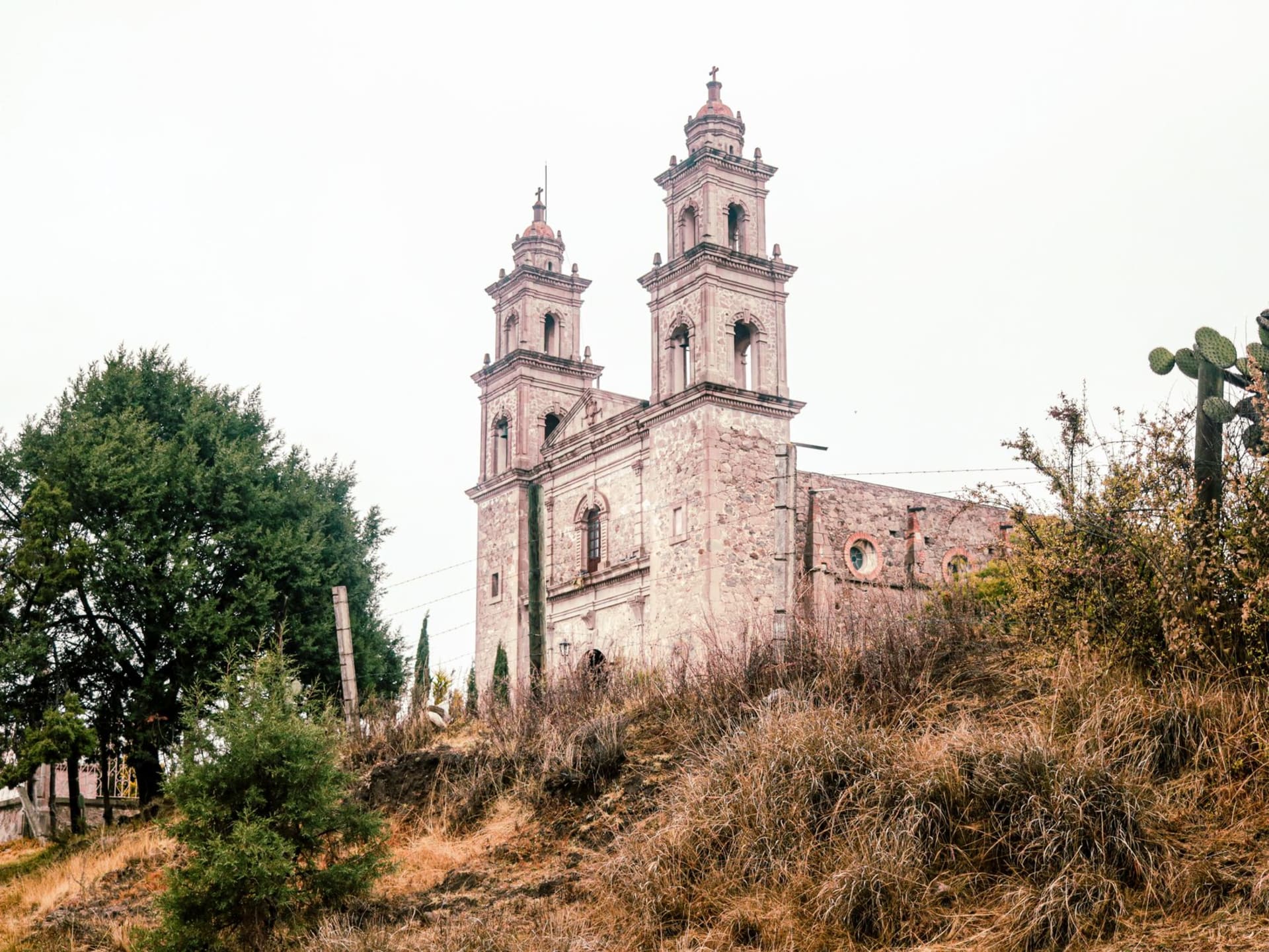
Fresnillo
"The mine is still operating. The goat was extraordinary. This is a city earning its living."
I went to Fresnillo because I had been in Zacatecas for three days and had eaten too many carefully plated meals in too many restored colonial dining rooms and had begun to feel that I was experiencing a very beautiful museum rather than a state. This is not an objection to Zacatecas City, which is spectacular, but three days of UNESCO World Heritage Site can produce a specific kind of sensory narrowing. The antidote is sixty kilometers north on Federal Highway 45.
Fresnillo does not have a UNESCO designation. It does not have a cable car. It has the Fresnillo mine, which has been producing silver since 1567 and is still producing silver today, operated by Fresnillo PLC, a company listed on the London Stock Exchange — which is its own historic fact about the extractive relationship between Mexico and foreign capital, but that is a larger conversation.
A Working City
The centro of Fresnillo is the centro of a functional northern Mexican city. Wide streets, the kind that suggest a municipal plan designed around vehicles rather than pedestrians. The Parroquia de Nuestra Señora de las Mercedes on the main plaza: a colonial church in good condition, restored without the over-restoration that sometimes produces a kind of artificial newness. The plaza has the benches and the trees and the old men and the teenagers that Mexican plazas have, apparently by civic requirement.
What is different from Zacatecas City is the sound. The background of Fresnillo includes norteño music from car stereos — the accordion and bajo sexto guitar combination specific to the northern states — and the traffic of a city that is actually at work. The commerce is not artisanal. The restaurants near the plaza have laminated menus and fluorescent light and the lunch crowd is people who have come from the mine offices and the municipal buildings.
I walked the center for an hour. I found a shoe store with boots displayed in the window that looked like good quality at prices considerably less than their Zacatecas City equivalents. I found a traditional pharmacy with the specific floor-to-ceiling wooden shelving that pharmacies in Mexico still sometimes have, the kind that requires a rolling ladder to reach the upper rows. I found nothing that was designed for me, a French man living in Mexico with a travel blog, and this was exactly right.

Cabrito
Cabrito — young goat, roasted — is the signature dish of the northern Mexican states, and the Zacatecas version has its own character. The essential facts: the animal is young, the preparation involves a long slow roast over wood, and the result is meat that is simultaneously gamey and mild, with a texture that is neither the toughness of old goat nor the softness of farmed lamb but something specific to the age and the preparation.
I found the restaurant by the method I usually use, which is to walk past several places and go into the one that looks most occupied at lunchtime on a weekday. It was occupied mostly by men in work clothes, some still wearing the reflective vests specific to industrial sites. The menu was on a board. Cabrito was the primary item. I ordered it.
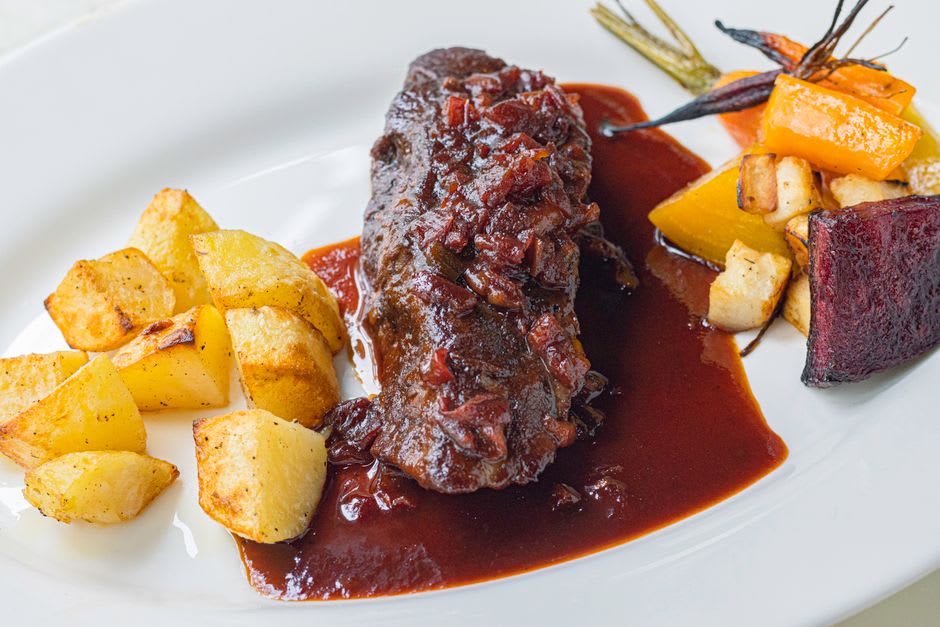
It came on a platter with tortillas, beans, and the green salsa that northern Mexico puts on everything with a justified confidence that it improves everything. The cabrito was dark from the roast, fragrant, and — this is the thing that is hard to explain until you have eaten it correctly prepared — not overwhelmingly gamey. The goat flavor is present and it is pleasant, contained within the roasting and the charring in a way that gives it depth rather than challenge.
I ate the full portion. I thought about the cable car and the pink cathedral and the Callejón de Veracruz in Zacatecas City, which I had genuinely loved, and I thought that this lunch was an equally real version of the state. Different dimensions. The same place.
The Mine on the Hill
The Fresnillo mine is not a tourist site. You cannot go into it. You can see it from the hills on the city’s edge — the headframes and tailings piles and processing infrastructure of a mine that has been operating in some form for over four centuries, now producing tens of millions of ounces of silver annually using heavy equipment and a workforce that eats cabrito at lunch.
The visibility of the mine from the city is part of what makes Fresnillo interesting. Zacatecas City has the mining history too — the Mina El Edén is the tourist centerpiece, a colonial mine you descend via cable car — but the mine there is historical, museum-ized, made into something you visit rather than something that is happening. In Fresnillo the mine is happening. The trucks go out in the morning. The payroll of the Fresnillo operation circulates through the restaurants and the fuel stations and the shops of the city, and this unmediated relationship between extraction and civic life is the specific thing Fresnillo offers that the UNESCO city sixty kilometers south cannot.
Getting there: Federal Highway 45 north from Zacatecas City, about sixty kilometers, roughly an hour. Regular bus service runs from the Zacatecas terminal. Fresnillo works as a day trip or an overnight stop on the way north toward Sombrerete and eventually Durango.