Cuzamá
"A horse-drawn cart on abandoned hacienda tracks into three secret swimming holes — Yucatán invents its own genre of tourism."
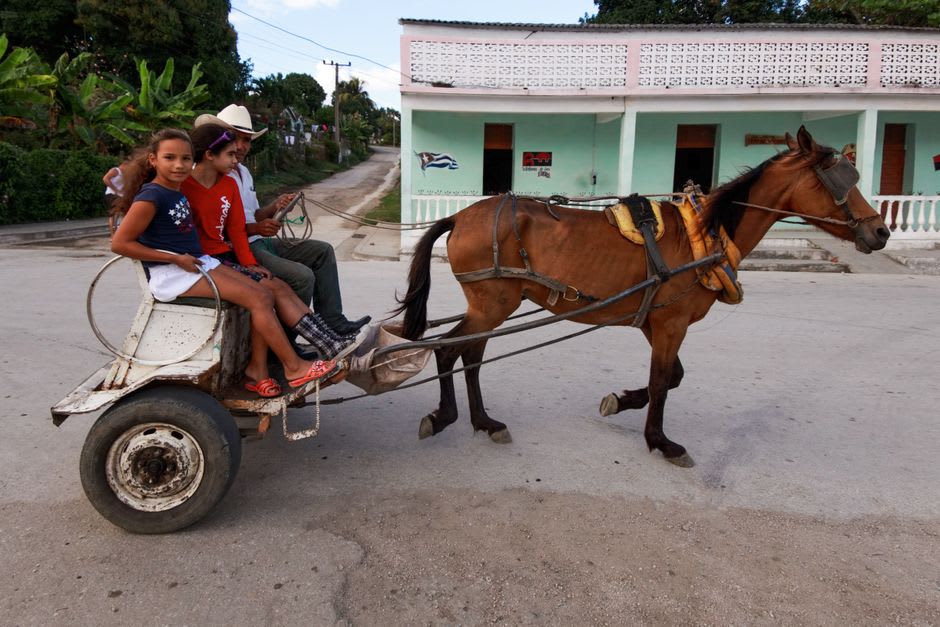
The horse looked bored in the specific way of an animal that has made this trip hundreds of times. I climbed into the wooden cart — a flatbed on narrow-gauge wheels, essentially — and the driver clicked his tongue, and we were off, bouncing along rails that the henequen industry abandoned decades ago and that now serve as the unlikely infrastructure for one of Yucatán’s stranger afternoons. The jungle closed around us within sixty seconds. By the time we reached the first cenote, I had stopped thinking about anything else.
The Three Cenotes and the Contraption That Gets You There
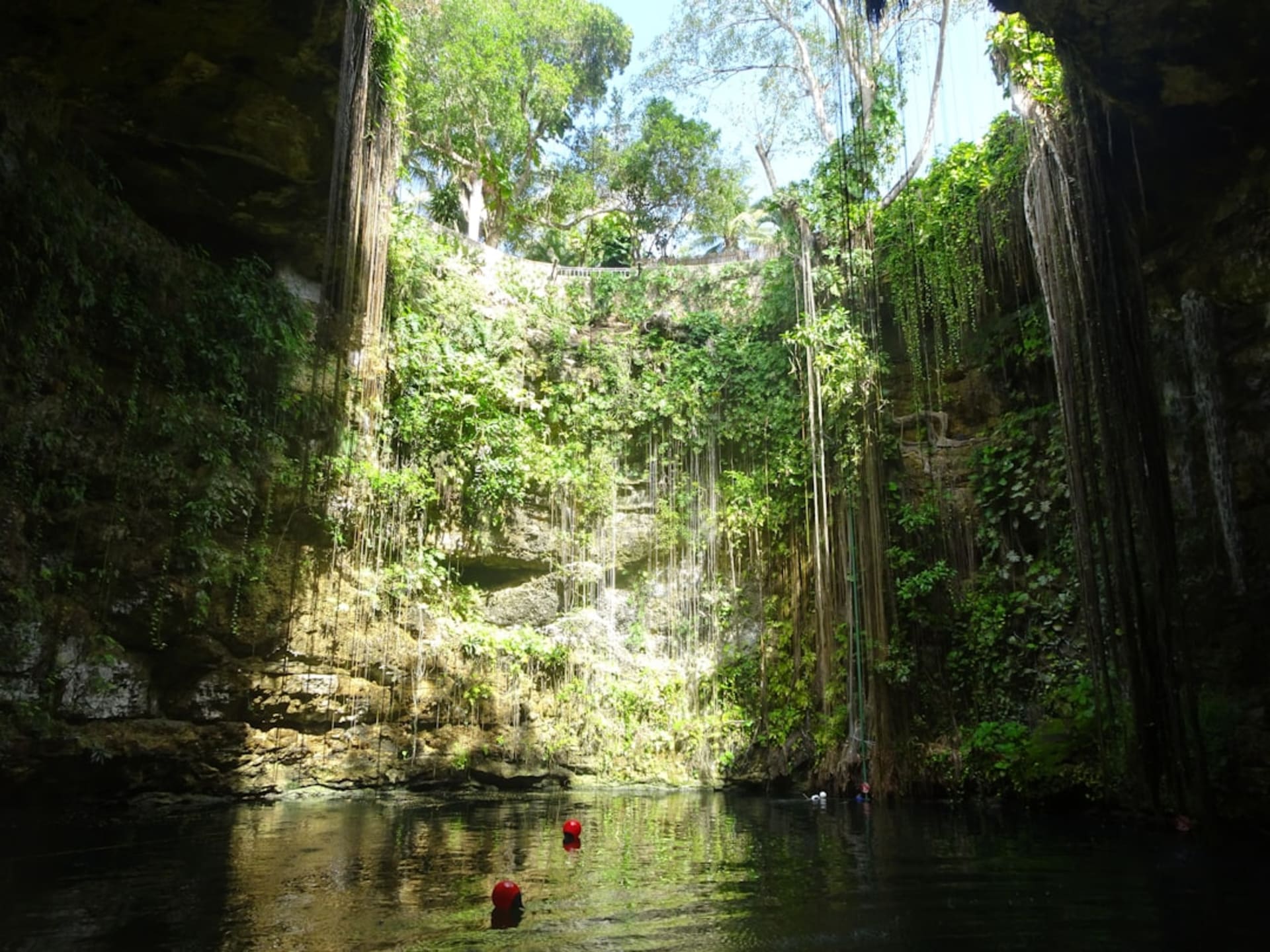
There are three cenotes at Cuzamá: Chelentún, Chansinic’che, and Bolonchoojol. The cart stops at each one; you descend by wooden ladder, swim, climb back out, and rattle on to the next. The whole circuit takes about two hours, minus swimming time, and the ride itself is half the point. The tracks were built to haul henequen through the fields of the old hacienda — they were never designed for tourists, which is partly why they feel so improbable and right. The jungle presses in from both sides. The horse sets the pace.
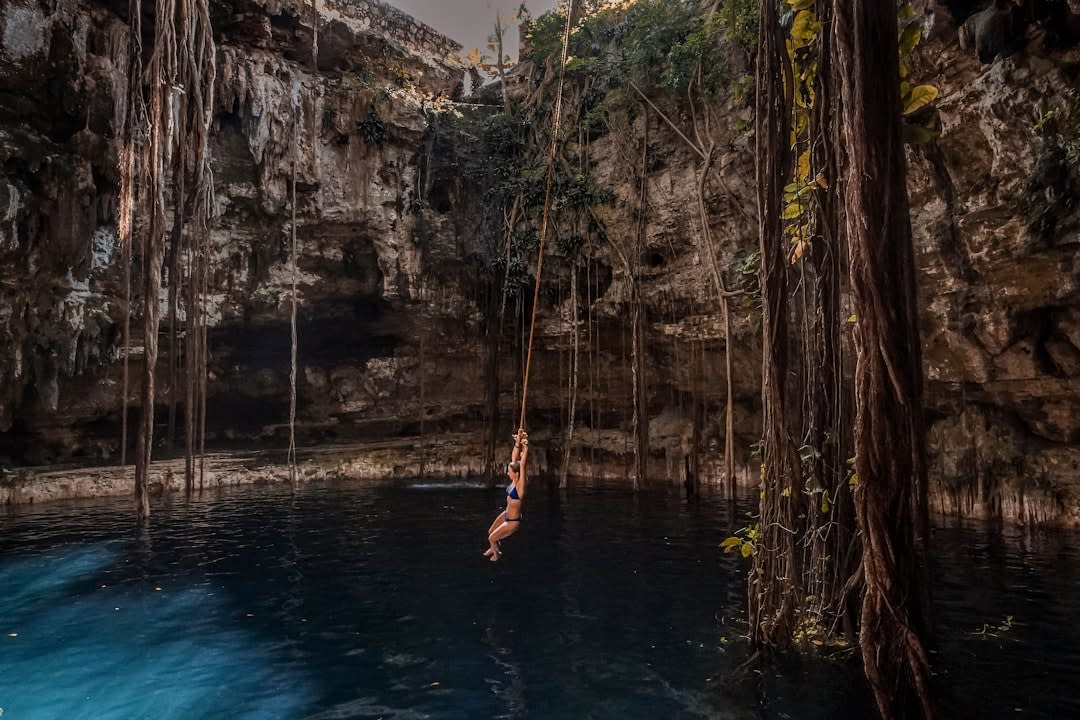
Chelentún is the largest, with a wide circular mouth and a timber platform from which the ladder drops into green-blue water some fifteen meters below. Chansinic’che is smaller, more intimate — the kind of place where you float on your back and stare at the roots hanging through the opening and feel genuinely removed from the world. Bolonchoojol requires the most commitment: a longer ladder, a narrower descent, and then water cold enough to make you inhale sharply. All three are fed by the same underground river system that threads through the entire Yucatán peninsula. The color of the water — and I say this as someone who has now swum in perhaps twenty cenotes across the state — is not something you get used to.
What the Hacienda Leaves Behind
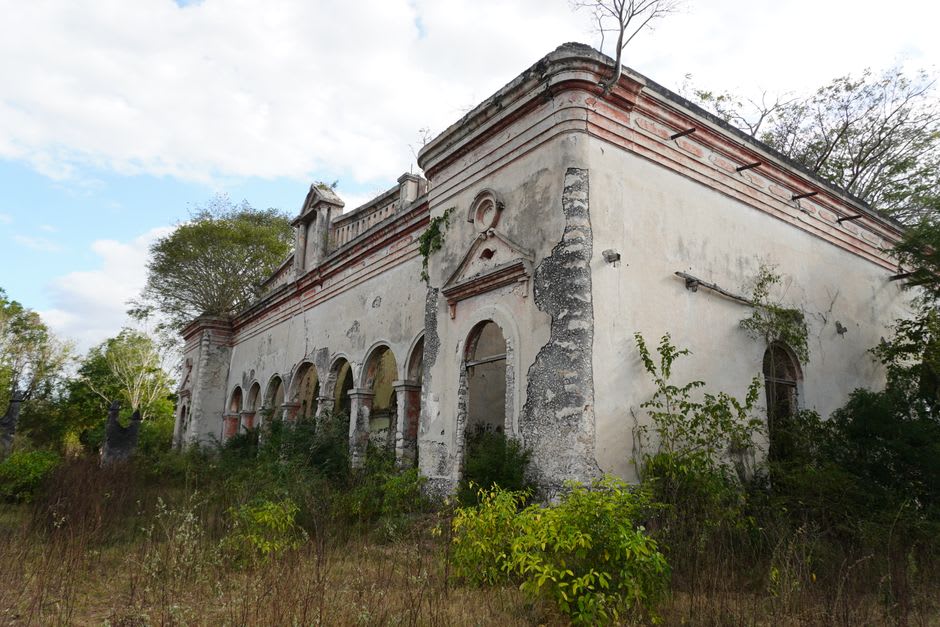
Cuzamá sits on the land of a former henequen estate. The fiber — known internationally as sisal — made Yucatán briefly one of the wealthiest regions in Mexico at the turn of the twentieth century. The hacienda owners built those rails to move raw henequen to the processing plants; a horse and cart was faster than men carrying bundles through the heat. The tracks survived because they were made well and because nobody had a particular reason to pull them up.
The village that grew around the hacienda is quiet in the way that Yucatecan pueblos often are on weekdays: a church the color of old cream, a main square with a basketball court that doubles as the social center, and two or three comedores where you can eat panuchos and sopa de lima for next to nothing. I stopped at the one nearest the church after the cenotes and ate more than I needed to, sitting in a plastic chair while a ceiling fan worked hard against the afternoon.
A Few Things Worth Knowing
Go on a weekday, and go early — the carts start around eight in the morning, and by noon the place has absorbed whatever tour buses have arrived from Mérida. Bring cash; there is no card reader at the cart stand or the cenote entrance. Wear your swimsuit under your clothes and bring a dry bag for your phone, because the ladders are steep and the platforms get wet. The drivers manage their own horses and some will linger at each cenote longer if you ask — it is worth asking.
The admission covers the cart ride and entry to all three cenotes. Negotiate nothing; the price is fixed and it is fair.
Getting There
Cuzamá is about fifty kilometers south of Mérida. The most reliable option is a colectivo from the second-class bus terminal toward Acanceh, which drops you in the village or close enough to walk. Taxis from Mérida will quote around 400 to 500 pesos one way. No direct ADO service exists. Plan for a full morning, and arrange your return before noon if you are using public transport.