Xalapa
"The Anthropology Museum has four colossal Olmec heads. Each one is the portrait of a specific person who lived three thousand years ago. You can tell them apart by their faces."
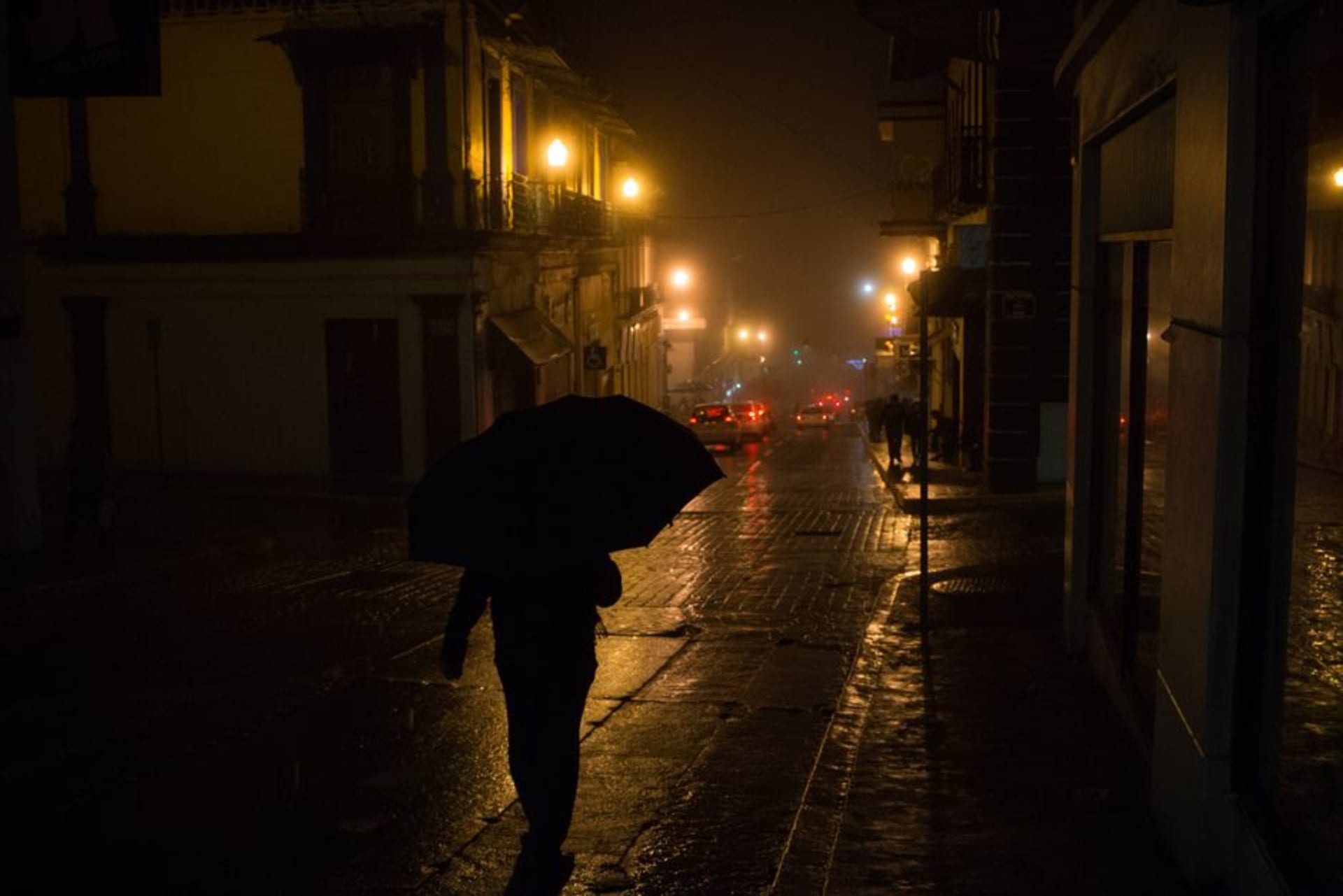
Xalapa sits at 1,400 meters in the cloud forest zone where the Gulf coast lowlands rise to the central Mexican plateau — a city of perpetual mist and flowering trees where the university dominates the culture in the way that Oxford dominates its market town. The Universidad Veracruzana has 90,000 students and the city has the bookstores, cafés, and political energy that 90,000 students generate. It is also, by a comfortable margin, the city with the best collection of pre-Columbian art outside of Mexico City.
The reason to go is the museum. The reason to stay is everything else.
The Anthropology Museum
The Museo de Antropología de Xalapa houses the most significant collection of Gulf coast pre-Columbian art in the world, assembled from decades of excavation at Olmec, Totonac, and Huastec sites across Veracruz state. The building — designed by Edward Durrell Stone and opened in 1986 — is itself remarkable: a series of open-air garden terraces connected by indoor galleries, the largest pieces displayed outdoors where the cloud forest light changes their character through the day.
The four colossal Olmec heads — carved from single basalt boulders, each weighing between 6 and 50 tons, each a portrait of a specific Olmec ruler from the San Lorenzo site (900-400 BCE) — are the centerpiece of the collection and among the most striking objects in any museum I have visited. The heads are enormous (the tallest is 3.4 meters) but the scale is less immediately striking than the particularity of the faces: each one is clearly a specific individual, with specific features, a specific expression, carved with a naturalistic precision that is unlike anything else in early Mesoamerican art. The helmets they wear are ball-game equipment.
Standing in front of the largest head at the end of the afternoon, when the mist comes in from the cloud forest and reduces the visibility in the garden terraces, and the head emerges from the grey with its three-thousand-year-old face intact: this is one of the experiences that Mexico offers that I have not found an equivalent for anywhere else.
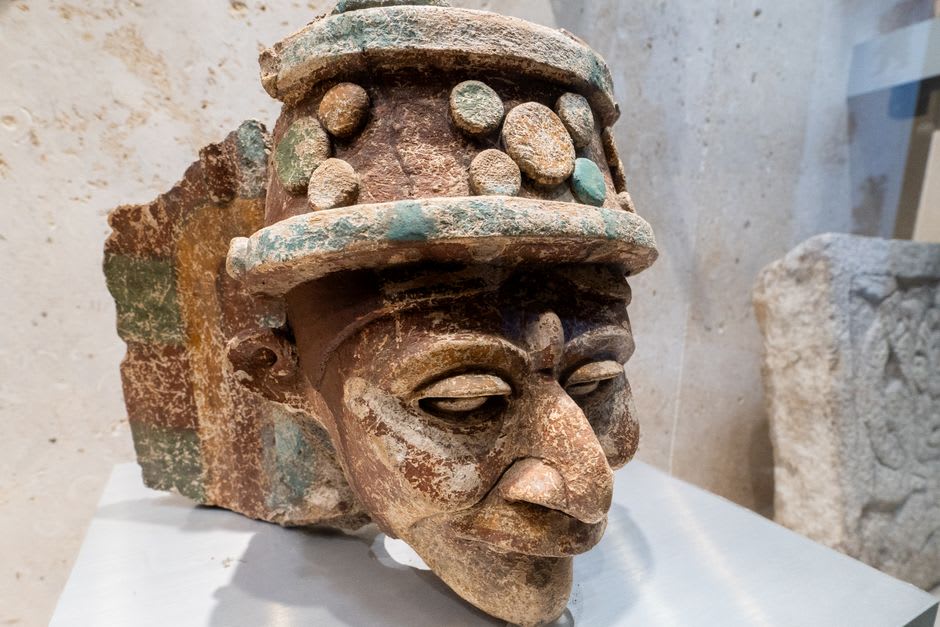
Beyond the Olmec heads, the Totonac collection — including the “laughing figures” (smiling clay figures from the central Veracruz culture, 300-900 CE) and the extraordinary “yoke, axe, and palma” ceremonial ball-game equipment — and the Huastec collection (featuring the extraordinary adolescent figure known as “El Adolescente,” a nearly life-size stone carving of extraordinary technical sophistication) make the museum a half-day minimum and a full day for anyone who reads the labels.
The Coffee and the City
Xalapa is in the coffee-growing zone of the Veracruz sierra, and the coffee culture reflects this: the independent cafés that line the streets around the university serve single-origin beans from the farms in the surrounding mountains at prices that also reflect the local student economy. The best concentration is around the Parque Juárez — the central park, on a ridge overlooking the cloud forest valley — and the Callejón del Diamante, a stepped alley of cafés and bookshops.
The Mercado Jáuregui is the daily market of the city and the antidote to the anthropology museum: entirely practical, selling cloud-forest produce (chayote, quelite herbs, chipotles en adobo in clay pots, vanilla from the Papantla region), live poultry, and the Xalapa specialty of café con leche made with the locally grown beans and a specific technique of pouring simultaneously from two heights to create the foam.
Getting there: ADO buses from Veracruz city (1h) or Mexico City TAPO (4-5h). The bus station is a taxi ride from the center. Xalapa’s airport has limited service; most visitors arrive by bus.
When to go: Year-round — the cloud forest climate means it’s never hot and rarely truly cold. The mist is heaviest in the afternoon. Mornings in the museum, afternoons in the cafés, evenings at the Agora cultural center where the university programs concerts and theater.