Papantla
"No one told me a city could smell like this. Not like vanilla extract — like the actual bean, cut open in the morning air."
The approach to Papantla is olfactory before it’s visual. I was on a second-class bus from Poza Rica, watching the Veracruz foothills roll by — humid and green, oil infrastructure punctuating the jungle — when something changed in the air coming through the window. It took me a moment to name it: vanilla. Not the extract, which is synthetic and sharp, but the actual bean, something warmer and rounder than any bottle in a French supermarket, a smell that seemed to come from the earth rather than from any single source. The bus hadn’t even reached the terminal.
Papantla is in the heart of Mexico’s vanilla-growing region, and the vanilla here is Vanilla planifolia, the real thing. The curing process — which takes months of sweating and drying in shade, the beans bundled in cloth and turned by hand — happens in the surrounding villages and in the city itself. The municipal market sells vanilla in quantities that make the tiny overpriced vials in European spice shops look embarrassing: fat, oily, properly cured beans at prices that require a reassessment of everything you thought you knew about this ingredient. I bought more than was reasonable. I have no regrets.
The Totonac and the Voladores
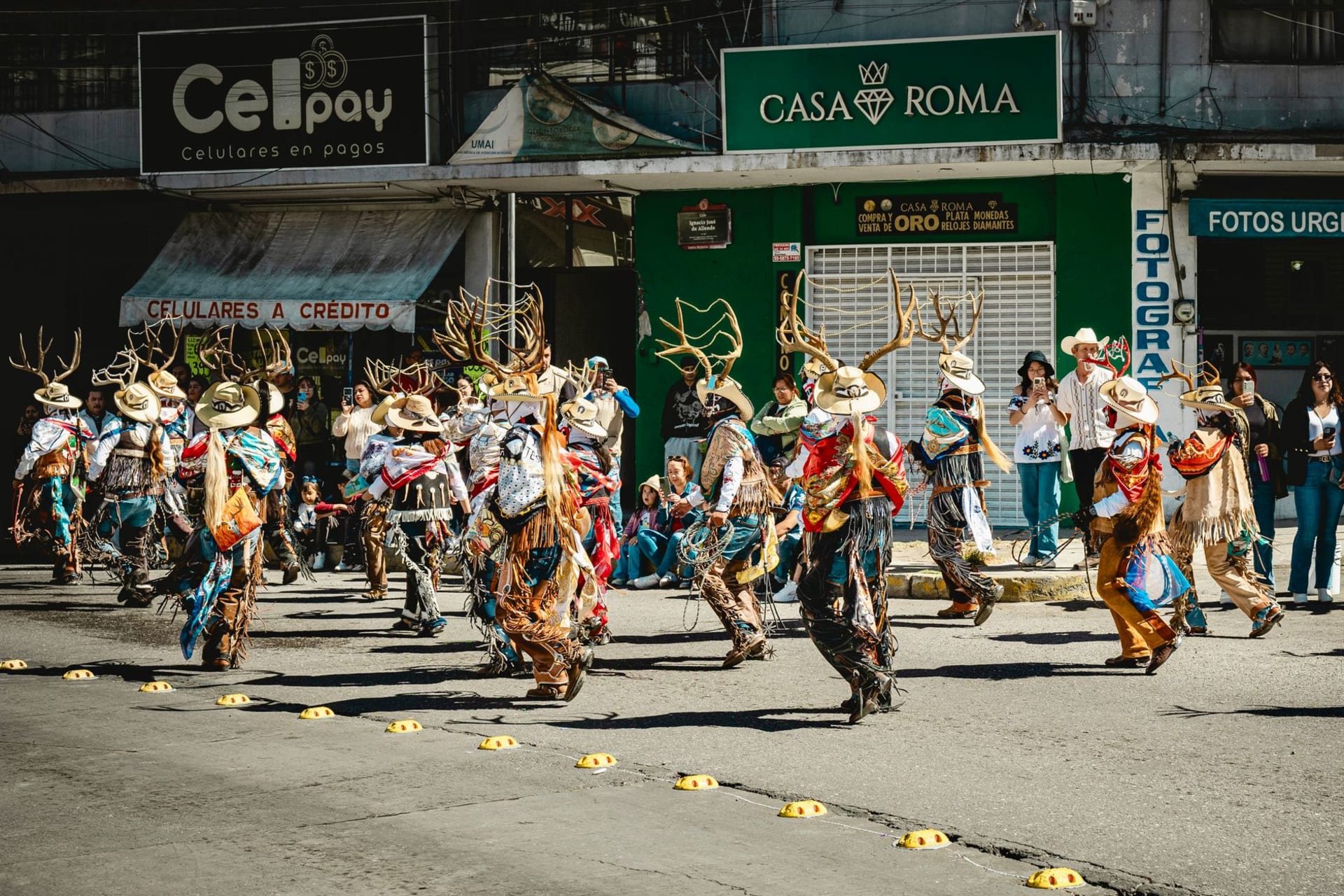
Papantla is a Totonac city. The Totonac people have been in this region for more than a thousand years — they built El Tajín, the ruins 15km away, and they are still here, and the city reflects this in a way that goes beyond tourism signage. The market sells Totonac textiles. There are Totonac-language phrases in the municipal buildings. And in the main plaza, several times a day, the Voladores de Papantla perform a ceremony that is so specific and so strange that I watched it three times and still feel I haven’t fully processed it.
The ceremony involves four men and a caporal, a lead dancer. The caporal climbs to the top of a 30-meter wooden pole and plays a flute and small drum while dancing on a rotating platform barely larger than his feet. The four voladores tie ropes to their ankles, lean backward off a wooden frame at the top, and begin to spiral outward as they descend — each making 13 full rotations, totaling 52 for all four, corresponding to the 52-year cycle in the Maya calendar system. They descend slowly, arms extended, bodies nearly horizontal, suspended above the plaza by nothing but rope and the geometry of the rotation.
I stood directly below the pole as they descended. There is no good way to describe this from below. The sky wheels around the stationary pole. The voladores spiral down like something between a prayer and a physics demonstration. The flute keeps playing from the top. The crowd around me fell silent in a way that crowds rarely do.

El Tajín and the Vanilla Market
Papantla is the base for El Tajín, and if you’re here you go. The ruins are 15km from the city center, a short taxi or collective ride, and they are among the most undervisited major archaeological sites in Mexico — not undiscovered, but modest in crowds compared to Chichén Itzá or Teotihuacán. The Pyramid of the Niches, with its 365 square openings, is the famous structure, but the full site spreads across a valley and includes ball courts, friezes depicting ritual life, and a jungle backdrop that makes the experience different from the arid central Mexican sites.
The city itself deserves a full day beyond the ruins. The Saturday market in the municipal building is where you buy vanilla — from vendors who know their product and will explain the difference between grades and curing methods if you ask. There’s a large Totonac mural on the hill above the city, and the coffee in Papantla comes from the same highland belt that runs through Veracruz — decent enough to order twice at breakfast.

Stay at least two nights: one to orient yourself and watch the Voladores twice, and one to reach El Tajín in the morning and return to the market in the afternoon. The vanilla in the air is a good reason to linger over both.