Coatepec
"In France a café is a social contract — you arrive, you order, you leave. In Coatepec the café is an argument for staying indefinitely, and the coffee itself seems designed to prove the point."
Xalapa gets all the attention. It’s the capital of Veracruz state, a university city of 600,000 people, full of museums and bookshops and the peculiar intellectual energy that attaches to towns with a major university. I like Xalapa. But fifteen minutes south of Xalapa, at the point where the road dips through coffee plantations and the air carries a faint roasting smell that announces the town before you see it, is Coatepec — and Coatepec is what I think about when I think about the highlands of Veracruz.
The altitude matters here: 1,200 meters, which is enough to change the temperature and the light and the character of the vegetation entirely from the hot lowlands below. The cloud forests of the Veracruz sierra start nearby. The coffee grows on the slopes around the town in plantations that are visually extraordinary — the cherry-bearing plants in rows on hillsides, the forest canopy above providing shade, the whole thing looking more intentional than nature usually manages.
Coatepec has been producing coffee since the 19th century, and the region’s arabica — often called Altura Coatepec — is among the most consistently excellent in Mexico. The cup profile tends toward medium acidity, chocolate and nut notes, a cleanness that reflects the altitude and the volcanic soil. I’m not a coffee professional. But I’ve been drinking a lot of Mexican coffee in the years since I moved here, and the cup I had at a small roaster called El Beneficio, sitting in their courtyard on a Tuesday morning in November, is the clearest reference point I have.
The Café Culture and the French Comparison
In France, café culture operates on a particular rhythm. You go to a café, you stand at the zinc bar if you’re being authentically Parisian, you drink your espresso in approximately three minutes, you pay, you leave. The café is a pause in the day, a social ritual, a quick injection of caffeine and social existence. It is not somewhere you live. Sitting at a table for forty-five minutes is what you do with a friend; sitting alone for forty-five minutes is either suspicious or the sign of someone waiting for someone who is late.
In Coatepec I sat alone in three different cafés over two days, for total combined hours I would rather not calculate, and nobody found this unusual. The rhythm here is entirely different. The coffee arrives — usually a café de olla, the cinnamon-and-piloncillo-brewed version that is the regional standard, served in a clay mug — and the expectation is that you will drink it slowly, in the specific silence of a colonial courtyard with bougainvillea on the walls and a fountain that may or may not be working, and that you will not be particularly productive while doing so.
This is, I want to be clear, a profoundly different relationship with coffee than the French one. Not better or worse, but organized around different values. The French café is about efficiency and sociability. The Coatepec café is about the coffee itself as a thing worth slowing down for, and about the town’s specific confidence that it has something worth sitting still in front of.
The café de olla, made properly, is not a café au lait with cinnamon — it’s a full extraction in a clay pot with cinnamon stick and piloncillo cooked directly into the brew. The clay imparts something, though what exactly is a question I’ve heard debated by people who know far more than I do. What it produces is a coffee that is round and slightly sweet and slightly spiced and has a particular softness that the espresso-based preparations don’t, and that works at this altitude in this air in a way that makes the French espresso at the bar seem like it belongs to a completely different value system. Which it does.
The Finca
Lia arranged a visit to a coffee finca on our second morning in Coatepec, through a contact she’d found at the small tourism office near the main square. We went in November, which is harvest season — the time when the coffee cherries turn red and the picking crews are working the rows.
The finca was a family operation, maybe eight hectares, at a slope above the town. The owner — a man in his sixties whose family had grown coffee here for four generations — walked us through the plantation and explained things in Spanish with the patience of someone who has given this explanation many times but still finds it worth giving. He showed us the different stages of ripeness on a single branch: the green unripe cherry, the yellow in transition, the red that’s ready, and the overripe dark red that you leave or process separately. The pickers move through the rows selecting only the ripe ones, which means multiple passes through the same plants over several weeks.
We picked for a while ourselves, clumsily. The action is more methodical than it looks — you learn quickly to grip and twist, not to pull, and to check the cluster before you strip it. I picked maybe two kilos in thirty minutes. A good picker does twenty. This ratio is instructive.
The finca had its own small wet mill — the fermentation tanks where the cherry pulp is removed from the bean, the raised drying beds where the beans dry in the sun. The owner showed us a batch at different stages. The fermentation smell is powerful and specific, something between fruit and hay, not unpleasant but not subtle. He let us taste a bean at different stages of drying. The taste shifts remarkably: green, vegetal when fresh; something cleaner and more recognizable as it dries.
He made us coffee at the end — his own beans, roasted on a small drum roaster in an outbuilding, ground by hand, brewed in a clay pot over a wood fire. We sat on plastic chairs in his courtyard and drank it while the plantation slopes were visible through a gap in the trees. It was a very good cup. He knew it was a very good cup and said nothing about it.
The Town Itself
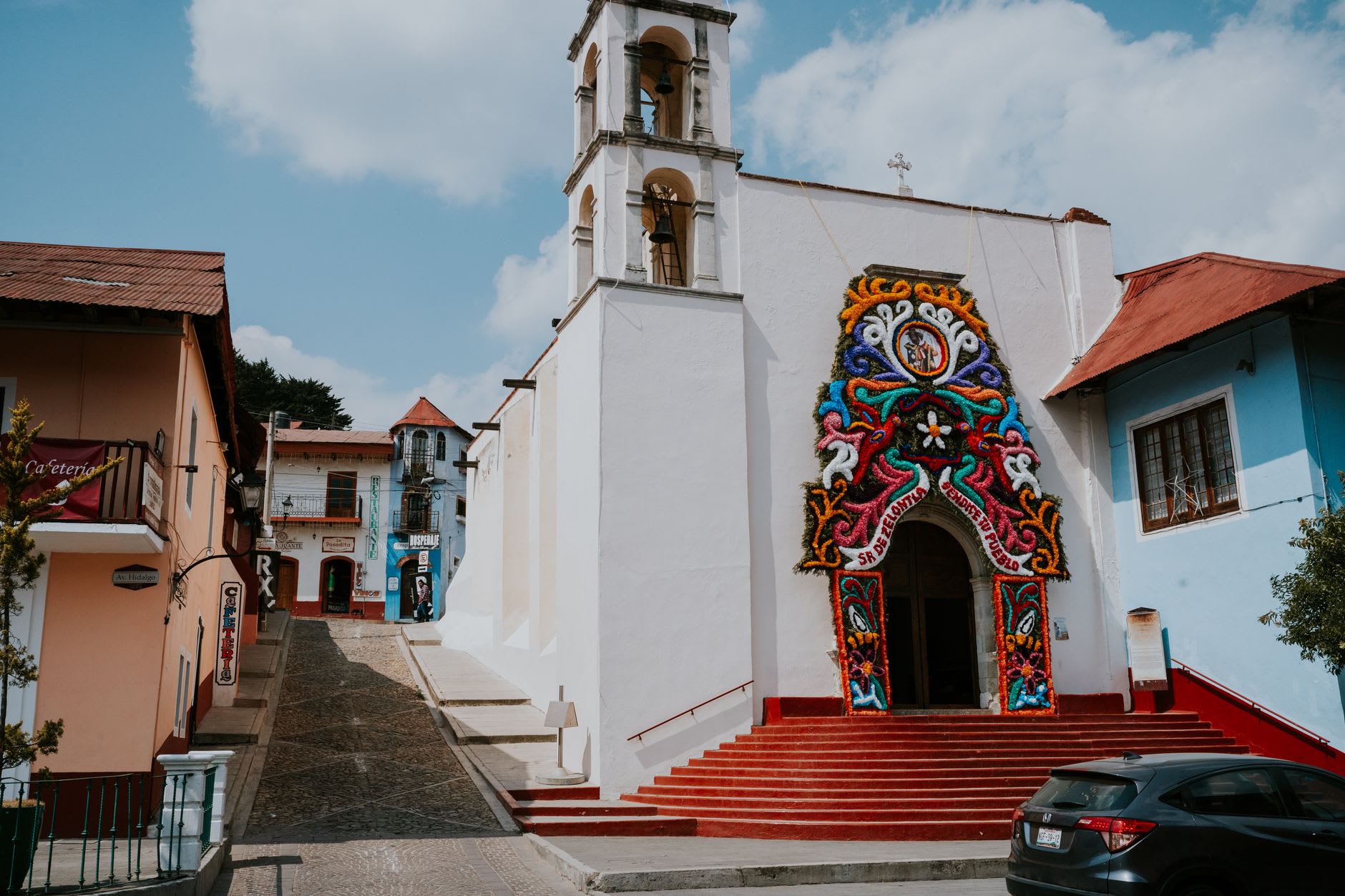
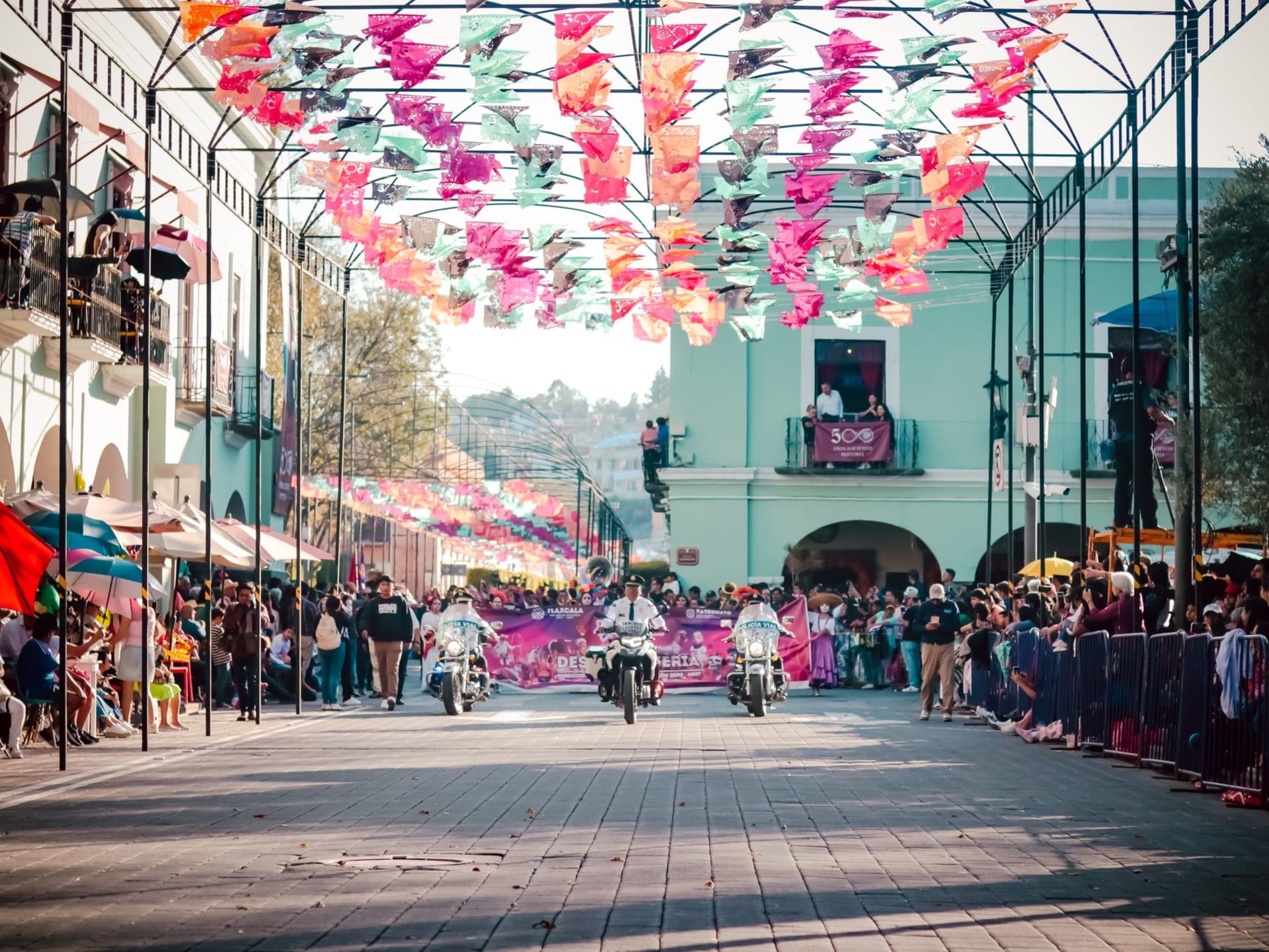
Coatepec is small enough to walk completely in under an hour. The main square is handsome — a kiosk in the center, the Parroquia de San Jerónimo on one side, the colonial portales on the others. There are orchid farms scattered around the municipality — the altitude and humidity are perfect for them — and several have small retail operations where you can buy plants. The town has a small but good antique market on weekends.
What strikes me most about Coatepec, relative to Xalapa 15 minutes away, is the quiet. Xalapa has the energy and noise of a university city — students, traffic, political murals, a dozen bookshops with strong opinions. Coatepec has none of this. Its energy is turned inward, toward the production of something rather than the discussion of things. This is not a sophisticated observation but it’s the true one.
Getting There and Practical Notes
Coatepec is 15 kilometers from Xalapa. Colectivos run between Xalapa’s main bus station and Coatepec throughout the day for almost nothing. By car from Xalapa it’s 20 minutes. From Veracruz city, there are direct buses or you can transfer in Xalapa.
The town works as a day trip from Xalapa or as a one- or two-night stay in its own right. There are several small hotels in the center, most in colonial buildings. Given that it’s a coffee town, the accommodation quality tends to involve good coffee in the morning, which is the correct priority.
For finca visits, the Coatepec tourism office (on the main square) can recommend guides and farms that accept visitors during harvest season (October through January). Outside harvest season, some fincas still accept visitors to see the processing facilities and taste. If you visit without a guide, look for the signs reading “Café de altura” or “Finca visitable” on the roads heading uphill from the center.
Eat: the Mercado Municipal has excellent breakfast — enfrijoladas, enmoladas, the thick corn masa drinks called atoles. There are two or three sit-down restaurants around the main square that do the full Veracruz state repertoire including the fresh fish from the lowlands brought up each morning. The coffee everywhere is good; the café de olla is always the correct choice.