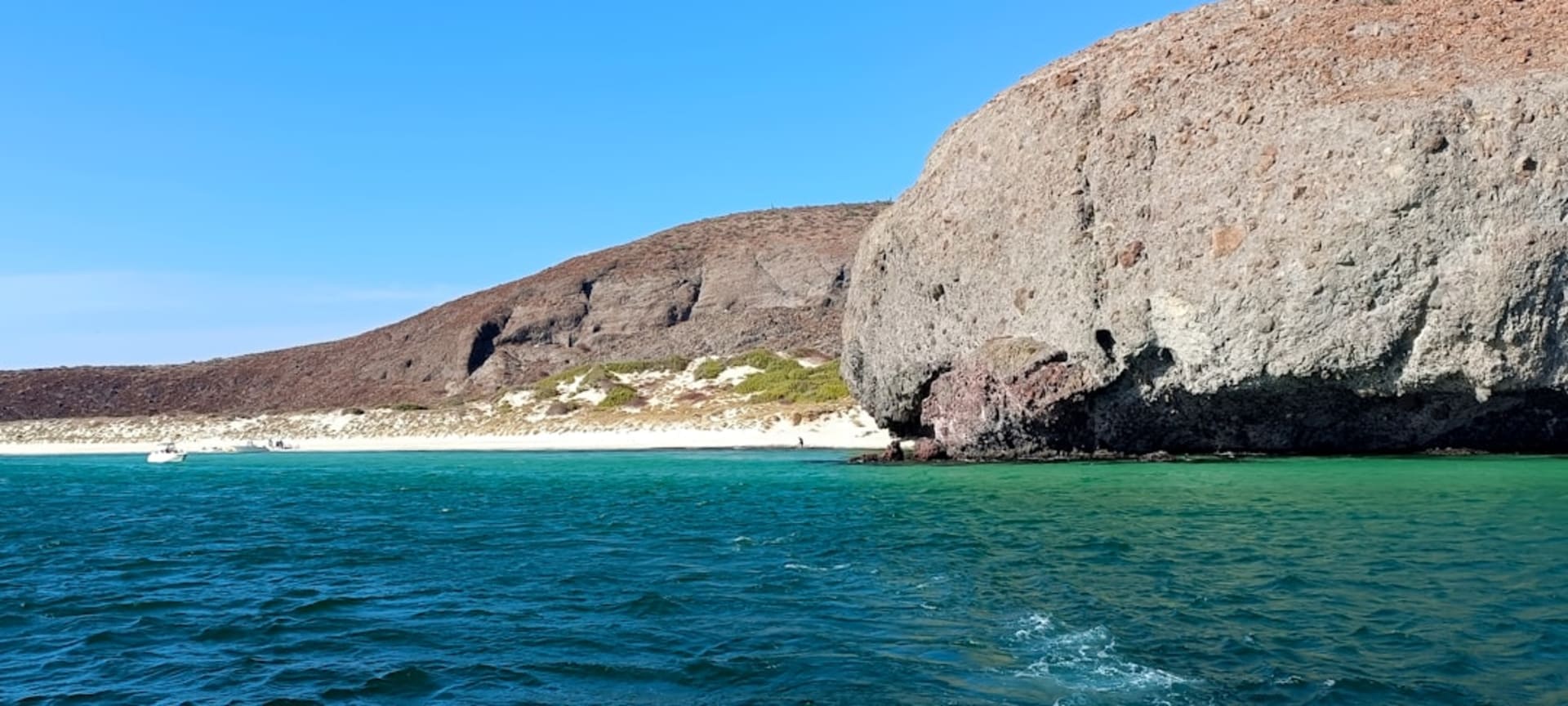
Cempoala
"Standing in the courtyard where the alliance that broke an empire was negotiated, with roosters calling from the houses next door and no other visitors in sight"
I arrived at Cempoala on a Tuesday morning in March, having taken a colectivo from Cardel that dropped me at the edge of town with vague directions toward the zona arqueológica. I walked fifteen minutes through a neighborhood where the houses back directly up to the site perimeter, chickens loose in the street, a woman hanging laundry from a second-floor window. The groundskeeper at the entrance booth looked mildly surprised to see me. He took my seventy pesos and waved me through without a word.
Temples That Time Has Stripped Clean
The thing nobody tells you about Cempoala is that the plaster is gone. Most Mesoamerican ruins you visit were originally coated white or painted in bright pigments — what you see today is the underlying stone, bare and honest in a way the finished version never was. At Cempoala the effect is particularly acute. The Templo Mayor rises in broad tiers of rough-hewn volcanic rock, and the circular temple beside it — the Templo de las Chimeneas, named for the columns that ring its upper section — has a strangeness to it that I kept circling back to. Neither building is enormous by the standards of Teotihuacán or Monte Albán. What they communicate instead is density of use: these were working structures, the administrative and ceremonial center of a city that housed somewhere between twenty-five and thirty thousand people at its peak. The pyramid complex is still only partially excavated. Much of the old city lies under the surrounding cane fields and the modern town itself.
The Weight of What Was Decided Here
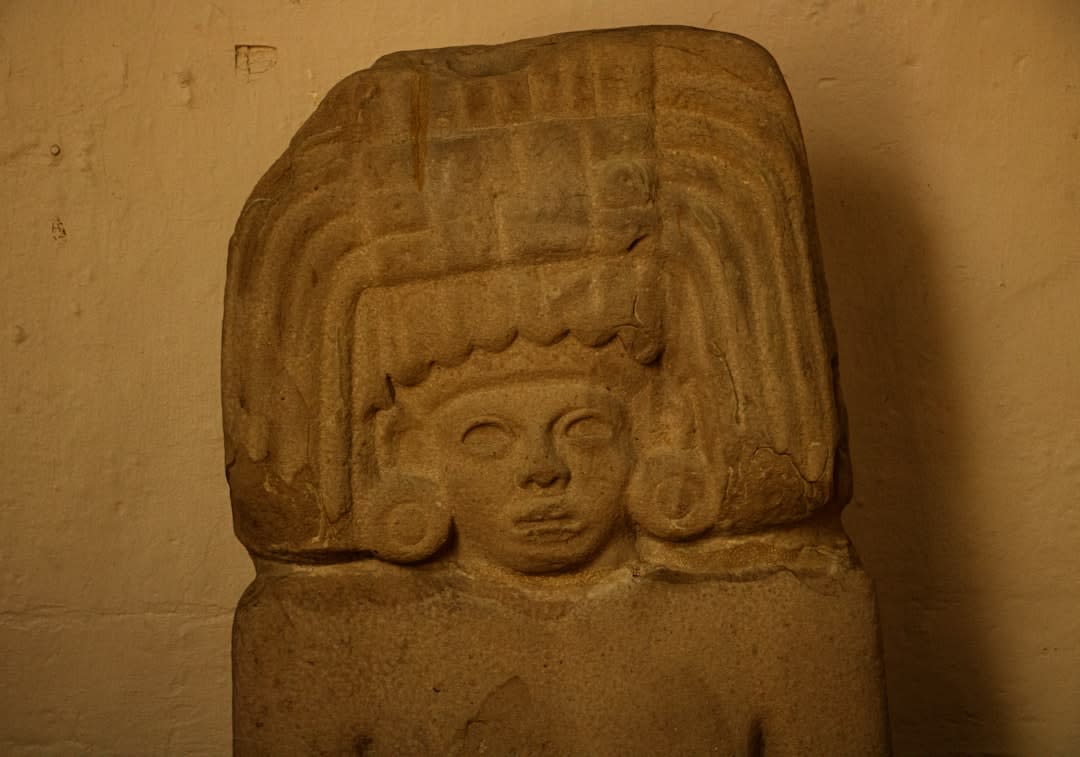
I stood in the main courtyard for a long time without fully being able to articulate why. This is where Xicomecoatl — the Totonac lord the Spanish called the Fat Chief — met Cortés in August 1519 and chose to ally with him against the Mexica. The Totonacs had been under Aztec tribute extraction for decades, and it was a calculation with a sharp edge to it: trading one form of domination for the possibility of another. It is not a simple story. But it was consequential in ways that radiated outward across all of Mesoamerica. The political geometry that made Tenochtitlán fall was assembled here. I kept glancing at the houses visible over the site wall, the clothes on the lines, the roosters calling from somewhere nearby. History has a way of becoming banal at its source, which is maybe the most useful thing ruins can teach you.
The Town Around It
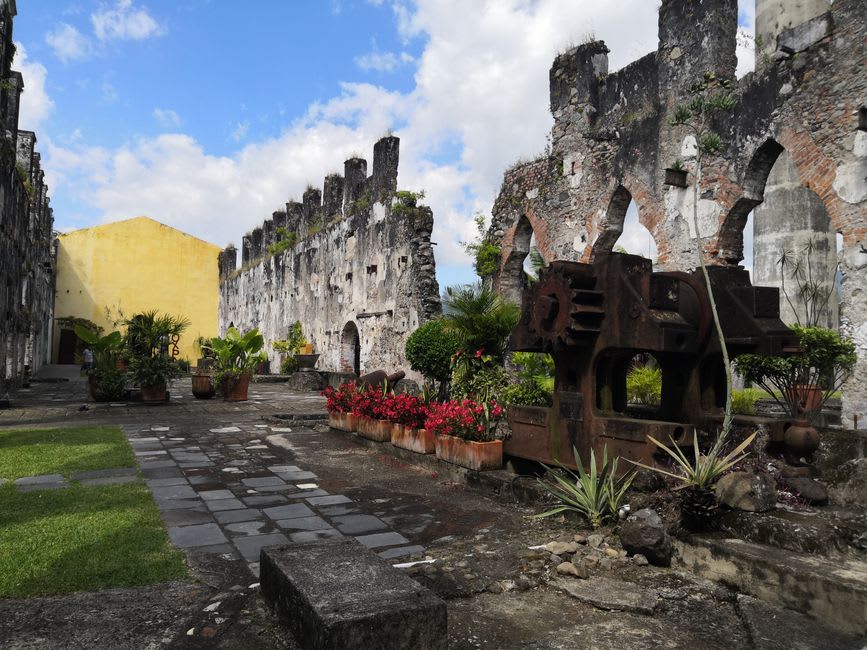
Cempoala sits within the municipality of Úrsulo Galván, and the town that surrounds the site has a small market on the main plaza where I ate a bowl of pozol de cacao at a counter near the entrance — not a drink I expected to find this far north of Tabasco. The woman running the stall seemed pleased I knew what it was. There is not much else oriented toward visitors: a modest on-site museum covers the Totonac occupation in reasonable detail, and a handful of comedores near the entrance serve straightforward comida corrida for well under a hundred pesos. None of this is polished. That is mostly the point.
Getting There
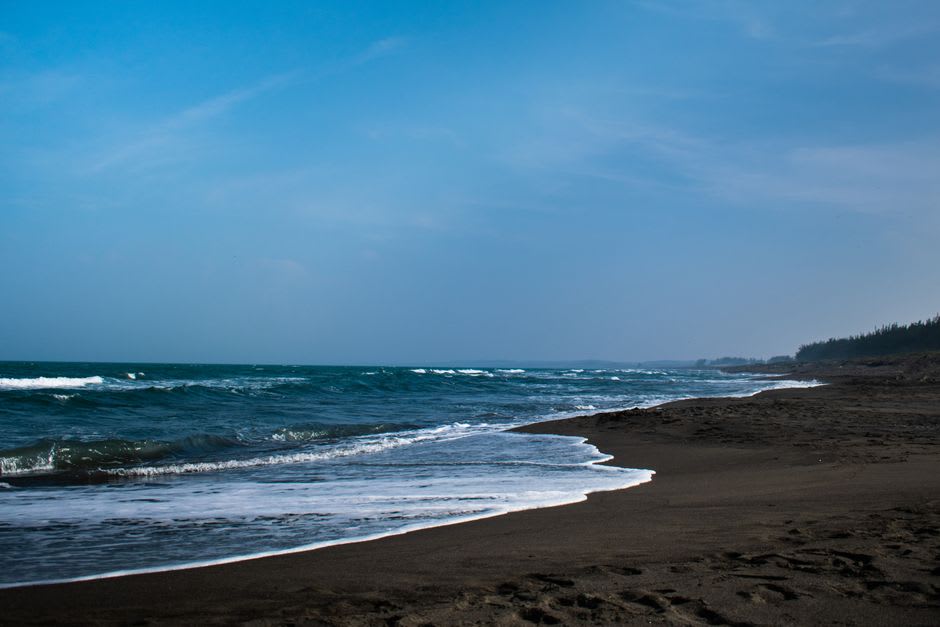
Cempoala sits roughly 45 kilometers north of Veracruz city, about forty minutes by car. From Veracruz’s CAPU terminal, take an ADO or second-class bus toward Cardel, then a colectivo or taxi the final eight kilometers to the site. The dry season, October through March, is the right time — the Veracruz coast gets genuinely hot and saturated with rain come summer. Arrive before ten in the morning to have the site largely to yourself.